

ah my apologiesIt was not intended to be a put down. I will give you an example: I have a pile of used 2 ****** pistons in my tool box, and I learned how to tune and rebuild 2 ****** motors on my own. Thus the pile of money in pistons are the "cost of education"

You are using an out of date browser. It may not display this or other websites correctly.
You should upgrade or use an alternative browser.
You should upgrade or use an alternative browser.
piston ring swap with engine in car
- Thread starter withku
- Start date
Disclaimer: Links on this page pointing to Amazon, eBay and other sites may include affiliate code. If you click them and make a purchase, we may earn a small commission.

Ta2dResqr
SHO Member
Please see first point...“all of your rings were gapped too wide” yes too wide for spec, but spec is again too tight.

SM105K
Streetlight Grand Prix Champ/ IG @fafomotorsports
Lol I remember when I was younger and had this attitude. Over the years numerous new members come in the forum. They break their SHO, ask for help, and receive help. They don't agree with what is being said, and get attitudes. They fight with members that know more about these cars then themselves, and then fade into obscurity. Rinse, lather, repeat.just because it’s a ford doesn’t mean everything was done correctly? again, .011” is too tight. i always forget this is a car enthusiast, not a mechanics forum. and yes i’m a kid, who’s more qualified to use feeler gauges than most of this sub including you.
Here are some questions you should ponder:
1. Is this the original motor that Ford installed into your SHO?
2. What is/was the maintenance protocol for your SHO?
If this is the original motor and the rings were gapped too tight (IYHO), then this failure should have happened long ago. Most likely it wouldn't have just happened to one piston.....
Most likely this is a motor with a unknown maintenance history. From what I gather it was tuned. OP lives in AZ which has notorious terrible 91 octane. Seems this failure happened late September/early October. It was still over 100 degrees. Tune, crappy gas, and hot IAT2's are the perfect recipe for an LSPI /mega knock which has been proven to knock pistons out of TGDI engines. Engine oil also plays a very large role into this as well....
“my knowledge” this isn’t mine, this is basic ****. going by any ring manufacturer specs, .011” is too tight. the 15 other build experts i’ve asked said it’s too tight. my coworkers who have been in the industry for 50+ years said that’s too tight. the tens of charts and forums i’ve seen online say .011 is too tight. again, this is a car enthusiast forum, i just expected more.Please see first point...
Lol I remember when I was younger and had this attitude. Over the years numerous new members come in the forum. They break their SHO, ask for help, and receive help. They don't agree with what is being said, and get attitudes. They fight with members that know more about these cars then themselves, and then fade into obscurity. Rinse, lather, repeat.
Here are some questions you should ponder:
1. Is this the original motor that Ford installed into your SHO?
2. What is/was the maintenance protocol for your SHO?
If this is the original motor and the rings were gapped too tight (IYHO), then this failure should have happened long ago. Most likely it wouldn't have just happened to one piston.....
Most likely this is a motor with a unknown maintenance history. From what I gather it was tuned. OP lives in AZ which has notorious terrible 91 octane. Seems this failure happened late September/early October. It was still over 100 degrees. Tune, crappy gas, and hot IAT2's are the perfect recipe for an LSPI /mega knock which has been proven to knock pistons out of TGDI engines. Engine oil also plays a very large role into this as well....
you sound like a ford rep. if you had any experience installing rings you would know this. sorry to tell you an under glow kit doesn’t make you a mechanic :/

L M F A O ahahahahahahahahahaha. Ok son, how's that mangled crank thread repair going? G T F O of here with your ignorant clowning. I've been wrenching since at least a decade before your dad's con dom broke and brought you into existence.just because it’s a ford doesn’t mean everything was done correctly? again, .011” is too tight. i always forget this is a car enthusiast, not a mechanics forum. and yes i’m a kid, who’s more qualified to use feeler gauges than most of this sub including you.
hey i couldn’t avoid that when you said feeler gauges, i just got certified. let’s see yours? and the thread tap went good, new bolt seats fine.L M F A O ahahahahahahahahahaha. Ok son, how's that mangled crank thread repair going? G T F O of here with your ignorant clowning.
SM105K
Streetlight Grand Prix Champ/ IG @fafomotorsports
If you actually looked at the questions they are valid. You just too prideful or ignorant to consider the answers. If the motor was replaced or rebuilt, then you have another rabbit hole to dive down.you sound like a ford rep. if you had any experience installing rings you would know this. sorry to tell you an under glow kit doesn’t make you a mechanic :/
If the motor was original and spec'd wrong, then this should have been a problem a long time ago. Boosted engines with tight ring gaps, crappy fuel, and hot IAT2's will not last.
This is coming from the same kid with the quote below.....
neither of you know anything about me lol shut up
You have no idea my back ground, my knowledge, or my technical/mechanical skill. Your ignorance is astounding. Again, Rinse, Lather, Repeat.
I will let you in on a little secret. This isn't a too tight ring issue. This is a Mega Knock/LSPI event. I have already laid out the factors and you meet all of them.
Can you show me online where I can get feeler gauge certified so I can install an underglow on my 2J car so I can MECHANIK?
If you actually looked at the questions they are valid. You just too prideful or ignorant to consider the answers. If the motor was replaced or rebuilt, then you have another rabbit hole to dive down.
If the motor was original and spec'd wrong, then this should have been a problem a long time ago. Boosted engines with tight ring gaps, crappy fuel, and hot IAT2's will not last.
This is coming from the same kid with the quote below.....
You have no idea my back ground, my knowledge, or my technical/mechanical skill. Your ignorance is astounding. Again, Rinse, Lather, Repeat.
I will let you in on a little secret. This isn't a too tight ring issue. This is a Mega Knock/LSPI event. I have already laid out the factors and you meet all of them.
Can you show me online where I can get feeler gauge certified so I can install an underglow on my 2J car so I can MECHANIK?
“boosted engines with tight right gaps” yes, a tight ring gap. whyd you change your mind now?
SM105K
Streetlight Grand Prix Champ/ IG @fafomotorsports
If you are going to quote me....use the whole quote.“boosted engines with tight right gaps” yes, a tight ring gap. whyd you change your mind now?
Again.......what is the history of your particular engine? Let me break it down barney style for you. Or perhaps you would like me to write it in crayon?
If the engine was manufactured with from the factory with a too tight ring gap...it would NOT have lasted 100k miles. The failure would have happened long ago. Pull more pistons to see if the gaps are the same. If they are then what? You are a feeler gauge certified mechanik, should be no sweat.
If the engine had a mega knock/LSPI event it would have done exactly what has happened to your engine.
Ta2dResqr
SHO Member
Basic knowledge is following a tried and tested spec. Hence why there are MANY 3.5 EcoBoost with 100k plus and no issue along with many tuned EcoBoost with high mileage.“my knowledge” this isn’t mine, this is basic ****. going by any ring manufacturer specs, .011” is too tight. the 15 other build experts i’ve asked said it’s too tight. my coworkers who have been in the industry for 50+ years said that’s too tight. the tens of charts and forums i’ve seen online say .011 is too tight. again, this is a car enthusiast forum, i just expected more.
Car enthusiast are often also Automotive Technicians. Take your high and mighty attitude, mech i nik certification and go dump your money into building your motor the way you want. When it blows up, we will still be here, many of us with Automotive Technician licenses, Engineering degrees, etc. pushing the limits of a great platform.
hey i couldn’t avoid that when you said feeler gauges, i just got certified. let’s see yours? and the thread tap went good, new bolt seats fine.
Just got yours... time to eat some humble pie, sit back and take some advice. Many of us are certified. I am going to venture to guess that I went to school, got Master Certified and started working in the industry before the best part of you dribbled down the inside of your mom's leg. Even so, I am learning every day and continue to see advances in technology that change the way things were done 50+ years ago. At the end of the day, you asked for advice, you got it, you don't like it, so do what you want.
“Boosted engines with tight ring gaps, crappy fuel, and hot IAT2's will not last.” there’s the whole quote, doesn’t change anything. boosted engines with crappy fuel and hot IAT2’s can last. see the difference? my intake temps never went above 160°, and I used Shell 91. the upper compression ring was seized in the groove horizontally, indicating expansion. chunks of ring lands broke downwards from the rings drag.If you are going to quote me....use the whole quote.
Again.......what is the history of your particular engine? Let me break it down barney style for you. Or perhaps you would like me to write it in crayon?
If the engine was manufactured with from the factory with a too tight ring gap...it would NOT have lasted 100k miles. The failure would have happened long ago. Pull more pistons to see if the gaps are the same. If they are then what? You are a feeler gauge certified mechanik, should be no sweat.
If the engine had a mega knock/LSPI event it would have done exactly what has happened to your engine.
“basic knowledge is following a tried and tested spec” “there are many 3.5 ecoboost with 100k plus and no issue” yes it’s tried, tested, and failed. there’s a reason these ring ends are known to ****. manufacturers can gap rings too tight for emissions purposes. an engine is an engine, air and fuel delivery methods aside piston ring gap doesn’t change too much. a .011” gap will decrease emissions, increase compression, but then you have an increased risk of butting ring ends. a .020” gap will give you more blowby, less compression, and less chance of butting rings.Basic knowledge is following a tried and tested spec. Hence why there are MANY 3.5 EcoBoost with 100k plus and no issue along with many tuned EcoBoost with high mileage.
Car enthusiast are often also Automotive Technicians. Take your high and mighty attitude, mech i nik certification and go dump your money into building your motor the way you want. When it blows up, we will still be here, many of us with Automotive Technician licenses, Engineering degrees, etc. pushing the limits of a great platform.
Just got yours... time to eat some humble pie, sit back and take some advice. Many of us are certified. I am going to venture to guess that I went to school, got Master Certified and started working in the industry before the best part of you dribbled down the inside of your mom's leg. Even so, I am learning every day and continue to see advances in technology that change the way things were done 50+ years ago. At the end of the day, you asked for advice, you got it, you don't like it, so do what you want.
just please show me ring manufacturer or professional recommending a gap of .011” or less on a 3.64” bore.
Ta2dResqr
SHO Member
CAN... not willboosted engines with crappy fuel and hot IAT2’s can last.
Are you tuned for 91? Or were you tuned for higher octane?Shell 91
chunks of ring lands broke downwards from the rings drag.
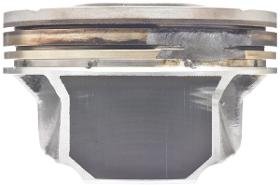 Like this maybe? This is a picture of a piston after LSPI straight from Mahle. Try taking a break from the forum wars, go and research LSPI and see if you may have tunnel vision and maybe the mass quantities of people that have experienced this and mentioned it may have an idea that is highly plausible.
Going by any generic aftermarket ring manufacturer specs, you'll find a disclaimer at the bottom that says "these are only general recommendations".“my knowledge” this isn’t mine, this is basic ****. going by any ring manufacturer specs, .011” is too tight. the 15 other build experts i’ve asked said it’s too tight. my coworkers who have been in the industry for 50+ years said that’s too tight. the tens of charts and forums i’ve seen online say .011 is too tight. again, this is a car enthusiast forum, i just expected more.
Ask your 50+ year coworker what a safe boost level is for a 10:1 compression engine. He'll probably tell you zero. Peruse multiple trusted resources spouting ancient irrelevant wisdom, they'll say a 10:1 engine can't run more than 4 psi boost on pump gas. But here we are, running 15 psi+ on factory high compression engines without hiccups.
Ask what a safe AFR is for this boosted high performance engine. They probably say 11:1 or so, and something like "anything above 12.5:1 is very dangerous." But here we are, with Ford running their 3.5L ecoboost no richer than 13.2:1 for 24 hours STRAIGHT at LeMans. I've personally ran my SHO up to 20 psi at > .90 lambda with the timing set to "yes" without repercussion.
You need to understand that old school tribal knowledge and universal recommendations are pretty much worth f*ck all on modern engines. The development of direct injection and other various technologies greatly change the operating dynamics and what is to be expected out of them. Of particular importance to our discussion is the concentration of combustion charge near the center of the piston which occurs with DI engines as well as the quenching that comes from spraying fuel straight onto the piston. Maybe, MAYBE, Ford learned through its extensive testing that their specific combustion chamber design significantly reduces heat at the rings and that tighter tolerances are warranted. It is well known that DI engines in general run much cooler than port injected engines, but I'm guessing they don't cover that in feeler gauge mechanik certification.
You also will do much better in life if you realize very early on that the average "professional" in just about any trade is teetering on the edge of total incompetence. Pay-to-play certifications, degrees, etc. mean literally nothing. If you want to become a true expert at something it will require a lot of critical thinking and independent research, not just swallowing every bit of information passed to you by someone else.
With all that out of they way, don't interpret any of this as me trying to dissuade you from opening them gaps. I highly doubt an extra couple thou will hurt performance, and if you have big power goals in mind then yes it is a must. Just, don't go thinking you've identified some fatal engineering flaw and the longevity of your engine hinges on pulling everything apart and filing your rings. Odds are much higher of you boogering the reassembly than your piston rings butting together.
“can, not will” that’s my point, if the rings gaps weren’t so tight from factory i would most likely be fineCAN... not will
Are you tuned for 91? Or were you tuned for higher octane?
View attachment 82561 Like this maybe? This is a picture of a piston after LSPI straight from Mahle. Try taking a break from the forum wars, go and research LSPI and see if you may have tunnel vision and maybe the mass quantities of people that have experienced this and mentioned it may have an idea that is highly plausible.
Ta2dResqr
SHO Member
Professional - Ford, Nissan (Juke GTDI), Mazda (Skyactiv motor), GM (Cadillac CTS)just please show me ring manufacturer or professional recommending a gap of .011” or less on a 3.64” bore.
SM105K
Streetlight Grand Prix Champ/ IG @fafomotorsports
The upper compression ring got seized because of the damage to the piston itself from a mega knock or LSPI event. It will usually deform a single piston and the rings tolerances can change. You have a single piston issue. Put the issue to rest...pull other pistons. If they are the same and in spec, it isn't the piston ring gap.“Boosted engines with tight ring gaps, crappy fuel, and hot IAT2's will not last.” there’s the whole quote, doesn’t change anything. boosted engines with crappy fuel and hot IAT2’s can last. see the difference? my intake temps never went above 160°, and I used Shell 91. the upper compression ring was seized in the groove horizontally, indicating expansion. chunks of ring lands broke downwards from the rings drag.
You said your intake temps never went over 160. Anything over 100 is considered hot. The SHO ECU pulls 1 degree of timing for every 10 degrees over 100 degrees. You are tuned...that plays a large role too. If your tuner doesn't understand the **** fuel in AZ and the extreme heat then you are asking for problems. The oil in your engine plays a large role too.
Shell/Chevron have a lot of additives in their fuel. Those additives have been known to be a factor in Mega Knock/LSPI events. That is the exact reason I don't run those brands. Also bad batches of fuel happen too.
SM105K
Streetlight Grand Prix Champ/ IG @fafomotorsports
Your rings could be overly gapped, correct, or tight and you can still have a LSPI event. You clearly are choosing to be willing ignorant.“can, not will” that’s my point, if the rings gaps weren’t so tight from factory i would most likely be fine
So, at room temperature the thermal expansion is still holding the ring in place? Nope, not how that works. Sounds like the piston itself is compressed, almost as if it were subjected to some hammer-like force. If only there were something, maybe like some kind of abnormal combustion event, that could cause such a thing!the upper compression ring was seized in the groove horizontally, indicating expansion.
Downwards, indicating a downwards force. Rings are hottest, widest, most seize-y(???) during the expansion stro ke, so a seizure would cause an upward force, hence why it is typical to see top land/crown separationchunks of ring lands broke downwards from the rings drag.
Oh I can help with that! Here's the recommended ring gap from Ford Motor Company for a 2010 3.5L GTDI:just please show me ring manufacturer or professional recommending a gap of .011” or less on a 3.64” bore.
Piston ring end gap — compression (top, gauge diameter) 0.17-0.27 mm (0.0067-0.0106 in)
Piston ring end gap — compression (bottom, gauge diameter) 0.30-0.55 mm (0.0118-0.0216 in)
You've also been given two separate professional sources illustrating your damage consistent with LSPI, and not a single ACTUAL symptom of a seized ring presented.
Similar threads

- Replies
- 3
- Views
- 1K
- Replies
- 6
- Views
- 1K
- Replies
- 2
- Views
- 914


