351Blueblood
Member
- Joined
- Jan 5, 2018
- Messages
- 42
- Reaction score
- 23
I just get in there with picks and scrapers and brake clean and vacuum on closed valves.

Disclaimer: Links on this page pointing to Amazon, eBay and other sites may include affiliate code. If you click them and make a purchase, we may earn a small commission.

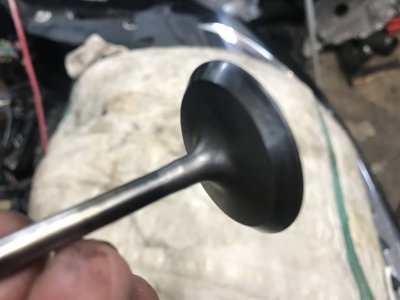
Try not to scrape or pick at the valves. Use something non abrasive like crc intake turbo cleaner directly or walnut blast. Goes for all valves especially if they are nitride or similar coated. Not sure if they are coated or not, i had one out and it looked factory coatedI just get in there with picks and scrapers and brake clean and vacuum on closed valves.
I do what I do. I'm cheap not paying for walnut and only do all **** on my junk. lolTry not to scrape or pick at the valves. Use something non abrasive like crc intake turbo cleaner directly or walnut blast. Goes for all valves especially if they are nitride or similar coated. Not sure if they are coated or not, i had one out and it looked factory coated
If you did anything to or near the valve seat area, remember to lap it back in to the head. Just a friendly reminder, it would s uck to have to tear it back apart for a compression leakI do what I do. I'm cheap not paying for walnut and only do all **** on my junk. lol
Yep never hit seats. Car went 11.9 couple weeks ago so she still huffing along.If you did anything to or near the valve seat area, remember to lap it back in to the head. Just a friendly reminder, it would s uck to have to tear it back apart for a compression leak
don’t need to be an expert to know .011” is too tightThey're probably thinking they know a lot more about DI engines than can be learned by googling a generic ring gap chart. That being said, if you're planning on running more power than stock then obviously widening the gap some is a good idea
don’t need to be an expert to know .011” is too tight
education cost money.Its turbocharged, when you build a turboed engine you have a different graph to go by as you are adding compression and still need to control a certain amount of leak. Gaps are very tight on turbo engines with these special ring materials, ive ran gaps down to 5-6 thou on a turbo build above 15psi. Normal rings you want to open up the gap with added pressures, not these.
Its how an ecoboost cop car can be started in the dead cold of winter with the cop slamming it to 100mph on a cold engine with cold oil and the engine be fine, everytime. They dont have time to wait for it to warm up
I feel sorry for your engine. Reading your process since the beginning, you should of just let a real expert fix your engine right
neither of you know anything about me lol shut upeducation cost money.
Its turbocharged, when you build a turboed engine you have a different graph to go by as you are adding compression and still need to control a certain amount of leak. Gaps are very tight on turbo engines with these special ring materials, ive ran gaps down to 5-6 thou on a turbo build above 15psi. Normal rings you want to open up the gap with added pressures, not these.
Its how an ecoboost cop car can be started in the dead cold of winter with the cop slamming it to 100mph on a cold engine with cold oil and the engine be fine, everytime. They dont have time to wait for it to warm up
I feel sorry for your engine. Reading your process since the beginning, you should of just let a real expert fix your engine right
I mean, Ford has multistory buildings (plural) filled solely with experts focused on drivetrain development, and probably billions worth of R&D testing resources. No offense, but you're an inexperienced kid probably using a feeler gauge for the first time. I'd love to hear the technical explanation of how you "know" better than they what the right ring gap is for their engine. don’t need to be an expert to know .011” is too tight

I agree. This looks like a LSPI event. Crappy fuel, tune, hot weather, 11 year old motor = smoked piston. It happens.I mean, Ford has multistory buildings (plural) filled solely with experts focused on drivetrain development, and probably billions worth of R&D testing resources. No offense, but you're an inexperienced kid probably using a feeler gauge for the first time. I'd love to hear the technical explanation of how you "know" better than they what the right ring gap is for their engine.
I have news for you- your damage, based on the evidence presented, has absolutely nothing to do with ring gap. Most likely it was caused by knock or low speed pre-ignition, a well-documented problem with all direct injection engines that either breaks your piston or snaps your connecting rod and punches a vent hole in the block. Insufficient gap on the compression ring causes tremendous outward force on the cylinder wall, resulting in heavy scraping of the walls. In worst cases it pushes so hard as to seize in the bore, at which point the whole top of the piston gets ripped off. I'd like to refer you to pages 36-39 of this document: https://www.memoparts.com/img/cms/Documents/Piston%20Failue.pdf
@shoblock with your experience and knowledge with warranty engine teardowns, how many were found to be due to insufficient ring gap?
just because it’s a ford doesn’t mean everything was done correctly? again, .011” is too tight. i always forget this is a car enthusiast, not a mechanics forum. and yes i’m a kid, who’s more qualified to use feeler gauges than most of this sub including you.I mean, Ford has multistory buildings (plural) filled solely with experts focused on drivetrain development, and probably billions worth of R&D testing resources. No offense, but you're an inexperienced kid probably using a feeler gauge for the first time. I'd love to hear the technical explanation of how you "know" better than they what the right ring gap is for their engine.
I have news for you- your damage, based on the evidence presented, has absolutely nothing to do with ring gap. Most likely it was caused by knock or low speed pre-ignition, a well-documented problem with all direct injection engines that either breaks your piston or snaps your connecting rod and punches a vent hole in the block. Insufficient gap on the compression ring causes tremendous outward force on the cylinder wall, resulting in heavy scraping of the walls. In worst cases it pushes so hard as to seize in the bore, at which point the whole top of the piston gets ripped off. I'd like to refer you to pages 36-39 of this document: https://www.memoparts.com/img/cms/Documents/Piston%20Failue.pdf
@shoblock with your experience and knowledge with warranty engine teardowns, how many were found to be due to insufficient ring gap?

First, I echo what everyone else has said, when you have billions of dollars in R&D yearly and over 100 years of research, you will begin to compare to Ford's knowledge. Second, your spec is wrong. (Top 0.0067-0.0106 in, Bottom 0.0118-0.0216 in, Oil 0.0059-0.0177 in) Third, all of your rings were already gapped too wide. Fourth, if you are going to just throw money away by going against all the research I would offer the solution of either A) throwing it into one of our PayPal accounts (that I am sure would gladly be provided) or B) not posting about how no one else knows what they are talking about and how you know it all. Obviously, if you know it all, there is no reason for the posts because no one can help you.wow, i just checked my piston ring end gaps. seized (upper) ring is .011”, lower is .020”. Spec is .0059” - .009”. Spec is way too tight, .011” is too tight. What is ford thinking? I believe .0035” x 3.64” (bore) = minimum gap of .0127”. i’m tempted to pull my other pistons just to adjust.
It was not intended to be a put down. I will give you an example: I have a pile of used 2 s tr oke pistons in my tool box, and I learned how to tune and rebuild 2 s tr oke motors on my own. Thus the pile of money in pistons are the "cost of education"neither of you know anything about me lol shut up
“all of your rings were gapped too wide” yes too wide for spec, but spec is again too tight.First, I echo what everyone else has said, when you have billions of dollars in R&D yearly and over 100 years of research, you will begin to compare to Ford's knowledge. Second, your spec is wrong. (Top 0.0067-0.0106 in, Bottom 0.0118-0.0216 in, Oil 0.0059-0.0177 in) Third, all of your rings were already gapped too wide. Fourth, if you are going to just throw money away by going against all the research I would offer the solution of either A) throwing it into one of our PayPal accounts (that I am sure would gladly be provided) or B) not posting about how no one else knows what they are talking about and how you know it all. Obviously, if you know it all, there is no reason for the posts because no one can help you.