I have been working through a complex set of tuning challenges on the 2010–2012 EcoBoost SHO platform. There has been a significant amount of misinformation circulating regarding the capabilities of this OS, particularly concerning fuel system scaling and hardware management. To clear the air and ensure others on the platform have access to accurate information, I want to present a technical audit of my findings based on actual, verifiable data.
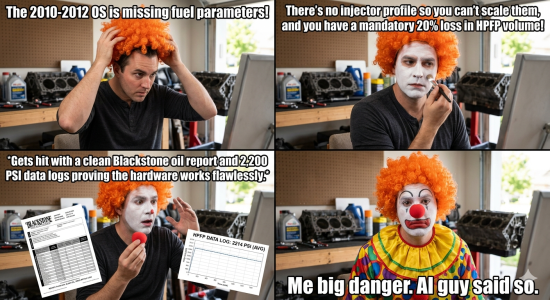
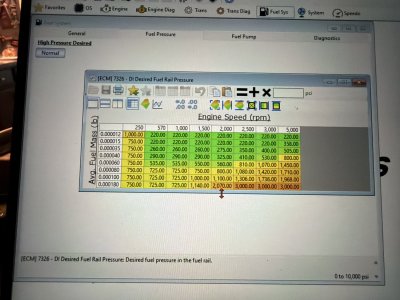
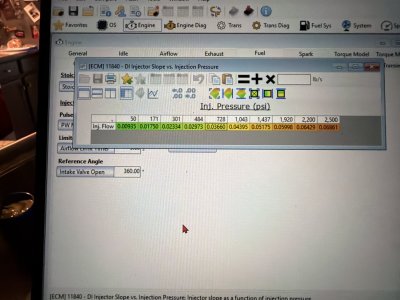
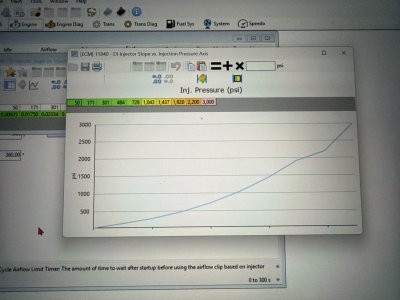
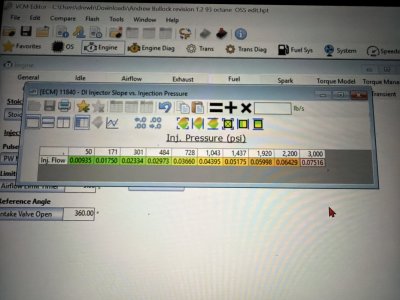
A recent video produced by SleeperSolutions claimed that the 2010–2012 OS is "hardware limited" and essentially un-tunable for aftermarket fuel system upgrades because it lacks specific "injector profiles" and "HPFP parameters" found in newer operating systems. The presenter asserted that because these specific parameters are not visible in his editor, they must not be adjustable, further claiming that this results in a "20% loss" of HPFP volume.
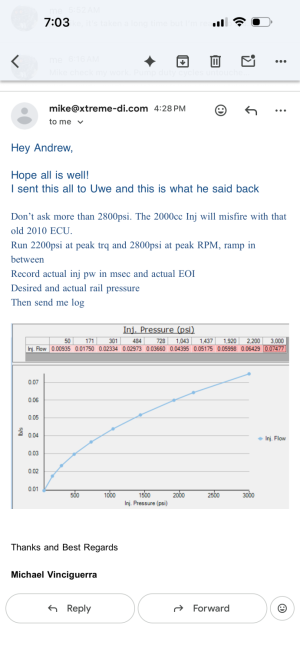
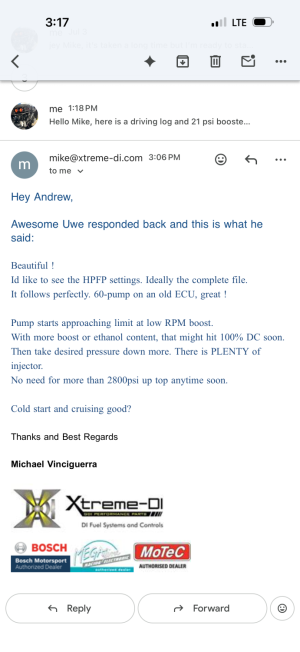
The empirical data directly refutes these claims. If we look at the live logs from my R7 and R8 sessions, we can see the fuel rail pressure climbing steadily and maintaining over 2,200 psi under wide-open throttle conditions.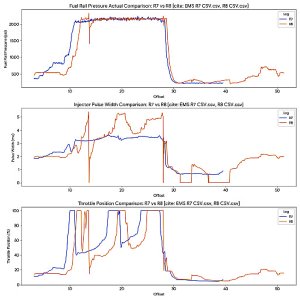 If there were a 20% loss in volume due to unscaled parameters, the system would be physically unable to sustain this pressure. These logs prove the fuel system is stable, high-performing, and fully under PCM control, regardless of the parameters visible in the standard GUI.
I also want to point to the most objective indicator of fuel system health: oil analysis.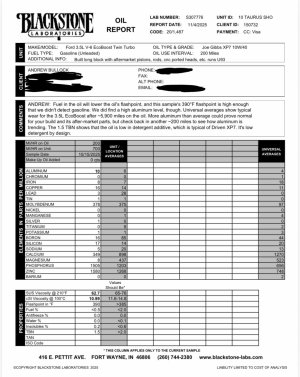
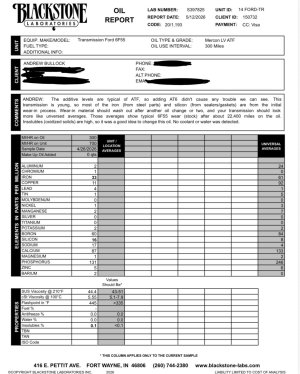 I have included my oil reports from October 2025 and April 2026 for comparison. Despite a period of heavy electrical diagnostics and extensive, excessive idling, the April 2026 analysis shows no abnormal fuel dilution. Fuel contamination is the hallmark of poor injector scaling or inadequate fuel system control. The fact that these reports show no significant fuel in the oil confirms that my XDI60 HPFP and XDI2000cc injectors are being managed with precision. Fueling is not a bottleneck, and it is not a concern for my calibration team.
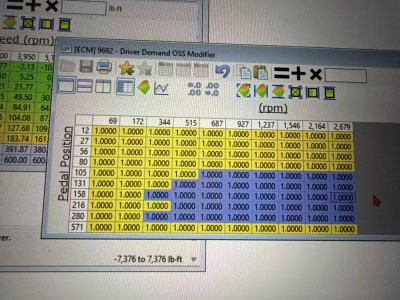
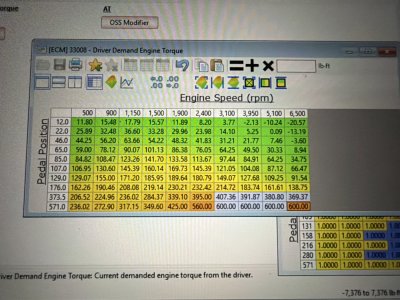
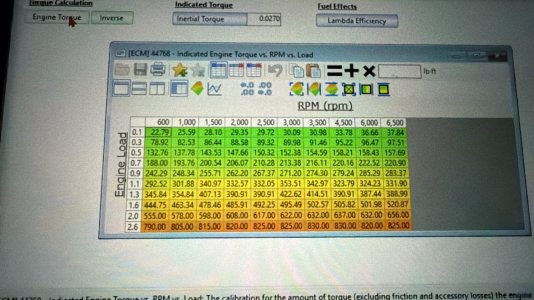
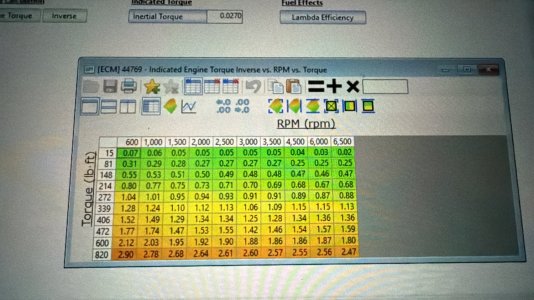
The performance "dips" we previously observed were not caused by the fuel system; they were traced to Electronic Throttle Control (ETC) intervention enforced by an internal torque-calculation ceiling. We have successfully worked with HP Tuners engineering to expose previously hidden definitions, such as the Brake Torque Limit (ID 3049), which was the actual cause of these interventions. The fact that we arrived at HP Tuners to solve these specific torque issues, without needing to ask for "missing" fuel definitions—proves that those definitions are already present and functioning as intended for this hardware.
It is a fundamental error to judge the 2010–2012 OS through the lens of newer 2013+ definition standards. True tuning expertise is measured by results on the specific OS being modified, supported by logs, and verified by physical engine health data like oil analysis. The insistence that this platform is "broken" or "un-tunable" regarding fueling, despite contradictory evidence from lab reports and live logs—indicates a significant gap in platform-specific knowledge.
When a tuner prioritizes speculative theories based on an incomplete understanding of available table architecture while ignoring empirical, log-based evidence, it creates a high-risk environment for the engine's longevity. I believe the methodology currently being advocated for this platform demonstrates an insufficient understanding of how to properly access and utilize the existing table architecture.
Given that this lack of understanding likely permeates his approach even on his preferred 2013+ platform, he is demonstrably not a qualified tuner for the 2010–2012 SHO. SLEEPERSolutions should not be tuning these cars, nor should he be speaking with any authority on their capabilities.
My recommendation to the community is clear: avoid engaging with this individual for any tuning needs, as doing so places your engine at unnecessary and preventable risk.
Engage at your own risk.
A recent video produced by SleeperSolutions claimed that the 2010–2012 OS is "hardware limited" and essentially un-tunable for aftermarket fuel system upgrades because it lacks specific "injector profiles" and "HPFP parameters" found in newer operating systems. The presenter asserted that because these specific parameters are not visible in his editor, they must not be adjustable, further claiming that this results in a "20% loss" of HPFP volume.
The empirical data directly refutes these claims. If we look at the live logs from my R7 and R8 sessions, we can see the fuel rail pressure climbing steadily and maintaining over 2,200 psi under wide-open throttle conditions.
If there were a 20% loss in volume due to unscaled parameters, the system would be physically unable to sustain this pressure. These logs prove the fuel system is stable, high-performing, and fully under PCM control, regardless of the parameters visible in the standard GUI.I also want to point to the most objective indicator of fuel system health: oil analysis.
I have included my oil reports from October 2025 and April 2026 for comparison. Despite a period of heavy electrical diagnostics and extensive, excessive idling, the April 2026 analysis shows no abnormal fuel dilution. Fuel contamination is the hallmark of poor injector scaling or inadequate fuel system control. The fact that these reports show no significant fuel in the oil confirms that my XDI60 HPFP and XDI2000cc injectors are being managed with precision. Fueling is not a bottleneck, and it is not a concern for my calibration team. The performance "dips" we previously observed were not caused by the fuel system; they were traced to Electronic Throttle Control (ETC) intervention enforced by an internal torque-calculation ceiling. We have successfully worked with HP Tuners engineering to expose previously hidden definitions, such as the Brake Torque Limit (ID 3049), which was the actual cause of these interventions. The fact that we arrived at HP Tuners to solve these specific torque issues, without needing to ask for "missing" fuel definitions—proves that those definitions are already present and functioning as intended for this hardware.
It is a fundamental error to judge the 2010–2012 OS through the lens of newer 2013+ definition standards. True tuning expertise is measured by results on the specific OS being modified, supported by logs, and verified by physical engine health data like oil analysis. The insistence that this platform is "broken" or "un-tunable" regarding fueling, despite contradictory evidence from lab reports and live logs—indicates a significant gap in platform-specific knowledge.
When a tuner prioritizes speculative theories based on an incomplete understanding of available table architecture while ignoring empirical, log-based evidence, it creates a high-risk environment for the engine's longevity. I believe the methodology currently being advocated for this platform demonstrates an insufficient understanding of how to properly access and utilize the existing table architecture.
Given that this lack of understanding likely permeates his approach even on his preferred 2013+ platform, he is demonstrably not a qualified tuner for the 2010–2012 SHO. SLEEPERSolutions should not be tuning these cars, nor should he be speaking with any authority on their capabilities.
My recommendation to the community is clear: avoid engaging with this individual for any tuning needs, as doing so places your engine at unnecessary and preventable risk.
Engage at your own risk.