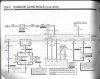
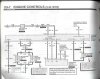
The EATC is what controls the AC. It has an in-car temperature sensor, ambient temperature sensor, sunload sensor to inform it. Its output is to the AC clutch cycling switch.
The 1995 EATC system response grid states "A/C clutch on if outside temperature is above 50F" for all modes except vent and off. It is unclear if the EATC enforces this, or if they are just talking about how the pressure switch operates. Jumpering would have no effect if the EATC is not asking for AC.
Also for the EATC, the "A/C air temperature control door response" "varies according to sensor temperatures and customer temperature selection". The EATC decides if you get air that has passed through the evaporator. The AC door is an electric motor with a position sensor.
One could monitor the pressure switch connector for +12V (pink wire side) to see if the EATC is engaging AC.
The pressure switch only turns on with adequate static pressure in the resting system, 45 PSI or greater. In the summer, the system will be above 45PSI, and compressor thus runs until the system drops below 25PSI on the low side. There is less refrigerant vapor pressure with cold weather.
The service manual for 1993/R12 states "Ambient temperatures below approximately 45-50 during cold weather seasons will prevent the pressure switch contacts from closing". Also "The switch will close when pressure is 40-47PSI on R12 and 39-47.5 on R134a".
You can unplug the pressure switch on top of the condenser and test the switch with a multimeter to see if it conducts electricity, just sitting there on a 50 degree day. Engine compartment or passenger compartment heat may add a few degrees to the refrigerant after a while. Jumpering of course bypasses the system pressure.
See that the "A/C ON" +12V signal is getting all the way to the CCRM, it is pin 21 on the connector (pink/light blue wire).
Finally, the CCRM used for running the compressor. "If an A/C function is chosen, the A/C clutch field coil will energize only when the engine cooling fan is operating". This might mean that it can detect a failed fan motor, of which there are two. Also, these will cause PCM/CCRM to disable A/C: "wide open throttle, too high or low RPM, engine cranking, high coolant temperature".
There's really not much to fault or direction to go, because ambient temperature is unpredictable. You can supply battery 12V/ground directly to the AC clutch coil if you have a cutoff pigtail to plug in, or attach insulated female spade connectors to the two pins inside the compressor receptacle.
I also have a similar symptom with working summer AC that doesn't do much winter defrosting in the small temperature range where it is expected to operate. One year old pressure switch. I wonder if it is just R134a being finicky in its pressure/temperature relationship in the retrofit, and if another half-can of R134a would boost pressure, but I haven't cared to investigate.