That's where you start moving out of my area of expertise. Yeah you can, but I don't have the first clue as to proper prep work, blending, etc.
Here's an edit I was doing to my earlier post, but I took too long and you posted already

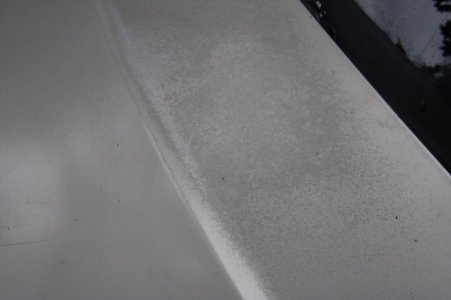
Dealing with wet-sanding and compounds with high-speed polishers can be a very dicey, as you can very easily take the paint right off your car, especially if it's already damaged and thin like it looks in your pic. Sanding/polishing isn't a terribly difficult skill to learn, but patience and some experience are required to make it look really good without doing a bunch more damage. Fortunately, you already have damaged paint so it's not like you can make it look much worse

Ingredients:
1 High-speed polisher.
www.harborfreight.com carries some good, inexpensive polishers.
1 wool compound "cutting" pad. Meguairs makes some good pads and they can be picked up at just about any auto parts store
1 black foam "finishing pad". Once again Meguairs can be your answer.
1 bottle medium compound. Meguairs FTW once again, they make a complete line of "professional" grade products in tan bottles.
1 bottle machine glaze. You'll use this after you've used the compound. Once again, Meguairs offers a good glaze.
1000 grit wet sandpaper. Yeah, it's pretty aggressive, but with clearcoat damage like you have you'd spend an hour sanding that crap. 1000 grit offers a good combination of bite versus scratch, and the medium grade compound will take all the scratches back out so you don't have to go through steps (1000 grit sanding, 1500 grit, etc.)
Start with the sanding. Use plenty of water and constantly wipe down your area and check to make sure you're not removing paint. A white milky liquid means you're removing clearcoat. If you start to see any color in it you're into the base coat so STOP.
Once you have the cruddy clearcoat out, throw the wool cutting pad on your polisher and start with the compound. A little compound goes a long way, so don't get carried away with product. Also, work small areas at a time, a foot and a half square is a good rule of thumb. Keep the speed on the wheel in the medium-medium/slow range. Just work slowing until it all starts to look reasonably shiny and uniform. It won't glow with the compound, that's what the glaze is for. The compound will leave a glossy but hazy look. Once you're done with the compound, wipe the area down good with a rag to remove any left over compound, the switch to your foam polish pad and do the same thing, only with the glaze. Keep the speed the same, but you won't have to worry as much about burning off the paint as the glaze is non-abrasive. You'll still want to be VERY careful around rubber/plastic trim, as the foam pad can get hot in a hurry and you'll melt rubber trim in less than a second.
Once you're done with that and you have a shiny car, wash/wax as normal!
If it sounds pretty easy, it isn't. Give yourself a day and go slow until you get the hang of the polisher. However, once you get the hang of that polisher, people may start calling you a miracle worker: