The Low
[ OIL
] pressure light illuminates when pressure at the sensor drops below 6 psi,
if the Oil Pressure Sender is working correctly.
There is roughly a 7psi increase in oil pressure for every 1000 rpm increase in engine rpm. Conversely, oil pressure decreases as rpm decreases, and most Gen I/II SHOs will display a steady or flickering
[ OIL
] light when the rpm drops to 500-to-600 rpm due to simple engine wear.
If you're allowing the rpms to drop below 800rpm while letting the clutch out, that's the problem as
TopGunnYFZ indicated above.
A "bad" or weak oil pump is not likely. A malfunctioning Oil Pressure Sender is much more likely.
Do you know what kind of oil they use during the oil change? Using the wrong weight oil (eg. 5W-20) could suddenly cause you to get a Low
[ OIL
] pressure light. Conversely, using a heavier weight oil can elevate oil pressure, which will prevent the flickering
[ OIL
] light.
I'm going to play the contrarian here.
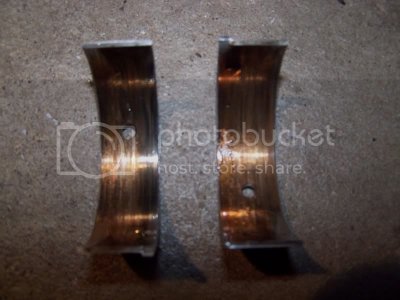
First, rod bearing damage like that shown in the image posted by
1993MTXSHO does not occur because seeing a flickering Low
[ OIL
] pressure light once or even a few times. It is the result of poor maintenance practices - not changing the oil at regular intervals, running low on oil repeatedly or for extended periods, running the wrong weight oil, repeated burnouts and beating-the-shit out the engine, etc.
Rattle does *not* always mean a rod bearing knock. There are a number of other underhood problems that can produce very similar sounding noises, especially to someone that's not familiar with what a rod-knock sounds like. And even if it were a rod bearing knock, I know several SHO owners who have driven their SHO for months, beating the **** out of them before the engine let go. Ask
SuperHO and
St Louis SHO how long and how hard they drove their 3.0s before they blew.
First, if you're allowing the rpms to drop below idle-level (800 rpm) as you engage the clutch - stop it, use a little more pedal.
Second, put a mechanical oil pressure gauge on the engine and see what your oil pressure actually is.
Third, consider changing the Oil Pressure Sender - it's a single-wire sensor, inexpensive, and simple to change.
Fourth, I agree with
Troywakeling - change your oil and filter to what ever weight and brand you were using before the last oil change. Also consider going to the next heavier weight in the interim.
Wanna hear a scary story why you should always do your own oil changes?
Several years ago, a female friend came into an O'Reilly's with that look on her face. I asked where her car was, and she said the oil light had come on and the Jiffy **** station told her the motor was bad (even though they had driven it in to service with no light on).
So I walk back-over with her and the guy that serviced her car immediately gets defensive. "I already checked the drain plug and the oil filter is on there right." Okay - I replied fine and ask that they push the car back out. I check the drain plug and filter, look for leaks, then check the level - all fine.
Anyone want to guess what was wrong?