

Hey @Jordan_R never looked close enough - you using regular Ford radiator hoses - or did you make your own silicone - or buy them pre formed from a known vendor - curious.

Disclaimer: Links on this page pointing to Amazon, eBay and other sites may include affiliate code. If you click them and make a purchase, we may earn a small commission.

Did you mean me? OEM hoses and the UPR dual valve catch can hoses are visibleHey @Jordan_R never looked close enough - you using regular Ford radiator hoses - or did you make your own silicone - or buy them pre formed from a known vendor - curious.
Radiator specificallyDid you mean me? OEM hoses and the UPR dual valve catch can hoses are visible
Yeah OEM radiator and hosesRadiator specifically
Just was wondering thanks!Yeah OEM radiator and hoses
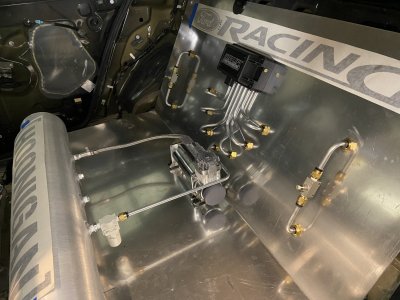
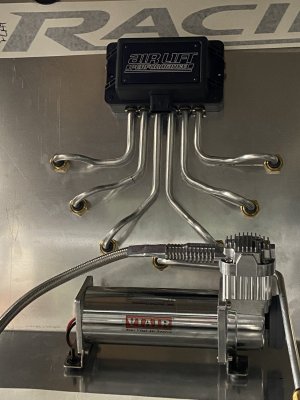
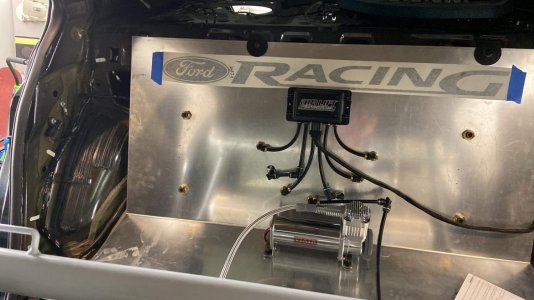
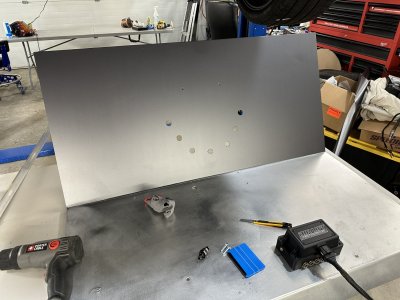
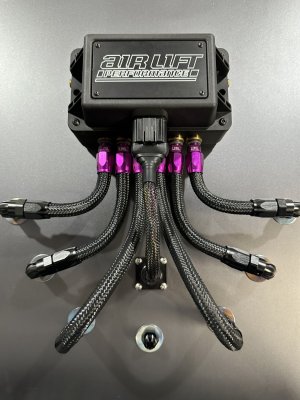
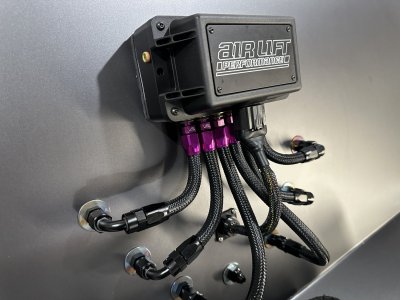
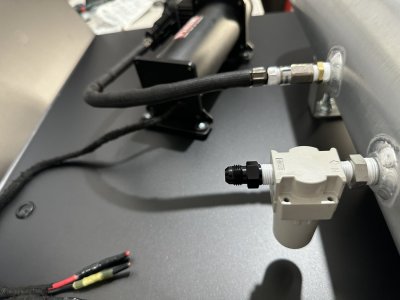

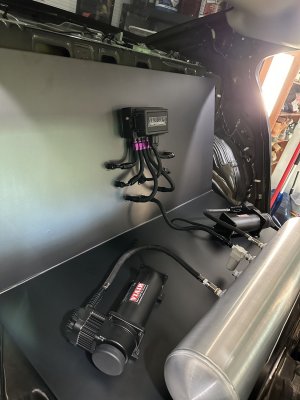
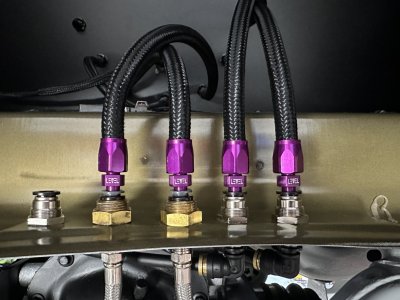
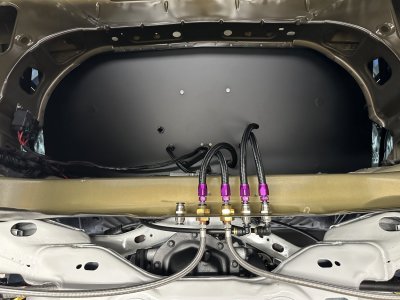
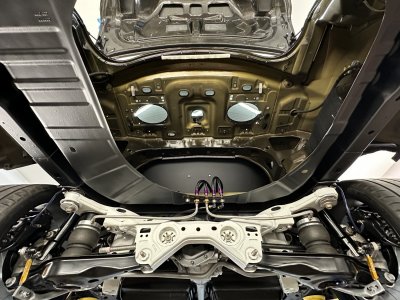
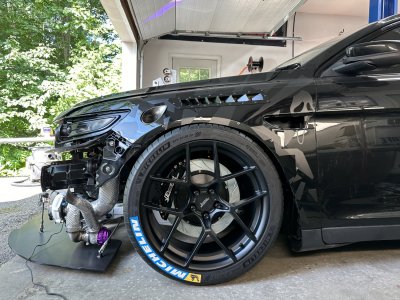
Thank you for explaining to those of us that haven't attempted to do this. It looks like an art project, quite beautiful. Glad you worked out the issues and taught us all through your trial and error.push to connect

Well, there’s always the XDI60 that Xtreme-DI has in their possession since April 23…..just to change the inlet to 0 degree and well that was done within the first couple weeks, been sitting waiting for them to flow test it.It's been nearly a week
ideally want it lower so it kind of has some gravity fed to the sump, then pumped out and up …but since the whole thing will be getting sucked out with the pump, maybe it’s ok to leave it up high, and not sure it matters too much if one turbo oil drain hose is longer than the other…less than ideal but with a scavenger pump…does it matter?
me and my bookie are looking forward to it. lots of popkorn and peanuts sacrificed to this project. we need the dough to help us melt all the weight we have put on.But no matter what, it’ll be done soon, this season! 100%
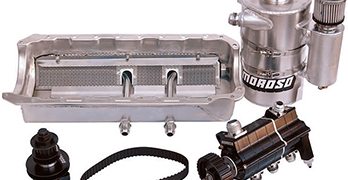
That’s a great article and man, a dry sump oil system is so RACE CAR!! That would be awesome!I am far from the person to ask, however I can Google too. I searched a few racing build sites, and well here is this sites explanation - see link. The sad part with no room, near the bottom of the oil pan.
How to Build Racing Engines: Sumps and Oiling
Lubrication is the critical lifeblood of every racing engine. Without it, the engine’s lifespan is measured in seconds. The oiling system is designed to deliver a constant supply of clean, filtered oil to properly lubricate all of the engine’s moving parts. This includes the engine bearings...www.musclecardiy.com

That looks like a great place for your custom mount, based on your earlier pictures I was wondering where the f you would find space. Thanks for the education and product you are using. That looks like a great location near the turbos.That’s a great article and man, a dry sump oil system is so RACE CAR!! That would be awesome!
I’m not talking about the same type of system. For the turbos in a remote mount configuration, in my case in the front of the engine and below the oil pan…well barely below, I need to scavenge the oil return and need to use a pump. But it’s not that simple. In order to have a system that doesn’t lead to excessive oil consumption of the turbos you need to run the oil return into a sump tank, with filter.
After I made my post I sent an email to Turbowerx to ask about the location of my oil return dry sump, if it’s better to have it low near the turbos which bc of space means it would be off center, with the rear turbo (passenger front) having about 1’ of hose to the sump and the front turbo (driver front) having 3’ of hose to the sump, or if it would be better to have it more center with equal length hoses but at the cost of having it mounted well above the Turbos…using the scavenger pump…which would be better or does none of it matter bc of the power of the pump?
Let me divulge a little. The pump is Turbowerx “base-model” pump…but get this, it’s designed to scavenge hot turbocharger drain oil from anywhere to anywhere in automotive applications. Time-tested, proven reliability over years, and with its 1.75GPM (105GPH) scavenging capacity, it is powerful enough to scavenge oil from most twin turbo setups. It will self-prime/draw from over 8 vertical feet, and pump the oil as high as 20 vertical feet! Whether the application moves 1 oz of oil a minute or up to 1.75 gallons a minute, 'under-flow' applications are no problem. In fact, the TurboWerx pump may be run dry indefinitely. May be operated up to 60PSI pressure for pressure applications. It’s one **** of a pump! So it might not matter too much even though it’s less than ideal, that one oil drain hose is 3 times as long or if it was mounted above the turbos.
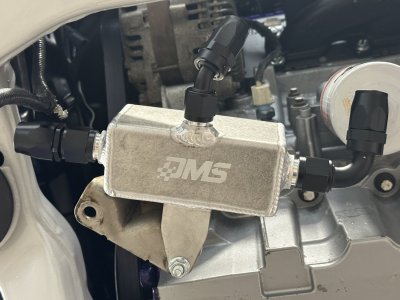
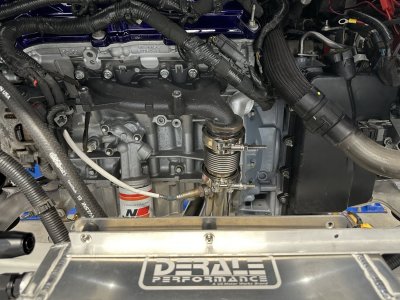
This is where I mocked it up, under the alternator. View attachment 91192View attachment 91193
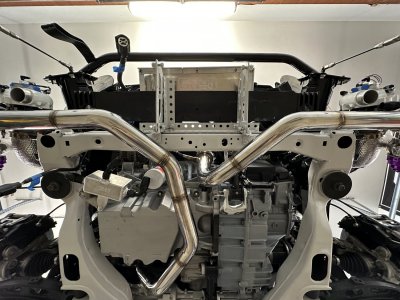
It’s made for a twin turbo setup and comes out a single -8AN return with an inline 100 micron filter to the scavenger pump, back to the rear OEM turbo drain. I can’t mount it under the radiator inbetween the chassis splitter mounts, and I could do the driver side but it would be the same orientation, one side longer than the other. View attachment 91194View attachment 91195
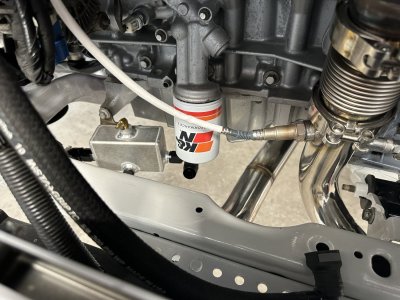
I could mount it on the subframe closer to the center but not by much. As is I checked the oil filter, I can get it off and back on with the fitting directly below it. Or I could make some bracket to use the bolts that go on top of the exhaust manifold but that would put it higher but more center…but also hotter.
View attachment 91197
1) will different length oil drains work just fine with the suction of this powerful pump
2) or is it more important the oil drains are the same length, more so than the height?
3) the different length oil drain hoses are insignificant and so is the height, the pump will easily pump the oil out of the turbos, into the sump and back into the block. Fluid flow won’t be compromised bc of an extra 2’ on one side.
I’m not concerned with the pump whatsoever. Just where to mount the sump. I’ve got over 1k into AN fittings and hoses, and it can take me up to 3-4 hours to make 6-8 hoses…learning as I go lol. I don’t want to waste anything so I need to decide on the location of the turbo oil sump and it’s basically done…feed, return, pump. Until then it’s on hold.
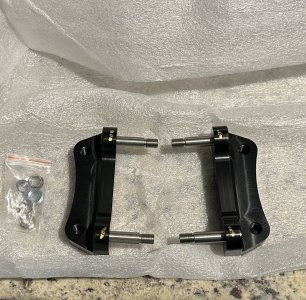
Today I got the new custom Rotora brackets for their forged 2 piston calipers I bought for my Voodoo13 hydraulic handbrake! View attachment 91198
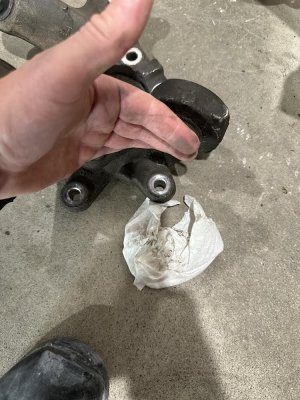
These are based directly off the same plane as the OEM knuckle caliper brackets. And would require 4 OEM caliper bolts. The idea is, to help make this setup easier to fabricate, will be to cut the caliper brackets off the old set of knuckles I haveView attachment 91199
Then weld them on to the new knuckles at the same plane as the originals, then I can use OEM caliper bolts to bolt these new brackets to the knuckle and add the 2 piston calipers….View attachment 91200
Rotora was kind enough to help out and make these brackets!

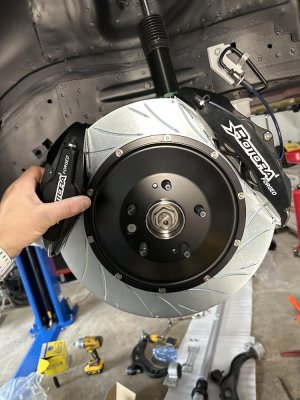
looking good. The fit and finish of the Rotora brakes and hardware is outstanding. No trimming needed of the rear knuckles and all hardware is supplied except you reuse your caliper bolts. And their line fittings fit right up to the OEM fittings. View attachment 90951
The calipers are thicker so if you’re on OEM wheels you will likely need a spacer. Probably fine with aftermarket wheels. Can just put one wheel on gently, maybe put some painters tape on the side of the caliper….if your spokes of your wheel touch…then yeah, if they don’t then no. The Rotora kit is plug and play. Everything you need to install everything for the brakes is there. But if your OEM wheels touch then might need to get a 5mm spacer. Likely need spacers.802SHO:
I also bought the Rotora calipers, front and rears, for my 2019 SHO PP. I haven't installed them yet because I thought we needed some kind of "spacer" and didn't know which one(s) were required. Is the Rotora kit as-delivered, plug-and play with my 2019 SHO; i.e., no spacers required? Thanks!


