


You are using an out of date browser. It may not display this or other websites correctly.
You should upgrade or use an alternative browser.
You should upgrade or use an alternative browser.
X35Design SHO Ecoboost Intake Manifold Spacer
- Thread starter Autox4fun
- Start date
Disclaimer: Links on this page pointing to Amazon, eBay and other sites may include affiliate code. If you click them and make a purchase, we may earn a small commission.

Iqoniq
SHO Member


Ecoboost_xsport
SHO Member
So I'm trying to wrap my brain around what this product will accomplish...I know phenolic spacers, in general, typically claim:
1) Lower intake temp by interrupting metal to metal contact
2) increase plenum volume
But not sure how effective it would really be with either of these. Air is moving so fast through the IM, I'm curious how much "heatsoak" it gets from the metal contact. The heat generated by compression of the turbos is what has the most effect on IATs. Even at idle, I'm not sure it effects it enough.
And as far as volume is concerned, I dont have any data on this, but my common-sense-o-meter just says this is a non issue considering the thickness of the spacer not being enough to make a significant difference.
Can anyone help me here? I could very well be wrong. I am not knocking the product, but I am legitimately uneducated on it and the benefits it may afford to the 3.5L.
Last edited:
Autox4fun
SHO Member
So far I’ve notice an offset of 90 degrees on avg from coolant temps while towing a 2k loaded trailer (Ford Flex) at 75 mph
So far I’m happy with the outcome.
I’ll get some logs soon when I’m not using the car like a truck.
So far I’m happy with the outcome.
I’ll get some logs soon when I’m not using the car like a truck.
Ecoboost_xsport
SHO Member
90 degrees? Wow.... So lower coolant temp is the benefit we will likely see greatest with this?So far I’ve notice an offset of 90 degrees on avg from coolant temps while towing a 2k loaded trailer (Ford Flex) at 75 mph
So far I’m happy with the outcome.
I’ll get some logs soon when I’m not using the car like a truck.

High on Ethanol
Just Ain't Care
Hmmm doesn't seem like that would help with power. Can you describe the testing process? Where did you read Temps from? Did you datalog?

So far I’ve notice an offset of 90 degrees on avg from coolant temps while towing a 2k loaded trailer (Ford Flex) at 75 mph
So far I’m happy with the outcome.
I’ll get some logs soon when I’m not using the car like a truck.
What exactly temperature is 90 degrees less with this?
Autox4fun
SHO Member
Hmmm doesn't seem like that would help with power. Can you describe the testing process? Where did you read Temps from? Did you datalog?
My long drive test was driving a load 45 minutes to my camp area
So hills, stop and go traffic, and max speed of 75mph
Real life with a little extra work towing
No logs just watching IAT2 and coolant data via Livewire TS.
High on Ethanol
Just Ain't Care
Need to log IAT and IAT2 and have a previous log before spacers at same conditions to compare. For all we know, nothing has changed.
For example my IAT2 in my truck is usually around 90 to 120, but my coolant is usually around 210 to 220.
so would spacers even make a difference for me?
For example my IAT2 in my truck is usually around 90 to 120, but my coolant is usually around 210 to 220.
so would spacers even make a difference for me?

yaycandy
Aerospace Engineer
Oh yea, saw that or something similar at PRI. Forgot all about it.

skyshadow07
On a mission to get below 4000lbs
So I'm trying to wrap my brain around what this product will accomplish...I know phenolic spacers, in general, typically claim:
1) Lower intake temp by interrupting metal to metal contact
2) increase plenum volume
But not sure how effective it would really be with either of these. Air is moving so fast through the IM, I'm curious how much "heatsoak" it gets from the metal contact. The heat generated by compression of the turbos is what has the most effect on IATs. Even at idle, I'm not sure it effects it enough.
And as far as volume is concerned, I dont have any data on this, but my common-sense-o-meter just says this is a non issue considering the thickness of the spacer not being enough to make a significant difference.
Oh man, this is a difficult one. Aluminum conducts heat VERY well. Think of heat as energy, it moves it better than all but one other natural metal. I know that soaking my intake manifold in ice before a pull at the drags results in lower temps. So I would imagine that goes both ways.
Increasing the plenum volume would increase lower end torque. But how much is the real question.
I feel like someone should take temp readings straight off the manifold for before and after. I also feel like the volume change might not be enough to see on a dyno, but someone should dyno a before and after.
High on Ethanol
Just Ain't Care
Oh man, this is a difficult one. Aluminum conducts heat VERY well. Think of heat as energy, it moves it better than all but one other natural metal. I know that soaking my intake manifold in ice before a pull at the drags results in lower temps. So I would imagine that goes both ways.
Increasing the plenum volume would increase lower end torque. But how much is the real question.
I feel like someone should take temp readings straight off the manifold for before and after. I also feel like the volume change might not be enough to see on a dyno, but someone should dyno a before and after.
IAT2 is a very good indicator of engine air before combustion
Any additional information would be appreciated as far as testing goes.
skyshadow07
On a mission to get below 4000lbs
You guys that run SCT tuners like the IAT2 temp because you can't see CAC_T lol. Torrie (in about 3 words) explained the IAT2 was a calculated temp number with less accuracy than the CAC_T temp output. But I agree the IAT2 is directly on the manifold.
Ecoboost_xsport
SHO Member
Idk, I understand how conductive aluminum is in regards to heat, but the heat the IM is soaking isn't just directly from the metal block underneath. It's surrounded in hot engine bay radiant and convected heat that a phenolic spscer cannot isolate it from. Not to mention, the hot engine coolant passes right through it via the thermostat housing and underneath it in a metal tube (I've had that tube ceramic coated for this very reason) soaking up that heat.Oh man, this is a difficult one. Aluminum conducts heat VERY well. Think of heat as energy, it moves it better than all but one other natural metal. I know that soaking my intake manifold in ice before a pull at the drags results in lower temps. So I would imagine that goes both ways.
Increasing the plenum volume would increase lower end torque. But how much is the real question.
I feel like someone should take temp readings straight off the manifold for before and after. I also feel like the volume change might not be enough to see on a dyno, but someone should dyno a before and after.
I've also done the ice water trick at the track, and unless I'm running literally the instant after I spray it on, it has no effect, the IATs just rises right back within a minute or so, so as I'm approaching the line, it's right back where it was. I just stopped doing that altogether at the track because of that.
And that spacer looks 1/2" in thickness from what I can tell in the photos, and I cant see that making a huge difference in volume, all things considered.
Anyway, I love the idea of this product, I just don't know how effective it can really be. That being said, I've spent more money on less effective things before, so it wouldn't be the last time lol.
High on Ethanol
Just Ain't Care
You guys that run SCT tuners like the IAT2 temp because you can't see CAC_T lol. Torrie (in about 3 words) explained the IAT2 was a calculated temp number with less accuracy than the CAC_T temp output. But I agree the IAT2 is directly on the manifold.
I use hptuners but I try to reference things for old school SCT guys, I know how tough getting the points just right can be.
skyshadow07
On a mission to get below 4000lbs
I've also done the ice water trick at the track, and unless I'm running literally the instant after I spray it on, it has no effect, the IATs just rises right back within a minute or so, so as I'm approaching the line, it's right back where it was. I just stopped doing that altogether at the track because of that.
I put a bag of ice on top of my engine/manifold for about 10min between runs. lol

Sgtmeatsauce1
2013 SHO +pp
I never do anything but lower tire pressure have 1/2 tank 93 and let er rip. I like to see real times id do on a street vs the world. Full trunk of crap etc....

mrhighcaliber
SHO Member
- Joined
- May 31, 2015
- Messages
- 320
- Reaction score
- 672
The spacer is what I've been waiting on to complete my anti heat soak protocol for the intake manifold. Got on the list as soon as I saw this on FB! Been waiting months since I saw a cad drawing of it.
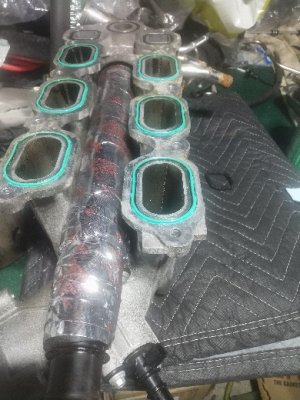
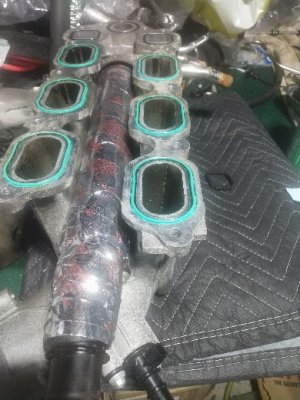
Some 1/2 wall heater/HVAC pipe insulation for 1" pipe, wrapped in foil tape.
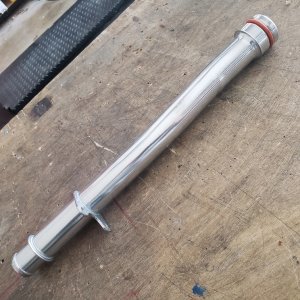
This coolant outlet pipe sees highest coolant temperatures in our engine. Our aluminum intake manifold surrounds this pipe within an inch on all sides.
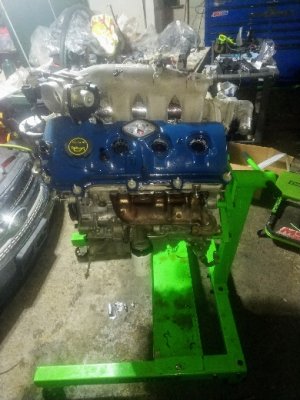
The manifold spacer should reduce heat transfer from the cylinder head. I can't wait to get out all of my tc's and temperature capture equipment to see what the difference is with both of these mods in place.
200°f+ temps radiating off this pipe directly on to our aluminum heatsink of a manifold. At idle, on a warm day, 170°f IAT2 temps aren't uncommon after idling for 5mins or so.
High IAT2 temps definitely effect off the line performance.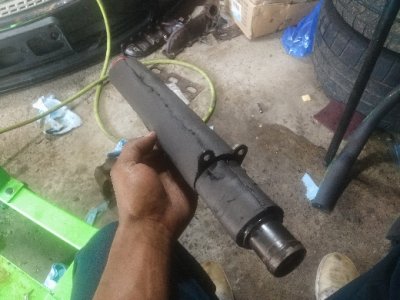
Sent from my PH-1 using Tapatalk
Some 1/2 wall heater/HVAC pipe insulation for 1" pipe, wrapped in foil tape.
This coolant outlet pipe sees highest coolant temperatures in our engine. Our aluminum intake manifold surrounds this pipe within an inch on all sides.
The manifold spacer should reduce heat transfer from the cylinder head. I can't wait to get out all of my tc's and temperature capture equipment to see what the difference is with both of these mods in place.
200°f+ temps radiating off this pipe directly on to our aluminum heatsink of a manifold. At idle, on a warm day, 170°f IAT2 temps aren't uncommon after idling for 5mins or so.
High IAT2 temps definitely effect off the line performance.
Sent from my PH-1 using Tapatalk
Ecoboost_xsport
SHO Member
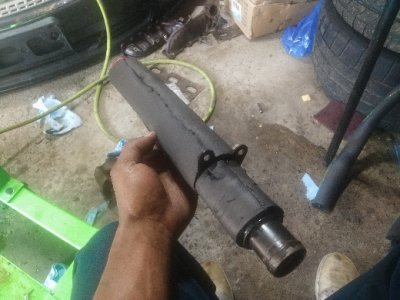
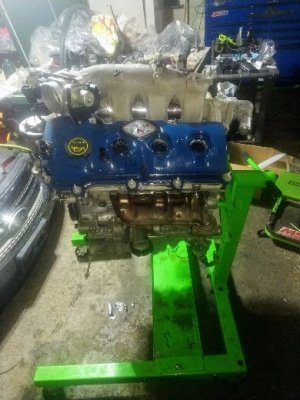
Yeah, I was thinking about doing that as well. I've had mine sent off to Jet Hot to ceramic coat mine.The spacer is what I've been waiting on to complete my anti heat soak protocol for the intake manifold. Got on the list as soon as I saw this on FB! Been waiting months since I saw a cad drawing of it.
Some 1/2 wall heater/HVAC pipe insulation for 1" pipe, wrapped in foil tape.
This coolant outlet pipe sees highest coolant temperatures in our engine. Our aluminum intake manifold surrounds this pipe within an inch on all sides.
The manifold spacer should reduce heat transfer from the cylinder head. I can't wait to get out all of my tc's and temperature capture equipment to see what the difference is with both of these mods in place.
200°f+ temps radiating off this pipe directly on to our aluminum heatsink of a manifold. At idle, on a warm day, 170°f IAT2 temps aren't uncommon after idling for 5mins or so.
High IAT2 temps definitely effect off the line performance.
Sent from my PH-1 using Tapatalk

Jordan_R
Stock Block Ready To Knock...er..Rock
Between runs? Amateur... Shut the hood with it still on there. Wait **** giving away my secrets... LOLI put a bag of ice on top of my engine/manifold for about 10min between runs. lol
Similar threads

- Replies
- 3
- Views
- 498


- Replies
- 11
- Views
- 2K

