It was the battery. Apparently neither I nor the Autozone guy have an idea how to diagnose a battery.
How do I still get 12.5+ V if the battery isn't right?
Disclaimer: Links on this page pointing to Amazon, eBay and other sites may include affiliate code. If you click them and make a purchase, we may earn a small commission.
3 ohms is a decent amount of resistance from the battery to the incoming solenoid post. I would want to see something more like the 0.6 ohms or less. I would expect 0.1 ohms on the typical Fluke meter. Sometimes the point where you check has corrosion and artificially raises the resistance readings, but the wire is fine. Big picture - more resistance, less available voltage at the other end of the wire.3 ohms from the battery post to the solenoid post. 0.6 ohm from the solenoid terminal to the positive terminal on the starter motor.
Measured ~0 from the negative post to the ground screw next to the solenoid. From that same screw to the wire on the stud at the transmission case the testing bounced around. To the starter case it was a little bouncy but was between 0.5 and 2.5 ohms for the most part.
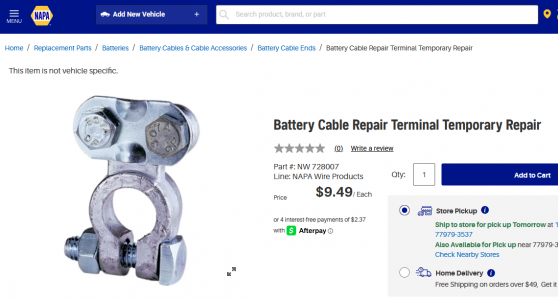
Which, the clamp style?Those terminals are meant to be temporary. I know people install them and forget it. They will always cause problems later on.
That would 100% be better, but I've never seen any mention of the repair terminals being temporary.The one that was sparking. All battery cables should have a crimped eyelet or terminal