Update: Major Progress
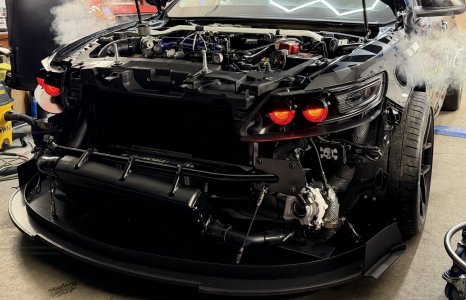
I started by replacing the starter and alternator. Both were original Motorcraft units with 16 years on them, and at this point reliability mattered more than trying to squeeze a little more life out of aging components. While I was in there, I permanently removed a couple of harness branches that were no longer serving any purpose, specifically the A/C motor and secondary O2 harnesses that were tied into the alternator wiring. With those systems long deleted, cleaning that up made the engine bay simpler and eliminated unnecessary dead wiring. The alternator install itself was straightforward, but my custom belt setup with the A/C deleted meant I had to order a new Gates belt and wait a few days rather than fighting the old belt off and back on.
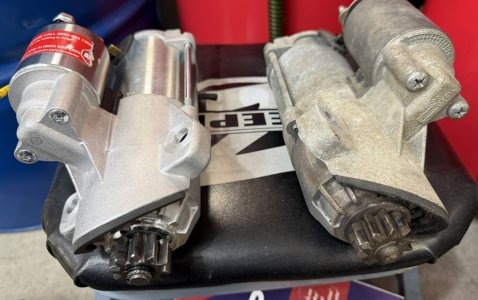
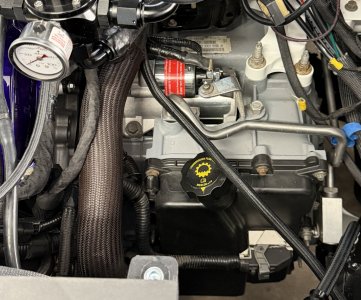
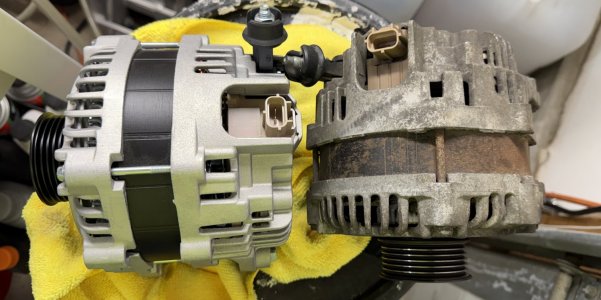

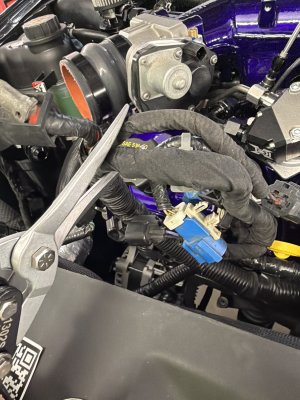
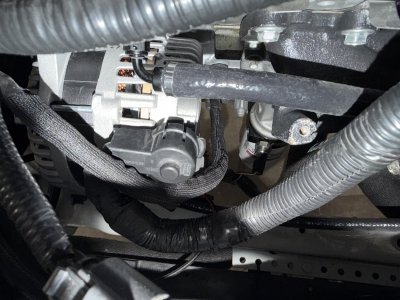
Once everything was bolted up, I didn’t immediately test the alternator or starter on their own. I finished the mechanical work and moved straight toward validating the electrical system as a whole.
Before starting the Rife 300 psi EMP sensor install, I went back to the real problem that had been looming over the car: TCM power loss. I’m not going to lie, diagnosing the BJB and TCM power path is intimidating. It’s one of those areas where guessing or moving too fast can create more problems than it solves. Buying the spare BJB turned out to be the single best decision I could have made here, because it let me slow everything down and fully understand the circuit without touching the car. I could dissect it, trace it, and make mistakes on the bench instead of on the vehicle.
I really started digging into that spare BJB. With it opened up, I was able to clearly trace Fuse 49’s load side out of the BJB and into the harness. That wire is green with a white stripe. While doing that, I identified a second green/white wire leaving the BJB, which belongs to the load side of Relay 52. Relay 52 supplies ignition-switched power to systems required for the car to start and run, which meant I now knew there were two nearly identical green/white circuits serving very different purposes.
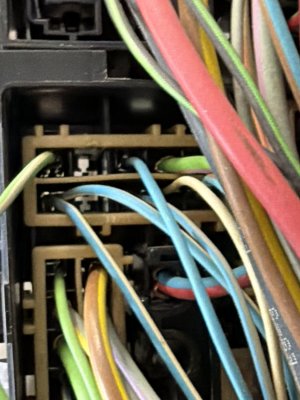
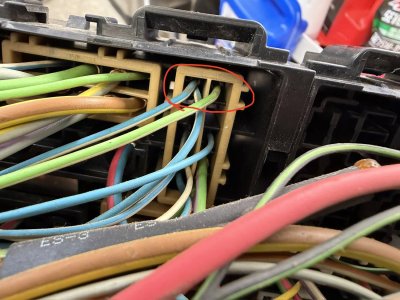
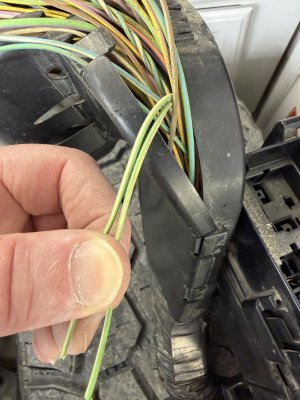
Using the spare BJB, I dissected it in the exact way I planned to open the harness on the car. Same loom location, same wire exposure, same approach. That allowed me to positively identify both green/white circuits without guessing or risking the live harness. One circuit feeds Fuse 49 and ultimately the TCM, the other feeds Relay 52 and has to remain intact for the car to start.

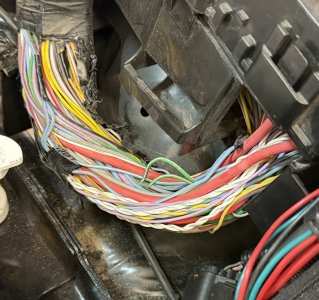
On the car and in the engine bay the wires had way more tension so I removed the loom back to the BJB to find them and expose them. Found them. From here I paused and did something less intimidating.
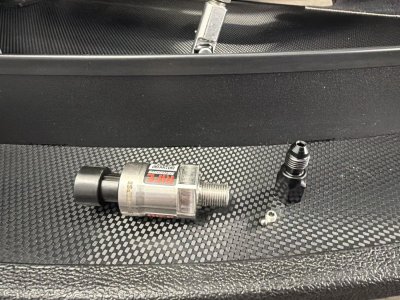
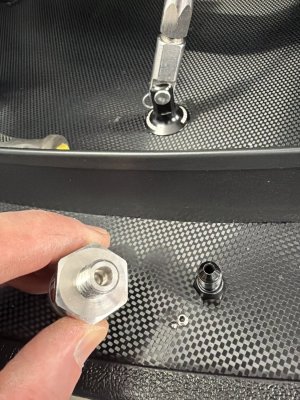
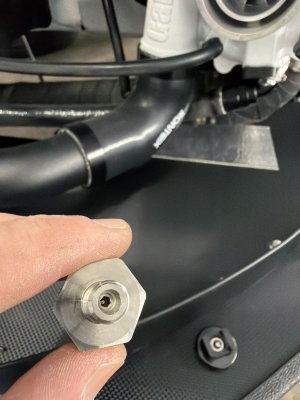
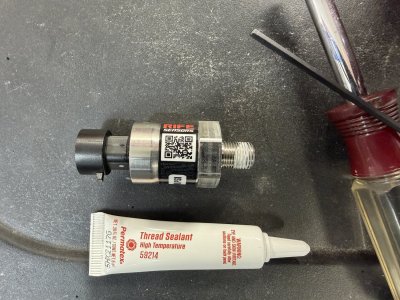
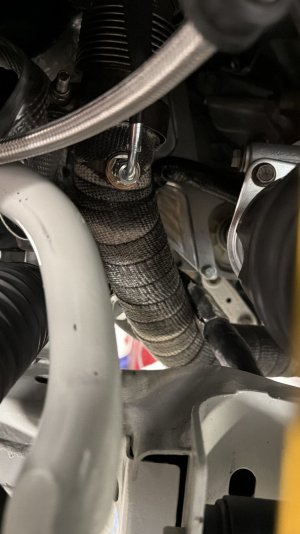
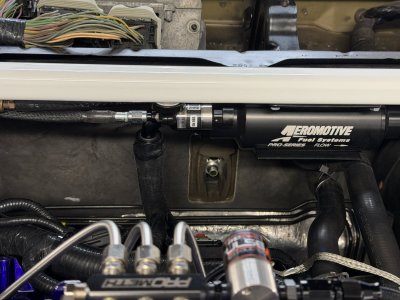
I installed the Rife 300 psi EMP sensor. The mechanical install is complete and mounted cleanly using Zbad1 magnetic mounts. I’m waiting on proper 26 AWG wire to finish extending the sensor leads into the HP Tuners ProLink+, since stepping those tiny signal wires up to 18 gauge didn’t make sense for a pressure transducer. Once that wire arrives, the EMP side will be finished properly.
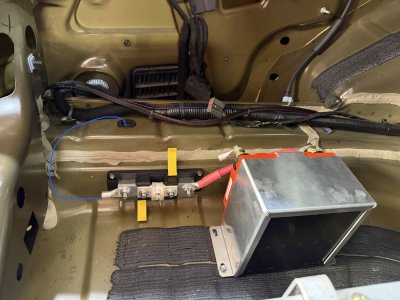
I added extensions to each wire so I’d have room to work cleanly around the battery and switch panel, and for the first time broke out the soldering iron. Practice first, then committed. Clean joints, heat shrink, no shortcuts.
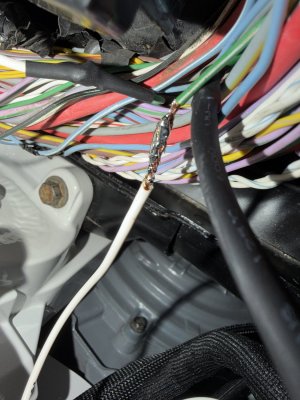
At that point all the wires were already cut because I had added extensions, so I labeled everything clearly as load and feed on both circuits. I didn’t want to power the feed side of Fuse 49 and backfeed into the BJB, which would have been pointless. For testing, I reconnected one circuit at a time by twisting its feed and load together while leaving the other circuit completely disconnected. The first attempt resulted in a no-start, which immediately confirmed that Relay 52 was still disconnected. From there it was simple: I reconnected the Relay 52 wires, then disconnected the Fuse 49 feed and load. I powered the Fuse 49 load directly from my switch panel and left the feed side isolated.
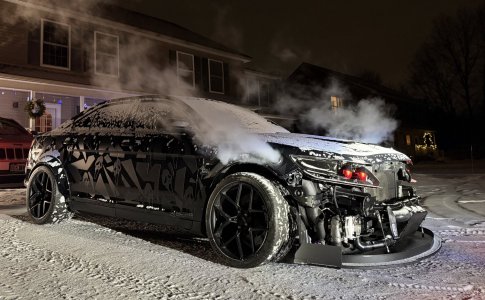
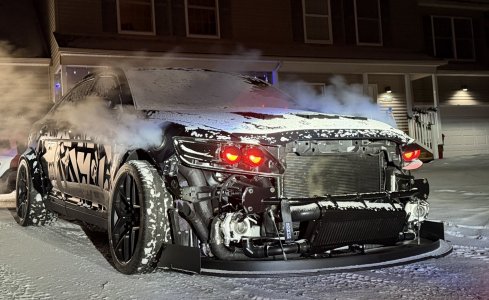
When I got it right and turned the key, the car fired instantly. Crisp start, no hesitation, no drama. The new starter and alternator made everything feel solid, and most importantly the transmission solenoid buzzing was completely gone. The car sounded healthy and boring, which is exactly what I wanted at this stage.
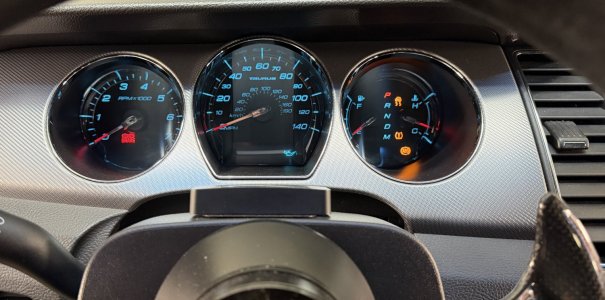
After shutdown, I let the scavenger pump run for about 30 seconds, and the TCM stayed awake, forcing the instrument cluster to remain active and showing ABS and traction control warnings. That tells me the module is fully powered and stable. At this point the TCM is effectively race-spec: manually powered, isolated from the compromised BJB, and fully under my control.
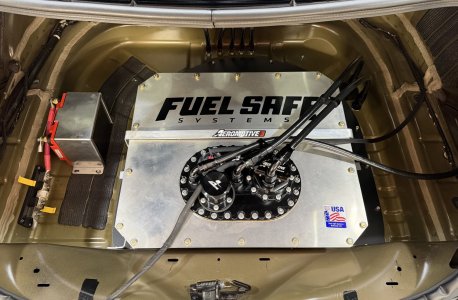
This was one of those repairs that wasn’t hard, but demanded patience, verification, and a willingness to slow down and think. No guessing, no vibes, no assumptions. The spare BJB made all the difference, and bypassing the compromised circuit entirely was the correct solution. The car is finally back on solid ground, electrically and mechanically, and now it’s ready for a test drive when the weather improves. Until then I’m moving on to the rear trunk battery install and can’t wait for my Maxx Velocity TurboGuards to arrive. They sent me a pic of them coated in Illusion Purple.


 .
.