Quick log update from last night.
I already posted the excited version because the car shifted clean, but I spent more time actually going through the log this morning. Log review takes time, especially on this Green Oak 2368K strategy, because the story is usually in the relationship between channels, not one single number.
Overall, this revision was a big success.
The car was much happier. The 6-5-4-3 downshift from around 50 mph was clean and fast. At first I almost thought it didn’t downshift because it didn’t smash into 2nd, but at 50 mph that actually makes sense. 2nd would have been extremely short there. The car pulled from about 50 mph to 114 mph and the shifts were clean.
Some really good data points showed up.
Transmission fluid temp went from roughly 180°F to 189°F during the pull. That is excellent information because the transmission is finally operating in a real temperature window instead of the cold/fluid-mismatch weirdness I was chasing before.
Engine coolant temp actually dropped during the pull, from about 185°F down to 176°F by 114 mph. That tells me airflow through the cooling package is working and the hood louvers are doing their job.
IAT was around 68–70°F and IAT2 peaked around 102°F on 93 octane only. No methanol injection yet. That is very reasonable for this stage.
Knock looked happy. It was clean and even ramped negative, meaning the PCM was adding spark instead of pulling it.
Fueling also looked composed. Wideband EQ ratio stayed around 1.00–0.99, injector pulse width stayed around 2.9 ms, trims were reasonable, and fuel rail actual was only slightly behind desired rather than collapsing. That is not a fuel system falling on its face.
WGDC was basically zero the whole pull. It hit 1.0 briefly on the hit, then went back to 0.000. So this is still essentially wastegate spring territory.
Now the interesting part.
The throttle was still being managed by torque control, but this time the event was much cleaner and easier to understand.
Early in the pull, desired load was around 1.36 and actual air load was around 1.17. Throttle was still 100% and Green Oak was happy.
Then actual air load got very close to desired load and throttle started closing. Once air load slightly exceeded desired load, the throttle reduction became much more obvious. I saw throttle position step down through roughly 92%, then 60%, then into the 30% range while air load was slightly above desired load.
That tells me the PCM was not confused. It was controlling the event.
Green Oak was basically saying:
“I’m letting this run, but the actual airflow/load trajectory is now exceeding the modeled desired trajectory, so I’m going to manage throttle authority.”
And honestly, that is exactly what this strategy is supposed to do.
The big conclusion from this log is: Wastegate spring is still too powerful for the current modeled trajectory.
That sounds funny, but it makes sense. The hardware is moving enough air on spring pressure that the current torque/load model still needs more room before the PCM fully agrees with the event.
So I sent Ryan the log and suggested we run it back at the same boost level, but scaled higher. Same power level. More modeled headroom. Let Green Oak agree with what the hardware is actually doing before we ask for more boost.
That is the proving ground. Not hero pulls. Not big boost. Not forcing it. Same boost. Cleaner model. Cleaner pull. Repeat.
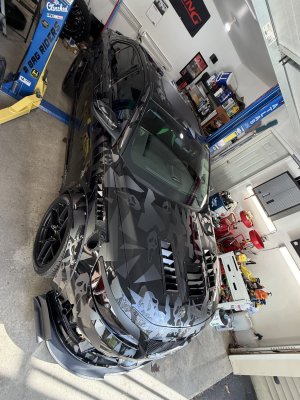
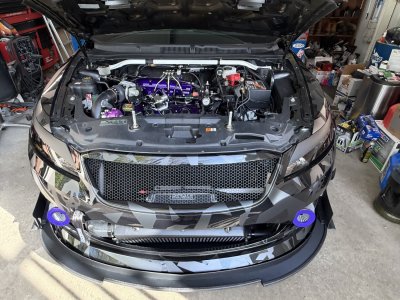
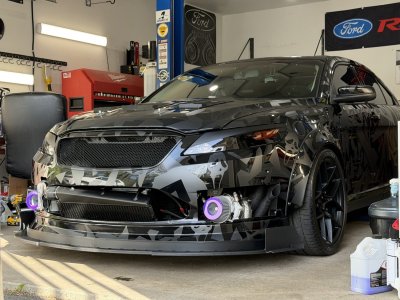
And a random couple pics of how clean this looked after a wash

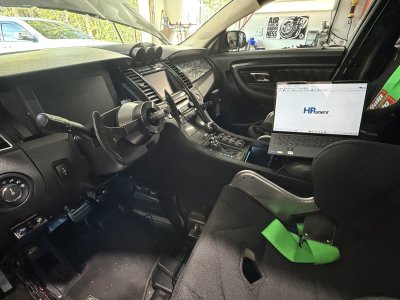
I also have a new steering wheel coming…OMG it’s going to be Epic. Sparco P310 open