Performance... Secondary Butterfly Removal?

Disclaimer: Links on this page pointing to Amazon, eBay and other sites may include affiliate code. If you click them and make a purchase, we may earn a small commission.

alphaseinor

New Member
Joined
Jul 12, 2003
Messages
15
Reaction score
0
Location
Colorado Springs, Colorado
Would it be advisable to remove the secondary butterflys?

I live above 7,000 feet and the only "real" power I get is when it's above 4,000 RPM.

I stuck a light and a video camera in the engine compartment (don't ask) to watch the pots engage the secondaries. Right on queue, 4,000 RPM instant 1.25x - 1.5x gain in horsepower/torque, *really* throws your head back if you're not expecting them.

I am wondering if I were to remove the butterflys from the secondary ports, would this improve the power at launch as well... I would like to hear from people who have tried this and who have theories as well.

If anyone would like me to test this theory, just ask, I'll check this forum sometime over the weekend.

The proposal is to remove the secondary butterflys only, not the shafts that connect them.

Thanks,

Brian Hague

 

Nook

New Member
Joined
Jun 16, 2002
Messages
236
Reaction score
0
Location
SLC
Disconect the vacuum lines to the secondary butterflies, they are open without vacuum, see how you like it.


Anyone got a spare set of cats lying around?

N
 

wood_e

The dude
Joined
Jun 5, 2003
Messages
1,620
Reaction score
2
Location
Ames, IA
From what I understand doing that will destroy your gas mileage....

I really don't see any other disadvantage

Maybe it might mess up the computer's readings?
 

Mike Kopstain

New Member
Joined
Sep 24, 2001
Messages
5,914
Reaction score
52
Location
Arlington Heights, IL
The motor is tuned for the secondaries.

To understand the secondaries, you need to understand the motor's need for air:

- At lower rpms, you want high velocity for optimum fuel mixture and too ensure that the most air possible gets into the cylinder.

- At higher rpms, you just want to cram all the air you can in there. The engine is really "sucking" the air. You just have to supply it. Open up the flood gates! :)

Now then... those are the basics.

The long skinny runners are always open. They are long and skinny to increase air velocity, which gives you your low end torque. At 4000 rpms, when the motor really just needs to breath, the secondaries open. The secondary runners are short and fat, simply to allow the most air possible to enter the cylinder, however, having these open below the set rpm, results in a loss of power, as the incoming air is very turbulent and won't mix well. Gas mileage will go to ****, and performance below 3000 rpms will be non-existent.

If you still want to go ahead, there is another guy in Texas named Brian that did this a couple years ago and claimed major gains. He goes by Artesia on other forums... (not this one :) )

This has been a Mikey broadcast... <zip>
 

Slo-Sho

It wasn't me!
Joined
Aug 11, 2001
Messages
1,825
Reaction score
21
Location
Crossroads, CNY
Mikeys_Taurus:

The long skinny runners are always open. They are long and skinny to increase air velocity, which gives you your low end torque. The secondary runners are short and fat, simply to allow the most air possible to enter the cylinder, however, having these open below the set rpm, results in a loss of power, as the incoming air is very turbulent and won't mix well. Gas mileage will go to ****, and performance below 3000 rpms will be non-existent.
Then why is it on the V8 SHO motor just the opposite of the long and short runners is true?
 

Mr Anonymous

Tire Wall
Joined
Apr 24, 2002
Messages
7,317
Reaction score
1,947
Location
St. Louis, MO
I'd be curious to see what your results are with the secondaries disconnected. At your altitude, I wonder if it will have a similar effect that a turbo would. Maybe if there's a dyno day somewhere near you coming up you could try it with them connected and disconnected to compare the results.

Another thing to consider would be getting an LPM and have it programmed to open earlier, say 3000-3200 RPM's to see if that improves performance at altitude.

Keep us posted! :)
 

gmorrell

Never been a noob...
Joined
Nov 28, 2000
Messages
806
Reaction score
540
Location
Colorado Springs, CO
alphaseinor:
Would it be advisable to remove the secondary butterflys?
I live above 7,000 feet and the only "real" power I get is when it's above 4,000 RPM.
I know some others have tried blocking open the secondaries and have seen a hefty loss of low RPM torque.
I live up here too, and its just something you have to live with. Get a turbocharged car, or put a supercharger on your SHO, I've done both. :D
 

rangerj

Active Member
Joined
Jun 6, 2002
Messages
2,338
Reaction score
10
Location
Brunswick, Ohio
alphaseinor,

The EEC-IV system uses a MAP (Manifold Ablolute Pressure sensor in conjunction with a MAP/BP sensor (Manifold Absolute Pressure/Barometric Pressure). The MAP/BP allows the EEC-IV module to compensate for altitude.

Have you checked your system for codes. Also check for vacuum leaks. There are tests for the MAP and the MAP/BP if you are interested. rangerj
 

Off Road SHO

Moderator
Joined
Jan 16, 2002
Messages
5,684
Reaction score
1,292
Location
Arizona
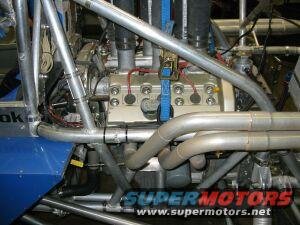
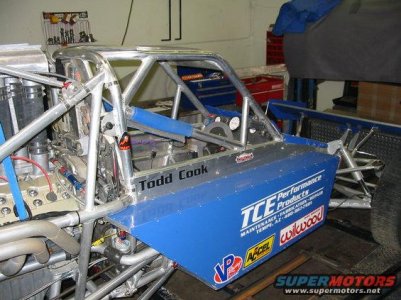
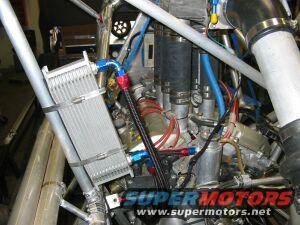
I believe that Todd Cook, (TCE Fame) who uses the SHO motor in his Pikes Peak Hill climb car has discarded the dual intake system alltogether.

He's rarely under 5000 rpms anyway so why have it. When I was at his Shop recently, he mentioned that the look-up tables for the SHO computer only go up to 7,000 feet anyway.

I guess Ford figured we'd all be gasping for breath at such a high altitude that we wouldn't notice the slight power loss. wink

Tom
 

gmorrell

Never been a noob...
Joined
Nov 28, 2000
Messages
806
Reaction score
540
Location
Colorado Springs, CO
rangerj:
The EEC-IV system uses a MAP (Manifold Ablolute Pressure sensor in conjunction with a MAP/BP sensor (Manifold Absolute Pressure/Barometric Pressure). The MAP/BP allows the EEC-IV module to compensate for altitude.
MTX SHO's have only a barometric pressure sensor, there is no MAP sensor or strategy. From looking at wiring diagrams (I have 1989 through 1995), ATX SHO's substituted the DPFE pressure sensor for the baro sensor. The DPFE sensor measures the pressure differential between the intake manifold and the exhaust gas recirculation so that EGR may be metered more accurately. It probably also gets baro pressure at key-on, as do most MAP strategies.

The basic problem here at 7K foot altitude is that the air is ~20% less dense then at sea level, so with a normally aspirated engine, you make 20% less torque. Its the unfortunate physics of living in the mountains. It affects your body the same way, if you came up here for a visit, you'd notice shortness of breath the first time you sprinted up a flight of stairs.

I do the engine calibration for Todd Cook's Pikes Peak hill climb car, and I'm having a rough time getting the altitude strategy to take out fuel above 12,000 feet, which is 2100 feet short of the Pike's Peak summit. The gearing on Todd's race car allows him to keep the engine between 4000 and 8000 RPM, and the single intake runners are enormous; they're about 12" long and over 2" in diameter. The heads are also very radically ported on the intake side and the exhaust side runs 3 into 1 headers with a primary length of almost 3 feet. This is not your average SHO motor.

<small>[ August 03, 2003, 12:52 AM: Message edited by: Gary M. ]</small>
 

Off Road SHO

Moderator
Joined
Jan 16, 2002
Messages
5,684
Reaction score
1,292
Location
Arizona
Here are some I took the other day.

Etfilephpid77893togglefullsizef100 0032 IMG

Etfilephpid77891togglefullsizef100 0030 IMG

Etfilephpid77892togglefullsizef100 0031 IMG

Tom

<small>[ August 03, 2003, 12:37 PM: Message edited by: Off Road SHO ]</small>
 

rangerj

Active Member
Joined
Jun 6, 2002
Messages
2,338
Reaction score
10
Location
Brunswick, Ohio
Gary,

In natually aspirated aircraft engines we adjust the fuel as we climb. Have you looked at any aircraft fuel regulation systems? Just a thought!rangerj

PS the picture of a SHO with an altimeter and a barometer (to adjust for pressure altitude) just flashed through my mind. Interesting thought!
 

MelectroK

SHO Member
Joined
Apr 17, 2004
Messages
578
Reaction score
1
Location
Michigan
Would a chip help him. I mean the computer just needs to know that it needs less fuel per throttle possistion?
 

advocate

New Member
Joined
Sep 6, 2003
Messages
122
Reaction score
0
Location
Edmonton
My SHO had the secondaries unplugged so they were always open (dumb ford dealer before I bought the car)...

Power was non existant below 4000, above was fine, gas mileage sucked and the car had a bucking problem!

After some research I checked the back of the intake - sure enough it was unplugged. Plugged it in and all those problems have disappeared.

Yamaha made the engine how it is for a reason, without alot of mods (see pics above) they should remain functional.
 

Todd TCE

SHO Member
Joined
Apr 14, 2002
Messages
373
Reaction score
45
Location
Tempe, AZ
Motor updates

Stumbled upon this thread today, thought I'd add the followig;

The 2004 motor is now a 3.2L with 12.7:1 compression JE pistons. There have also been a few other changes along the way and the car is now sporting about 20lbs less weight.

Gary came and spent some time here last month and we tuned for a bit at ProDyno for some positive results.

Rear wheel Torque is at 240lbs
Rear wheel HP is at 281

Based on a modest 12-14% loss this shows us now about 325 crank HP. All n/a.

And it seems to be working too: http://www.chcaracing.com/race_day_results.html
 

Forum statistics

Threads
107,087
Messages
1,181,310
Members
16,153
Latest member
lapochkarr

Members online

No members online now.
Back
Top