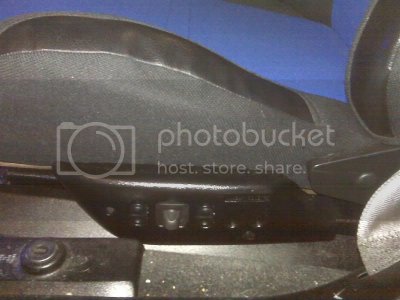
hawkeye18
Sorta cares
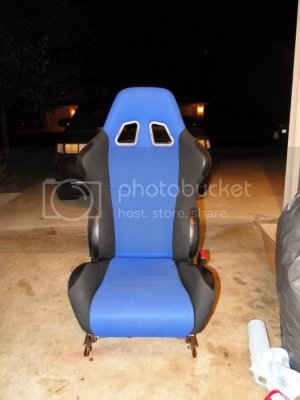
A long long time ago, I got some racing seats (no-brand) for cheap through craigslist. They were a good buy, and I wanted to mount them to my wife's 95 ATX. Problem is, I had no way of mounting these seats to the car in anything approaching a safe fashion. As I saw it, I had two choices:
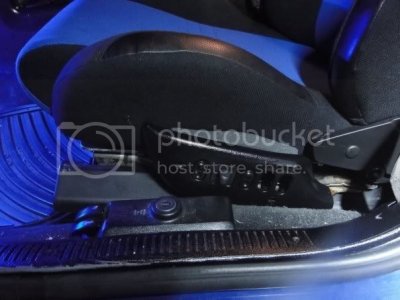
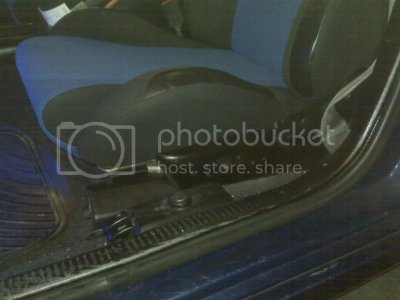
So, keeping that in mind, I'm going to show you how I got some cheap racing seats mounted to the stock lower seat brackets for less than $30 in parts, and in a method that's stronger than the seat itself in a wreck.
Materials needed (you can of course substitute for preference; this is what I used):
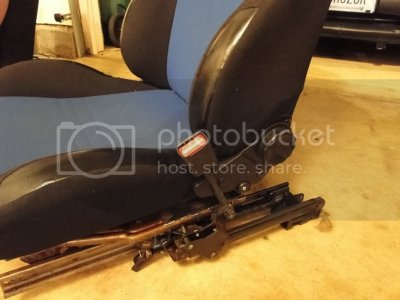
So, here's the gist of the whole project: You need to attach this -
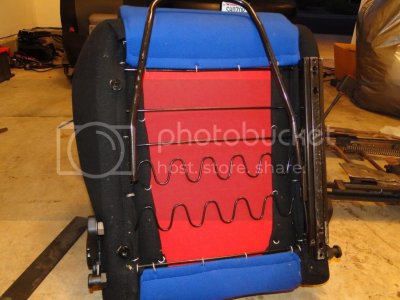
To this -
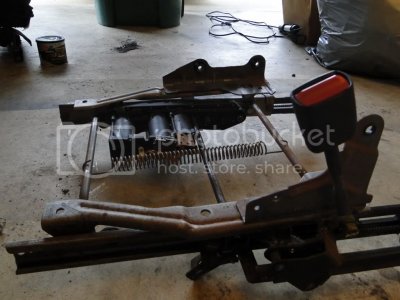
Using these.
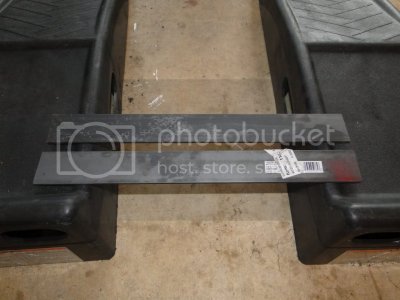
Simple!
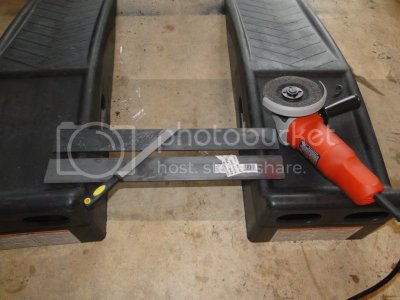
First things first: Cut the bar stock down to size. The stock I got (from Lowe's) was 36" long, so I made a mark down the middle and cut the bar in half with the angle grinder. Is an angle grinder the best tool? Probably not. Is it what I had? Absolutely. If you have a better tool, by all means use it. The file is for rounding out the edges so they don't slice your fingers after cutting. The car ramps are to elevate the bar stock. Would a clamp/vise be better? Absolutely! But like I said, this is the poor man's brackets. Just use your feet to stabilize the bar, it'll be fine. Also, please wear hearing protection.
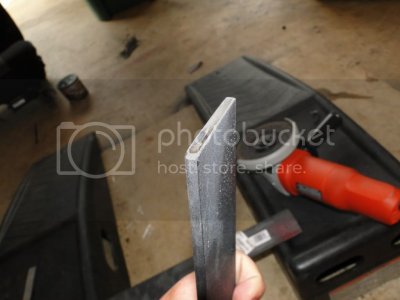
The filing is important; you're going to be dealing with this bar stock a lot in the next few minutes/hours, so you want to make sure it's nice and smooth. Also, sharp jagged edges in a car are just generally a bad idea.
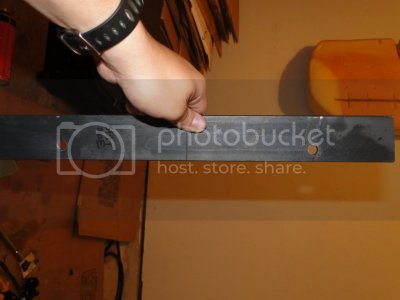
Then, you gotta figure out where you're gonna need to drill the holes in the bar stock. These are the holes that match up to the bolt holes in the seat, so I use them as a template on the bar stock:
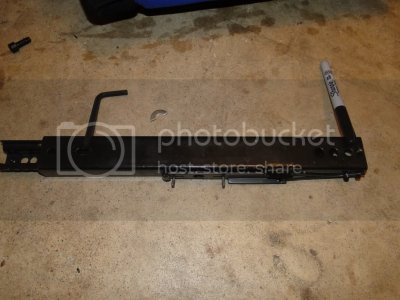
And making marks on the stock as such. Note how I failed to correctly divide 18 by 2 the first time. This is why they say measure twice. The smaller sets of marks are the boundaries of the bolt holes on the seat. This is a rather inexact science; that's why I used a 1/2" bit... it's bigger than the holes, so I can be off a little. This becomes important later, because off I certainly am. (also, I already had a 1/2" cobalt bit laying around for drilling strut pinch bolts out)
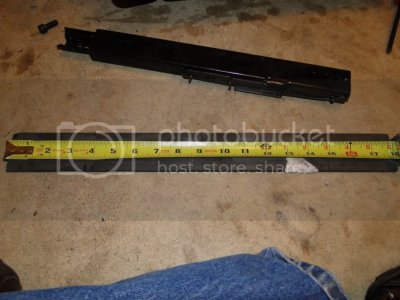
Really, I'm not sure why I was so bad at measuring this stuff; normally I'm pretty good at this. I think the problem was that I was trying to formulate the process at the same time I was executing it. This meant I was confusing myself on a regular basis.
In any case, verifying the measurements proves I'm not generally anywhere close, so I adjust them to match.
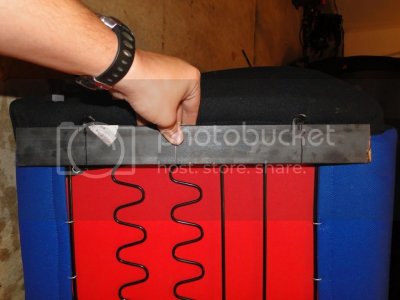
The other side turns out quite a bit better. Constant improvement is the name of the game.
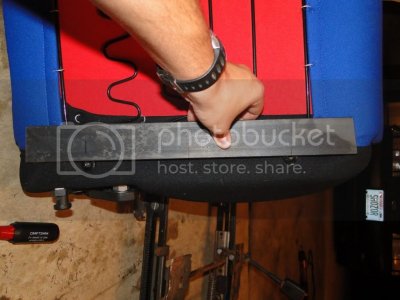
One of the better ideas I had was to mark the bar stock as to which side it was supposed to be on. This saved a lot of confusion down the road. Unfortunately, my system did not eliminate all confusion, as you'll see later. Feel free to use your own marking system.
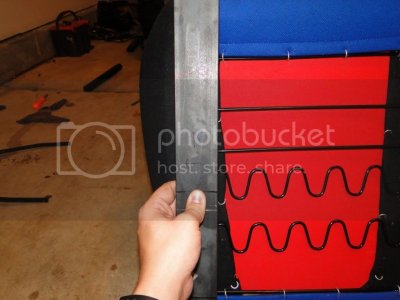
Now that I sorta-kinda had the places I was supposed to drill out, I began to do that. A note: You really want a corded drill for this. I used my trusty 19.2V Hitachi drill, and I went through about 12-14 battery charges, and nearly set the charger on fire. It is no longer really trusty, but I have a corded drill now, so it's all ok.
I started a pilot dimple with a smaller bit (I think 3/16") to keep the big bit from walking all over the place. You'll want to use plenty of cutting oil to keep the bit from overheating and to keep the metal shavings (of which there will be about 600lbs) flowing smoothly. It also helps keep them congealed, which is really good because you don't want 600lbs of steel shavings flying around everywhere. I highly recommend protective eyewear.
It looks easy, but really it took about an hour or two to drill out those holes. The weak drill was a big part, but it really does just take forever to sit there and drill through 3/16" of steel. A drill press would come in mighty handy, but chances are if you're rich enough to own a drill press, you aren't poor. Note the added labels to further reduce confusion. It helps if you label them correctly (as you'll see later).
At this point, you may be wondering why I drilled the holes so far off to one side. This is because the holes on the stock base are narrower than the holes on the seat. You'll see.
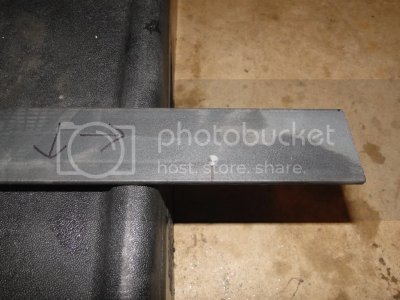
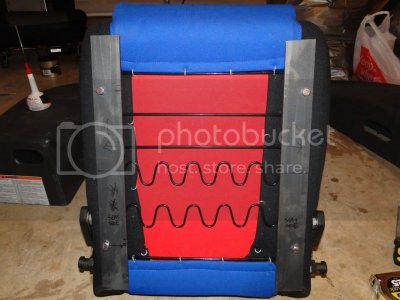
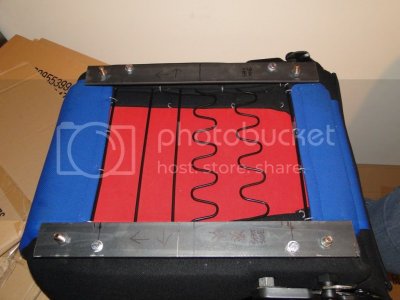
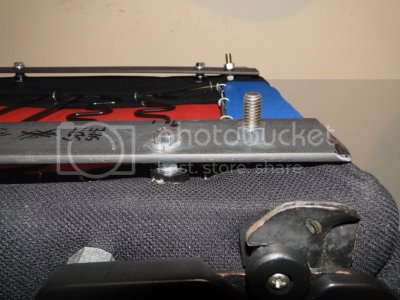
Success! They bolt to the seat! That was the easy part. The hard part is getting it all bolted to the bracket, which is what we're gonna work on next.
As you might've seen from the second picture, there are are wings that stick up that make it impossible to mount the seat to it. Therefore, they gotta go. Out comes the trusty angle grinder again... (before shots)
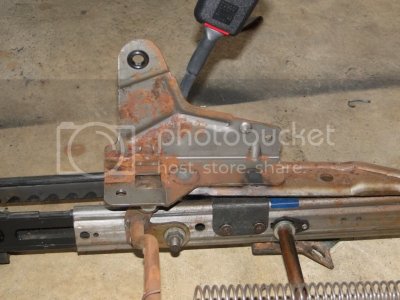
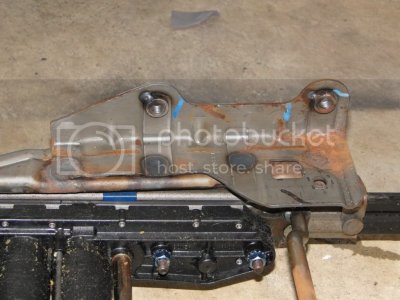
And after shots. The side with the seat belt buckle on it was a lot harder; had to ensure I didn't cut through the cable for it!
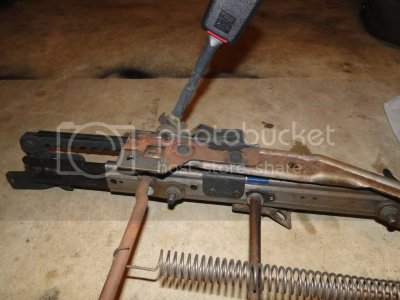
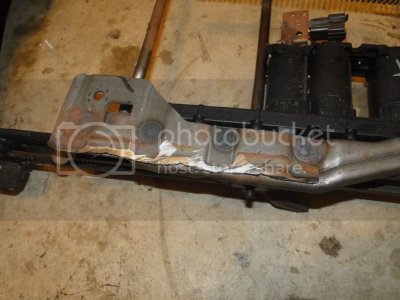
Here again the file is REALLY important; the edges created by cutting at essentially a 45° angle across the right angle leaves razor sharp edges. I did actually cut myself on one of the edges on the outboard side before I finished.
~continued in part deux~
- Mount the seats and their universal brackets directly to the car and figure out some way of mounting seat belts, or
- Mount the seats to the stock lower bracket, and bolt into car, and use stock seat belt points
So, keeping that in mind, I'm going to show you how I got some cheap racing seats mounted to the stock lower seat brackets for less than $30 in parts, and in a method that's stronger than the seat itself in a wreck.
Materials needed (you can of course substitute for preference; this is what I used):
- 4.5" angle grinder with both cutting and grinding disks
- Drill with 1/4" & 1/2" Cobalt bits (not Kobalt, Cobalt!)
- Cutting oil, LOTS
- Nuts & bolts (I used 8.8 hardness bolts with Ny-lock nuts, use a size appropriate for your situation - I can't remember what size I used but it took a 9/16" wrench)
- Bar stock steel(I used 3/16" x 2". This was most certainly overkill, but better safe than sorry) - I used 72" worth of it, you can get away with less
- Sharpie and a tape measure (hopefully you are better with it than I was, as you'll see)
- Grease (you'll want to clean out that stock seat track and regrease it, trust me)
- Bastard File (there are a lot of sharp edges that will CUT U DEEP, WHITE GIRL!)
- Wrenches (you really should already have these)
So, here's the gist of the whole project: You need to attach this -
To this -
Using these.
Simple!
First things first: Cut the bar stock down to size. The stock I got (from Lowe's) was 36" long, so I made a mark down the middle and cut the bar in half with the angle grinder. Is an angle grinder the best tool? Probably not. Is it what I had? Absolutely. If you have a better tool, by all means use it. The file is for rounding out the edges so they don't slice your fingers after cutting. The car ramps are to elevate the bar stock. Would a clamp/vise be better? Absolutely! But like I said, this is the poor man's brackets. Just use your feet to stabilize the bar, it'll be fine. Also, please wear hearing protection.
The filing is important; you're going to be dealing with this bar stock a lot in the next few minutes/hours, so you want to make sure it's nice and smooth. Also, sharp jagged edges in a car are just generally a bad idea.
Then, you gotta figure out where you're gonna need to drill the holes in the bar stock. These are the holes that match up to the bolt holes in the seat, so I use them as a template on the bar stock:
And making marks on the stock as such. Note how I failed to correctly divide 18 by 2 the first time. This is why they say measure twice. The smaller sets of marks are the boundaries of the bolt holes on the seat. This is a rather inexact science; that's why I used a 1/2" bit... it's bigger than the holes, so I can be off a little. This becomes important later, because off I certainly am. (also, I already had a 1/2" cobalt bit laying around for drilling strut pinch bolts out)
Really, I'm not sure why I was so bad at measuring this stuff; normally I'm pretty good at this. I think the problem was that I was trying to formulate the process at the same time I was executing it. This meant I was confusing myself on a regular basis.
In any case, verifying the measurements proves I'm not generally anywhere close, so I adjust them to match.
The other side turns out quite a bit better. Constant improvement is the name of the game.
One of the better ideas I had was to mark the bar stock as to which side it was supposed to be on. This saved a lot of confusion down the road. Unfortunately, my system did not eliminate all confusion, as you'll see later. Feel free to use your own marking system.
Now that I sorta-kinda had the places I was supposed to drill out, I began to do that. A note: You really want a corded drill for this. I used my trusty 19.2V Hitachi drill, and I went through about 12-14 battery charges, and nearly set the charger on fire. It is no longer really trusty, but I have a corded drill now, so it's all ok.
I started a pilot dimple with a smaller bit (I think 3/16") to keep the big bit from walking all over the place. You'll want to use plenty of cutting oil to keep the bit from overheating and to keep the metal shavings (of which there will be about 600lbs) flowing smoothly. It also helps keep them congealed, which is really good because you don't want 600lbs of steel shavings flying around everywhere. I highly recommend protective eyewear.
It looks easy, but really it took about an hour or two to drill out those holes. The weak drill was a big part, but it really does just take forever to sit there and drill through 3/16" of steel. A drill press would come in mighty handy, but chances are if you're rich enough to own a drill press, you aren't poor. Note the added labels to further reduce confusion. It helps if you label them correctly (as you'll see later).
At this point, you may be wondering why I drilled the holes so far off to one side. This is because the holes on the stock base are narrower than the holes on the seat. You'll see.
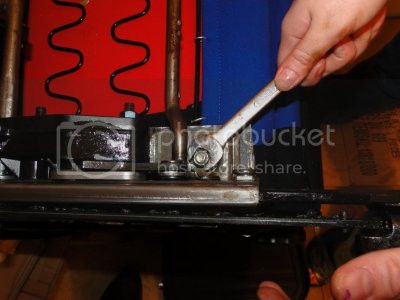
Success! They bolt to the seat! That was the easy part. The hard part is getting it all bolted to the bracket, which is what we're gonna work on next.
As you might've seen from the second picture, there are are wings that stick up that make it impossible to mount the seat to it. Therefore, they gotta go. Out comes the trusty angle grinder again... (before shots)
And after shots. The side with the seat belt buckle on it was a lot harder; had to ensure I didn't cut through the cable for it!
Here again the file is REALLY important; the edges created by cutting at essentially a 45° angle across the right angle leaves razor sharp edges. I did actually cut myself on one of the edges on the outboard side before I finished.
~continued in part deux~
Last edited:
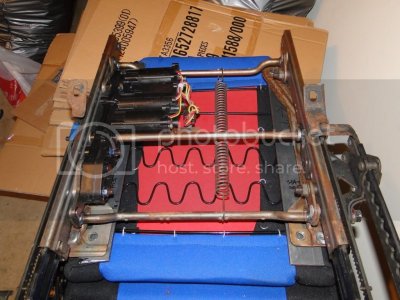
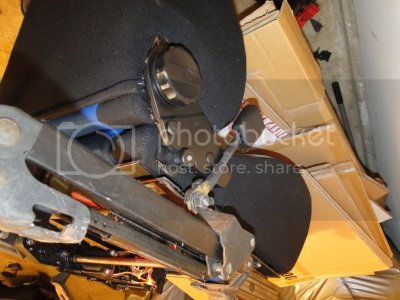
 ), but here is the completed seat below.