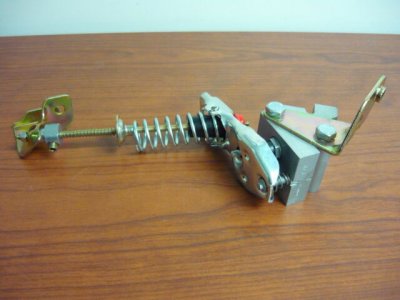
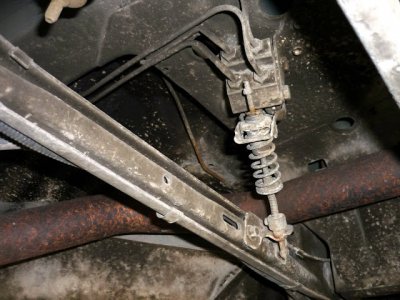
I just replaced the whole ABS brake modulator with one that had been sitting dry for over a year, along with a rear caliper and line. No issues even before just going for a drive and doing some emergency ABS braking on both gravel and paved roads while cornering.
If you don't have rust-free clean
speed bleeders installed, or an assistant to close the bleeder each time you release the pedal, it is important to use techniques to not get air back into the system while you are bleeding. Releasing the pedal will tend to suck back in.
Cover the threaded area of the bleeder valve into the caliper with grease so it can't leak air in or out around the threads. Find an 18 inch hose that fits tight around the bleeder fitting, **** up the fitting with more silicone grease and tighten hose to the fitting with a hose clamp so it is airtight. 11mm open-ended wrench.
Then you need to route the hose in a high loop, going up through the spring, and back down into a bottle that is no lower than the caliper so it doesn't siphon. You can wire a water bottle to the strut. The end of the hose should be immersed at the very bottom of the bottle, again taped if needed so it doesn't move.
Top the brake reservoir off to the top of the cap, and continue checking on it throughout. Open the bleeder just enough so that it starts to flow when you press the pedal, no more than 1/4 turn after where it wasn't flowing freely. Stomping hard and repeating fast ensures there is enough velocity to get air out of high spots in the lines. Alternate with stomping to the floor and holding for 5 seconds so compressed air bubbles can then expand their way through the system. You can start the car if you want some assistance instead of hard stomps. Air purged out of the caliper will stay trapped in the high spot in the bleeder line, and only fluid will be sucked back in from the waste bottle.
The bleed order is right rear, then left front, followed by left rear, right front. All should be done. Figure at least a pint for the rears, or more if you want fresh fluid through the system.
Also check that the parking brake is both fully engaging and releasing the lever on each rear caliper when it is engaged and disengaged. Pump and release the parking brake many times to get the piston "dialed" so it is effective. You can adjust the cable nut under the rear driver side door so the pull is balanced even pushing halfway. Top off the brake fluid reservoir to "max".