Advance Trac

Disclaimer: Links on this page pointing to Amazon, eBay and other sites may include affiliate code. If you click them and make a purchase, we may earn a small commission.

JasonoftheRugar

SHO Member
Joined
Feb 29, 2016
Messages
265
Reaction score
396
Location
Wisconsin
This is the 2nd time the light came this week, it says to service advance trac soon. 1st off, what is advance trac? Traction control is a different idiot light. The car is a 15'SHO with 5700 miles. All the bolt ons are on it and I just put in a OBDlink MX and an android to monitor engine data a few days ago. I do not unplug the OBDlink from the car. It stays in. The advance trac came on again today after a start up from a gas station, I nailed the throttle and it went away. A scan shows no CEL's. Does this problem have anything to do with the PTU? I fear the day when I have to return my car to stock for service.
 

SHOdded

SHO Member
Joined
Dec 25, 2011
Messages
9,045
Reaction score
4,390
Location
Maryland
Try keeping the MX unplugged for a while. Sometimes BT adapters are known to cause some issues with OBD/light up odd warning lights, but usually happens with the cheaper units.

Otherwise it could be wheel speed sensors, if they get dirty or rusted and are not sending correct data back to the PCM.

Traction (uses ABS and power transfer tools to limit wheelspin) and stability control together make up the AdvanceTrac system. A basic description is in the owner's manual, around pg 198 I believe.
http://jalopnik.com/this-is-how-abs-esc-and-traction-control-work-513807036
 

JasonoftheRugar

SHO Member
Joined
Feb 29, 2016
Messages
265
Reaction score
396
Location
Wisconsin
It was the OBD link. This one was $80. It was not a cheap $15 one. was hoping to keep it plugged like it says I can. Nice to know the code is not legit.
 

rubydist

SHO Master
Staff member
Super Moderators
Joined
Jun 25, 2007
Messages
7,521
Reaction score
3,399
Location
Denver
I have seen those codes randomly appear and then go away on their own, so in a couple days try plugging it in again and see if the same situation repeats.
 

SHOdded

SHO Member
Joined
Dec 25, 2011
Messages
9,045
Reaction score
4,390
Location
Maryland
It was the OBD link. This one was $80. It was not a cheap $15 one. was hoping to keep it plugged like it says I can. Nice to know the code is not legit.
Sucks about the adapter. It's supposed to go to auto sleep 30 seconds after vehicle turnoff, but ...
 

Majestic

SHO Member
Joined
Aug 28, 2016
Messages
1,234
Reaction score
998
This happens to me periodically. The service advance trac and collision avoidance not available warnings will come on. It always happens when turning right and hitting a bump. I usually just shut down and restart and the warnings go away.
 

SHOdded

SHO Member
Joined
Dec 25, 2011
Messages
9,045
Reaction score
4,390
Location
Maryland
No warnings if you turn LEFT and hit a bump? What is the car's speed at that time, usually?
 

Majestic

SHO Member
Joined
Aug 28, 2016
Messages
1,234
Reaction score
998
No warnings if you turn LEFT and hit a bump? What is the car's speed at that time, usually?

That is correct, right turn only. Always 5 mph or below. Just did it again pulling into my folks' driveway for lunch.
 

SHOdded

SHO Member
Joined
Dec 25, 2011
Messages
9,045
Reaction score
4,390
Location
Maryland
It just sounded familiar from an old Edge TSB where it actually involved the transmission internals. Probably not the case here though. Interesting ...
 

6500rpm

Quality Always Shoots Straight
Joined
Jun 21, 2016
Messages
589
Reaction score
653
Location
The safe zone outside metro St Louis
FYI, glad you found the cause. Just some info to read from the manual "description and operation" section ....


AdvanceTrac® System


The AdvanceTrac® system combines the traction control feature and the ESC feature.

Traction Control

The ABS module continuously monitors and compares the rotational speed of the drive wheels in relation to the non-driven wheels. When the drive wheels begin to spin faster than the non-driven wheels, the ABS module modulates brake pressure to the appropriate brake caliper(s) by opening and closing the appropriate solenoid valves inside the HCU while the hydraulic pump motor is activated. At the same time, the ABS module calculates how much engine torque reduction is required to eliminate the wheel slip and sends this torque reduction message to the PCM over the HS-CAN . The ABS module also sends a traction event message to the IPC over the HS-CAN . When the PCM receives the torque reduction message, it adjusts engine timing and decreases fuel injector pulses to reduce the engine torque to the requested level. When the IPC receives traction event message, it flashes the sliding car icon.

Once the driven wheel speed returns to the desired speed, the ABS module returns the solenoid valves in the HCU to their normal position, deactivates the hydraulic pump motor and stops sending the traction event and torque reduction messages. The PCM returns engine timing and fuel injectors to normal operation and the IPC extinguishes the sliding car icon. After the vehicle speed exceeds 100 km/h (62.1 mph), traction control is accomplished only through the PCM torque control.

The ABS module disables the traction control function if there are any wheel speed sensor or solenoid valve DTCs present in the ABS module. The traction control function is also disabled if there is a communication error between the ABS module and the PCM. When the traction control function is disabled, the ABS module sends a message to the IPC over the HS-CAN to illuminate the sliding car OFF icon.

Electronic Stability Control (ESC)

The ABS module continuously monitors the vehicle motion relative to the intended course. This is done by using sensors to compare the steering wheel input and the yaw rate sensor input with that of the actual vehicle motion. The SCCM (vehicles with active park assist) or PSCM (vehicles without active park assist) sends the steering wheel angle and rate of change information to the ABS module over the HS-CAN while the RCM sends yaw rate sensor information to the ABS module over a private HS-CAN . If the ABS module determines from the inputs that the vehicle is unable to travel in the intended direction, the ABS module modulates brake pressure to the appropriate brake caliper(s) by opening and closing the appropriate solenoid valves inside the HCU while the hydraulic pump motor is activated. At the same time, the ABS module calculates how much engine torque reduction is required to eliminate the wheel slip and sends this torque reduction message to the PCM over the HS-CAN . The ABS module also sends a traction event message to the IPC over the HS-CAN . When the PCM receives the torque reduction message, it adjusts engine timing and decreases fuel injector pulses to reduce the engine torque to the requested level. When the IPC receives traction event message, it flashes the sliding car icon.

Once the vehicle instability has been corrected, the ABS module returns the solenoid valves in the HCU to their normal position, deactivates the hydraulic pump motor and stops sending the traction event and torque reduction messages. The PCM returns engine timing and fuel injectors to normal operation and the IPC extinguishes the sliding car icon.

The ESC function does not operate with the transmission in REVERSE. The ABS module disables the ESC function if there are any wheel speed sensor, stability sensor or steering angle sensor DTCs present in the ABS module. Also, if there is a communication error between the ABS module and the PSCM , the SCCM or the RCM the ESC function is disabled. When the ESC function is disabled, the ABS module sends a message to the IPC over the HS-CAN to illuminate the sliding car icon.
 

SilverSH0

SHO Member
Joined
Nov 17, 2015
Messages
896
Reaction score
827
FYI, glad you found the cause. Just some info to read from the manual "description and operation" section ....


AdvanceTrac® System


The AdvanceTrac® system combines the traction control feature and the ESC feature.

Traction Control

The ABS module continuously monitors and compares the rotational speed of the drive wheels in relation to the non-driven wheels. When the drive wheels begin to spin faster than the non-driven wheels, the ABS module modulates brake pressure to the appropriate brake caliper(s) by opening and closing the appropriate solenoid valves inside the HCU while the hydraulic pump motor is activated. At the same time, the ABS module calculates how much engine torque reduction is required to eliminate the wheel slip and sends this torque reduction message to the PCM over the HS-CAN . The ABS module also sends a traction event message to the IPC over the HS-CAN . When the PCM receives the torque reduction message, it adjusts engine timing and decreases fuel injector pulses to reduce the engine torque to the requested level. When the IPC receives traction event message, it flashes the sliding car icon.

Once the driven wheel speed returns to the desired speed, the ABS module returns the solenoid valves in the HCU to their normal position, deactivates the hydraulic pump motor and stops sending the traction event and torque reduction messages. The PCM returns engine timing and fuel injectors to normal operation and the IPC extinguishes the sliding car icon. After the vehicle speed exceeds 100 km/h (62.1 mph), traction control is accomplished only through the PCM torque control.

The ABS module disables the traction control function if there are any wheel speed sensor or solenoid valve DTCs present in the ABS module. The traction control function is also disabled if there is a communication error between the ABS module and the PCM. When the traction control function is disabled, the ABS module sends a message to the IPC over the HS-CAN to illuminate the sliding car OFF icon.

Electronic Stability Control (ESC)

The ABS module continuously monitors the vehicle motion relative to the intended course. This is done by using sensors to compare the steering wheel input and the yaw rate sensor input with that of the actual vehicle motion. The SCCM (vehicles with active park assist) or PSCM (vehicles without active park assist) sends the steering wheel angle and rate of change information to the ABS module over the HS-CAN while the RCM sends yaw rate sensor information to the ABS module over a private HS-CAN . If the ABS module determines from the inputs that the vehicle is unable to travel in the intended direction, the ABS module modulates brake pressure to the appropriate brake caliper(s) by opening and closing the appropriate solenoid valves inside the HCU while the hydraulic pump motor is activated. At the same time, the ABS module calculates how much engine torque reduction is required to eliminate the wheel slip and sends this torque reduction message to the PCM over the HS-CAN . The ABS module also sends a traction event message to the IPC over the HS-CAN . When the PCM receives the torque reduction message, it adjusts engine timing and decreases fuel injector pulses to reduce the engine torque to the requested level. When the IPC receives traction event message, it flashes the sliding car icon.

Once the vehicle instability has been corrected, the ABS module returns the solenoid valves in the HCU to their normal position, deactivates the hydraulic pump motor and stops sending the traction event and torque reduction messages. The PCM returns engine timing and fuel injectors to normal operation and the IPC extinguishes the sliding car icon.

The ESC function does not operate with the transmission in REVERSE. The ABS module disables the ESC function if there are any wheel speed sensor, stability sensor or steering angle sensor DTCs present in the ABS module. Also, if there is a communication error between the ABS module and the PSCM , the SCCM or the RCM the ESC function is disabled. When the ESC function is disabled, the ABS module sends a message to the IPC over the HS-CAN to illuminate the sliding car icon.
This is very interesting to me. Basically, if there are any issues in the ABS module, sensors, or communication it turns off ESC and traction control. I wonder if you could use that to intentionally disable ESC on non-PP cars when on a closed course. Maybe intentionally wire up a switch to turn the stability sensor or steering angle sensor off (open circuit).
 

RamAireTransAm

SHO Member
Joined
Apr 21, 2016
Messages
94
Reaction score
40
i had codes coming up when i was using my ultragauge blue , the thing stays on all the damn time . Its annoying it causes issues so now i dont even use it . Which ****** me off not to use it .
 

SilverSH0

SHO Member
Joined
Nov 17, 2015
Messages
896
Reaction score
827
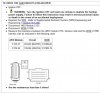
I've been going through some of the manual looking at how to make the stability control kick off. Based on the information posted above by 6500rpm it appears the stability control will turn off if, "any wheel speed sensor, stability sensor or steering angle sensor DTCs present in the ABS module." My thoughts are that if I disable a wheel speed sensor it will also effect the AWD clutches so I don't want to go that route. If I disable the steering angle sensor that could disable power steering (so I don't really want to go that route). But if I disable the stability sensor, I don't see that it would adversely effect any performance of the car.

From further reading it appears the stability sensor is basically a yaw sensor that's inside the RCM. If there's a faulty reading from the RCM sent to the ABS module it will throw a code and disable stability control. With this in mind, I was looking at the troubleshooting and electrical testing in the workshop manual. Under the troubleshooting for a yaw sensor fault code it has you measure resistance between the ABS connector 135 and the RCM connector 310B. Basically it wants you to verify the resistance between C-135-37 and C-310B-20 isn't an open circuit. So when I interpret that test, it means that if that wire was cut (open circuit) it would throw a yaw sensor code and throwing that code would disable the stability control. Sound like sound reasoning to anyone else? Also, anyone know the physical location of C-135? I'm going to go out and disconnect pin 37 once I find the connector location.
 

Attachments

  • Connector.jpg
    Connector.jpg
    97.6 KB · Views: 11

SHOdded

SHO Member
Joined
Dec 25, 2011
Messages
9,045
Reaction score
4,390
Location
Maryland
Any experimentation with the ABS module could be costly (900+$), so caution advised.
 

SilverSH0

SHO Member
Joined
Nov 17, 2015
Messages
896
Reaction score
827
Do you happen to know if C135 is inside or outside of the car? It looks like it's mounted to the firewall in the engine bay but it's a little hard to tell. Once again, thanks for posting the information.

I don't plan to touch the ABS module. Simply disconnect one wire to allow it to throw a fault code. But yes, screwing up would result in a large bill.
 

SHOdded

SHO Member
Joined
Dec 25, 2011
Messages
9,045
Reaction score
4,390
Location
Maryland
I assume mounted to the firewall also. You have to take off the HCU to get to the module, and you can identify the HCU by all the brake lines feeding into it.
 

Citationdoc

Active Member
Joined
Feb 14, 2015
Messages
79
Reaction score
109
Location
Rock, KS
Is the yaw sensor integral to the RCM? Most cars it's a discreet module (and a costly one). Just had one fail in my edge and it's a cool $400 to replace. They're MEMS (micro electronic motion sensor), basically a 2 or 3 axis accelerometer. Should be able to just unplug it, at least in most vehicles. Not sure about the SHO though.
 

SilverSH0

SHO Member
Joined
Nov 17, 2015
Messages
896
Reaction score
827
From what i could find, the yaw sensor is in the RCM. I looked for a separate sensor but didn't find one.
 

Latest posts

Forum statistics

Threads
107,080
Messages
1,181,222
Members
16,144
Latest member
14blkbeauty

Members online

Back
Top