Normally what I do is get the timing belt all situated with the auto-tensioner assembly, etc. Once that is back in place it will help hold the crank still because of the motor's compression. It's not imperative that you do that, it's just how I do it.
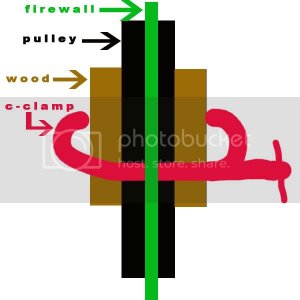
Then take two boards, one on the front side of the pulley, the other on the rear side and tighten a c-clamp on it. The boards keep the c-clamp from actually touching the pulley and damaging it. The clamp should be on the side closest to the passenger compartment so when you start to tighten the bolt (rightsy-tightsy), it will rise up and hit the fender fire wall. If you have it tight enough, you can use the leverage from the clamp on the pulley against the fender fire wall to tighten the pulley.
Here's a very rough diagram.
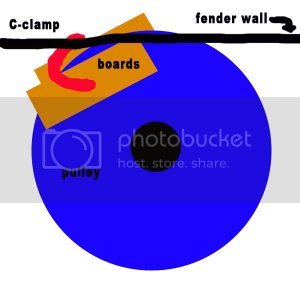
Does that make sense? If not I can see if I can modify some photos of a car to show you. It might be easier for you if you leave the belt off when doing it, but I've done it so many times with the belt on that I've got a system going so I don't even have to think about where the stuff goes to get it into place quickly.
Also, when you get ready to put things back together again, don't forget to put the crank gear shim thing in place prior to putting the pulley on. If you forget it the timing belt will walk right off the crank gear and hit your pulley which will damage it. Very important!

Have fun!

~Biz
What I usually do is take a c-clamp and the 1x2 board pieces, put the boards on either side of the pulley then clamp the c-clamp on as tight as you can get it. Use the box end of a large wrench as a cheater of sorts to get the clamp on super tight. "Put the belt into place" then rotate the bolt by hand until the boards/c-clamp meet up with the underside of the fender wall, then crank away with a torque wrench. Expect for it to slip if it's not tight enough. Don't forget the board pieces because if you clamp the c-clamp directly to the pulley you can damage the pulley.