Driver's 10-Way Seat Lumbar Repair

Disclaimer: Links on this page pointing to Amazon, eBay and other sites may include affiliate code. If you click them and make a purchase, we may earn a small commission.

longliveSHO

New Member
Joined
Jun 26, 2018
Messages
25
Reaction score
21
Location
Minnesota
When I purchased my 2011 SHO a year and a half ago the lumbar adjustment did not work, at all. You're about to see why. I'm wishing now that I had done this repair the day I brought it home.

I have the 10-way seats, which means I have a single power lumbar setting, rather than the three air bladder/massage setup.

I could not find anything online about tearing one of these seats down. Hopefully someone finds this information useful! All the steps I followed were straight from a Ford official factory workshop manual.

!!!!!!!!!!!!! EXERCISE EXTREME CAUTION DURING THIS JOB !!!!!!!!!!!!!

Most if not all gen 4 SHOs have airbags INSIDE the driver's seat. MAKE SURE YOU DEPOWER THE SRS SYSTEM before removing anything related to the airbag system. I've had an airbag blow up right in front of me (when it was supposed to, thankfully) and I don't ever want to see another one explode again, especially on accident.

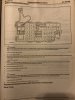
Here is the official way to do so:
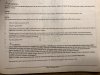
IMG 9085

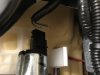
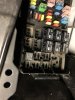
For anyone wondering, the Smart Junction Box is up underneath the dashboard, on the driver's side kick panel, way up high. There is a cover over it that releases with two clips, squeeze them and it's off. On the diagram find fuse 32, in the third row of fuses right next to the large gray relay. There should be a fuse removal tool mounted in the lid of the box. The photo below shows where the fuse should be, marked by the X in the box.
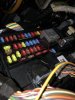
IMG 9096

Once the SRS system has been depowered, focus can be turned to the seat itself.

First, position the seat toward the middle of the track and raise it up, so you can get to the cover overtop of the seat belt anchor point. The panel covering it simply slides off, with a bit of force. Remove the bolt. IIRC it is a 13mm.
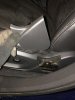
IMG 9088 IMG 9089 IMG 9090

Next up are the rear seat bolts. Remove the two plastic trim pieces covering the brackets, then remove the 13mm bolts from inside the rails. The trim pieces are clipped in, they take some force but will come right out. Pull straight back towards the rear of the vehicle, parallel to the floor. Here is everything removed:
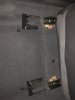
IMG 9092

Next up are the front seat bolts. There are (again) two plastic trim pieces covering the brackets, pull straight forward, parallel to the floor to remove them. They are clipped in similarly to the rear. This will reveal the two 13mm bolts, remove them as well. Please excuse the crusty floormat, I live in the midwest and it is winter. Fellow midwesterners will be overjoyed to know that the seat bolts live in brackets that do not see salt from the exterior of the vehicle! Mine wrenched out very easily. If this were a 90's Jeep, they would have probably snapped off. Ask me how I know.
IMG 9093

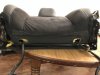
With the four bolts removed the seat is now loose. Tilt it back to reveal a spaghetti mess of wiring, but focus your attention on the two large connectors. They have large swinging release mechanisms, once the handle is released it should rotate and the connector should separate. The clips holding the handles in place were a pain to figure out, but once free my connectors released easily.
IMG 9098

Once these two connectors are disconnected, there is nothing else holding the seat to the vehicle. Remove the seat in whatever way you see fit. I strongly recommend calling a friend for this, the seat isn't exactly light and maneuvering it out of the door by yourself without destroying other interior components proved difficult. At this point you will be left with a gaping hole in the interior and whatever fast food remnants fell between the seat and the console. Surprisingly, I only had one fry down there. Rookie numbers, I'm sure.
IMG 9099
 

longliveSHO

New Member
Joined
Jun 26, 2018
Messages
25
Reaction score
21
Location
Minnesota
Moved inside for the next part - disassembling the seat itself.

The first thing to remove is the two clips holding the lower upholstery in place, they don't take much to undo.
IMG 9103

Next, the cover over the backrest hinge needs to come off. There is a scrivet (yup, that's what it's called) underneath the rear upholstery, as well as a (7 or 8mm) bolt, hidden way up and to the right, from the inside. It doesn't look like I got a good photo of it installed, my apologies for that. The arrow on the part removed is where it threads in. You can see where the scrivet goes, follow that line. Once the bolt and the scrivet are removed, the piece will hinge away. Undo the hinge at the top and the piece will be free.

IMG 9102 IMG 9104 IMG 9105

For the opposite panel, which also includes the seat controls, there is another scrivet and hidden bolt of the same size, in a similar location. In addition to those fasteners, there is an exposed bolt on the front of the panel, as well as various clips around the seat controls. They are tight, use localized force to remove the control panel. I left mine connected electrically, you can choose to disconnect it if you want.
IMG 9106 IMG 9109 IMG 9107

Once those panels are removed there are more large clips holding the upholstery in place, both obvious and buried - dig in the crease where the backrest meets the bottom cushion, there will be a clip holding the two pieces of fabric together on each side. There will be a clip going through a loop of fabric. Be sure to remove these before removing the backrest from the bottom. Once again, my apologies, doesn't look like I got the best photo of this part.
IMG 9110 IMG 9133

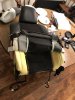
Next, flip the entire assembly on its back and disconnect/free up the two harnesses that go into the backrest from their attachment points. One will be yellow (airbag), the other will be black (power for lumbar, heat/cool, recline, etc). They are held in place with electrical tape to various points under the seat chassis.
IMG 9111 IMG 9112

With the harnesses free, the four bolts (two on each side) holding the backrest to the bottom cushion can be removed, which releases the backrest entirely. These are T50 bolts IIRC.
IMG 9114

Finally, the backrest is separated from the bottom.
IMG 9116
 

longliveSHO

New Member
Joined
Jun 26, 2018
Messages
25
Reaction score
21
Location
Minnesota
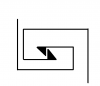
The next goal is to peel back the upholstery, about a third of the way up the backrest. It's main attachment point is at the very bottom of the backrest, in the form of a long bar connector. This was an absolute pain to separate. I ended up using two small screwdrivers and a pry tool. This is a rough diagram of how the connection looks. Simple in theory.
UpholsteryClamp

Once this connection is undone the upholstery can be peeled back ever so carefully, the front side is held on with velcro. I found it best to run my finger on one hand along the velcro while using the other to manipulate the upholstery. There is some rather delicate foam material up against the outer fabric as well, mine disintegrated when I pulled the fabric away from the yellow padding.
IMG 9129
IMG 9117

At this point the entire lumbar assembly is exposed, as was the glaring issue:
IMG 9118

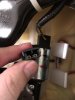
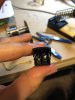
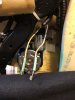
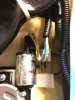
It appears as though my wiring fatigued over time, likely from repeated entry/exit, causing the wires to break off at the connector, on the vehicle harness side. I'd argue the wires were too short, maybe someone else has a better hypothesis. Makes sense why there were no signs of life. Here is another photo of the connector, removed from the lumbar motor.
IMG 9119

I had already ordered another complete lumbar assembly thinking this one was toast, but seeing this was a breath of fresh air. (Maybe the motor was still good after all?) Luckily the two wires broke in different ways, leaving it obvious which wire came from which pin (see one crimp is much fuller than the other)

At this point I decided to pull apart the connector and rebuild it, with small extensions for strain relief.

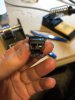
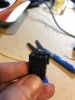
The connector was fairly easy to disassemble, the two clips can be undone to open the lid, then I jammed a tiny flathead screwdriver in the front to defeat the internal pin retention clip. I also marked the connector with a knife for polarity.
IMG 9124 IMG 9123 IMG 9125

Next I opened up what I could of the pin crimps and soldered new wire extensions to the pins. I then soldered the wires to the vehicle harness, added heat shrink tubing, and reassembled the connector - simply insert the pin into the back of the connector and it will click into place. If it doesn't stay, bend the retainer clip on the pin out a bit. The retainer clip is marked with a red arrow.
IMG 9121 IMG 9122 IMG 9126 IMG 9127

I then bench tested the motor with a 12V supply to see if the motor worked, and it did! Back in business.
 

longliveSHO

New Member
Joined
Jun 26, 2018
Messages
25
Reaction score
21
Location
Minnesota
I hate to say it, but getting the seat back together was exactly the reverse of disassembly.

You may want a friend to help align the backrest with the seat bottom. It's a bit unwieldy. Be sure to hook the upholstery clips back together, and don't get frustrated at the two tiny hidden bolts in the trim panels. I found it helped to turn the seat on its side to get them back in. YMMV.

Jumping ahead...

Once the seat has been reinstalled in the vehicle, you'll need to repower the SRS system. The push button start procedure is a little funky, and involves a special tool. Here is the official way to repower the SRS system on our vehicles:
IMG 9162 IMG 9163

So that's just what I did. I built a jumper out of an auto parts store fuse holder by tinning the ends of the wire and pounding them flat, enough to fit in the contacts of the relay box. I did have to cut some conductors away to make it thin enough. Here was my setup:

With the relay still installed:
IMG 9135

With the jumper installed:
IMG 9136 IMG 9137

I have to say, hooking up the battery with the jumper installed was the most nerve-wracking part of the entire project.

Luckily, nothing exploded. Thanks, Ford!


To sum it all up:

I now have a fully functional driver's seat! This job took me about 6 hours to do, by myself. I was taking my time and trying to be careful.

If you get this far and find you actually do have a dead lumbar motor, you can buy the entire assembly through the dealership, or Tasca or whatever place you normally get ford parts from. The part number for my 2011 with 10-way seats is 8A5Z5465500C, $88.39 shipped for pickup to my local dealer from the official ford parts website. I found this to be the cheapest option.

Luckily I was able to return the part.

To anyone looking to attempt this project, good luck! Feel free to ask questions. Happy to answer any that come up.
 

jman1200

SHO Member
Joined
Dec 5, 2017
Messages
695
Reaction score
644
Location
Ontario
The backrest of my passenger seat auto-inflates so I'll definitely be using your guide if I ever decide to tackle it.
Thanks for sharing !
 

Jeff2017

SHO Member
Joined
Jan 29, 2017
Messages
810
Reaction score
516
Good God! I'm just buying a new car when that happens!:)
 

longliveSHO

New Member
Joined
Jun 26, 2018
Messages
25
Reaction score
21
Location
Minnesota
Thanks guys!

jman1200 - if you do ever decide to do this let me know, since there is a occupancy sensor switch in the bottom cushion I believe there is a re-learn process or something - there are more steps. I can get you photos of what the manual says to do if you're interested.

Jeff2017 - I was close to doing just that... been looking at 2013+ cars for a while now since that seat was so uncomfortable!
 

Johnbigdog

SHO Member
Joined
Feb 17, 2017
Messages
1,417
Reaction score
1,703
Location
michigain
The backrest of my passenger seat auto-inflates so I'll definitely be using your guide if I ever decide to tackle it.
Thanks for sharing !

The occupancy classification system module is not used for multi-contour seats.

The multi-countour seat control module (SCMH) monitors the bladder air pressure in each bladder to get where you set it too. The modules can be swapped from the driver to passenger side. The two modules have different network addresses so when you put the drivers module in the passenger side, you'll still have to use the drivers seat controls to get the passenger seat to work.

I would bet my lunch that you just need a new multi contour seat module. They do require programming and are not plug and play.
 

jman1200

SHO Member
Joined
Dec 5, 2017
Messages
695
Reaction score
644
Location
Ontario
Man, I really have to pay you a visit. You've helped me in the past and seem to know how to fix a couple of annoyances I still have.
Will that throw a code visible in Forscan?
I tried disconnecting the air hoses at the bottom of the backrest but found that those feed the cushion so it seemed that the "pump" is built-in the backrest.
 

Johnbigdog

SHO Member
Joined
Feb 17, 2017
Messages
1,417
Reaction score
1,703
Location
michigain
Man, I really have to pay you a visit. You've helped me in the past and seem to know how to fix a couple of annoyances I still have.
Will that throw a code visible in Forscan?
I tried disconnecting the air hoses at the bottom of the backrest but found that those feed the cushion so it seemed that the "pump" is built-in the backrest.

I'm not sure which one your speaking too, but I'll shoot.

The pump is in the backrest but separate from the multi contour seat module.

The module can set dtcs but I dont recall any for a particular bladder or pressure sensor internal to it off the top of my head.
 

jman1200

SHO Member
Joined
Dec 5, 2017
Messages
695
Reaction score
644
Location
Ontario
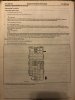
Found this in the WS manual:

Capture

I plan on parking my SHO at the end of March and start using my Mazda 6 for a while. Son got his learner's license and I want him to practice driving stick shift. That might be a good time to tear apart the seat.
 
Back
Top