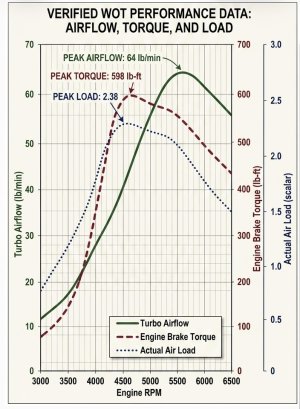
I was able to go out on Sunday and collect more data with some of the torque and inverse model expanded into the 2.2-2.3 load range as well as more brake torque. The car made too much power lol
Boost a hair over 22, EMP maxed at 22. A perfect 1:1 ratio at 22psi that’s really f good. I’d imagine it’ll creep past 1:1 on the EMP side if it gets into the 25-30+ psi range.
So 22 psi wasn’t exactly the plan. So it is going to get reduced and refined and likely ramped back but with a hard spark cap. Spark on this pull was 20. This thing pulled hard.
I was farther up on my test road than usual bc of traffic. I had to fall back and stay back much longer. I did a mini pill before the test road and it felt much faster than it’s ever been. When I went WOT I was on a sweeping right turn, really gradual nothing sharp but it pulled me straight. The lsd conversion and 22 psi just pulled straight so I had to counter steer, a hair too much and then had to counter steer again and less of an oversteer. I’m doing a mini zig and zag just getting pulled. I caught up to that car too quick and I was also caught by surprise by the power so I let out just over 100. The exhaust crackled hard.
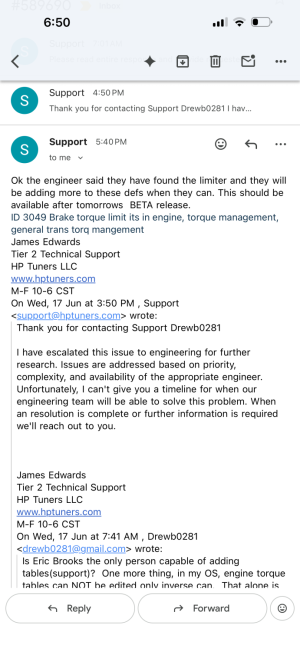
I reset KOM to -1.00 fast. I was also testing transmission changes with clutch fill times and increased pressure changes. I did a lot of driving to get the trans to relearn after clearing its adaptive tables to prep for the new transmission tune. So my trans temp was 187 in the pull. Absolutely perfect.
This happened
View attachment 97899
I’ve never made 2.3 load before and this wanted to make more, it was hitting the end of the table and being pulled back some.
Hit a few degrees knock retard that I’d expect to see if I knew it was going for 22 psi and 20 spark…so that’s not what I wanted but that’s ok, this once.
Now I know what to look for and that wasn’t Ryan’s tune. Ryan got stuck on PE and a friend, David, got me all set for PE, then he made me a trans calibration and didn’t realize I got G25’s….Im actually trying to get them to work together bc they have opposite strengths and weaknesses.
David sent me a new file, Ryan is making a new file. Not exactly what I had in mind but we’re at the point of making power.
With my new firm stance on spark and boost I want to dial in and command 18 psi and 16 spark. And it has to be close if not spot on. Then we could do 20 psi with 17 spark. At that point I don’t see much reason to push 93 too hard when I have better fuels to use.
Dial in 93, cmon, Let’s go! I need a clean file and I need successful logs and I’ll do a brake boosted 93 1/4 pull with Dragy. And move to the next fuel where we add spark and boost
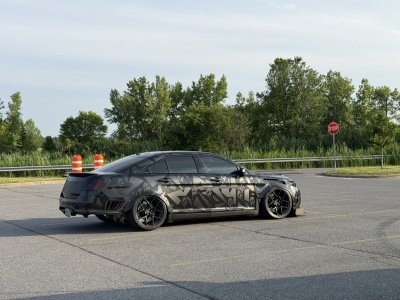
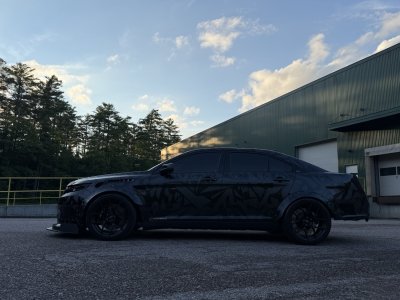
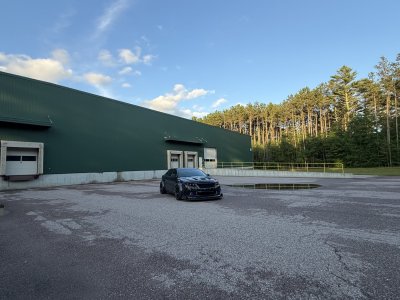
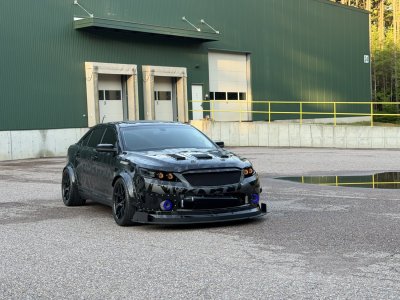
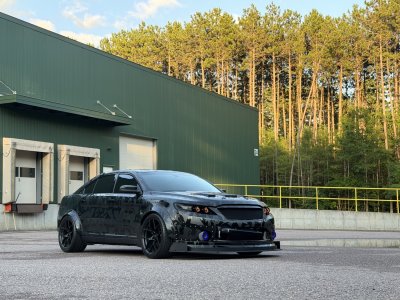
Some pics at a new place I stopped at to get ready
View attachment 97900
View attachment 97901View attachment 97902View attachment 97903



 Hahaha