2013 tranny FLUID change/ PTU change

Disclaimer: Links on this page pointing to Amazon, eBay and other sites may include affiliate code. If you click them and make a purchase, we may earn a small commission.

Big Mike 74

Active Member
Joined
Mar 20, 2015
Messages
262
Reaction score
33
For the tranny on my 2011 I didn't have a drain for my transmission it needed to be "transferred" out do these 2013's have a drain for the tranny or is it the same thing as my 11, and it is a performance package so as far as the PTU I heard also on the 13s their is a drain hole and a fill hole if so does anyone have pics of the location.
 

bpd1151

Lurking Around
Joined
Feb 21, 2010
Messages
3,131
Reaction score
6,668
Location
SHOcago 'Burbs
All model years 2010+ have drains on the trans housing's in order to facilitate the draining of the trans fluid. It doesn't matter if it's PP equipped, or not.

Who told you it does not?

2013's and up, as far as I knew, do incorporate drain & fill holes for/on the PTU. Not sure if it's PP only item, or it's found on both option pkg's.


Sent from my SM-N920V using Tapatalk
 

Big Mike 74

Active Member
Joined
Mar 20, 2015
Messages
262
Reaction score
33
PTU drain & fill holes on the 2013+ are for the PP-equipped SHOs and the PIs.
And the tranny has a drain hole as well? I remember on my 11 the dealer said it didn't and they had to suck the FLUID out... I haven't gone under the car to look
 

bpd1151

Lurking Around
Joined
Feb 21, 2010
Messages
3,131
Reaction score
6,668
Location
SHOcago 'Burbs
Your dealer was dumb.

Good God, I've done all my tranny fluid swaps myself for years now on mine.

Sent from my SM-N920V using Tapatalk
 

bpd1151

Lurking Around
Joined
Feb 21, 2010
Messages
3,131
Reaction score
6,668
Location
SHOcago 'Burbs
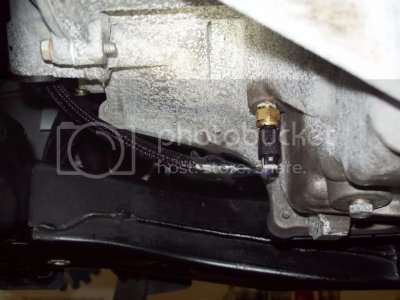
004 3

Above is the 6F55 Trans housing.....

The bolt in the far, lower right corner of this pic is the drain for the trans fluid.

Now when you crawl under yours, don't be confused if you don't see the sensor to the upper left of the drain bolt, that's because that is where I chose to tap in my trans temp sensor for my trans temp gauge inside the car.

Yours will just be a secondary bolt in that location.

Sent from my SM-N920V using Tapatalk
 

Big Mike 74

Active Member
Joined
Mar 20, 2015
Messages
262
Reaction score
33
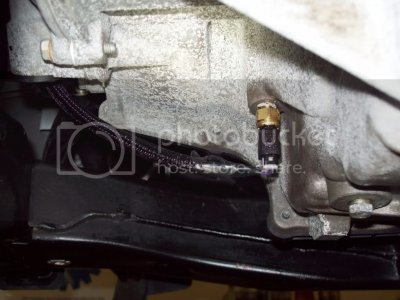
004 3

Above is the 6F55 Trans housing.....

The bolt in the far, lower right corner of this pic is the drain for the trans fluid.

Now when you crawl under yours, don't be confused if you don't see the sensor to the upper left of the drain bolt, that's because that is where I chose to tap in my trans temp sensor for my trans temp gauge inside the car.

Yours will just be a secondary bolt in that location.

Sent from my SM-N920V using Tapatalk
Yea, I'm going to do it my self lol, dam dealer I just didn't have the time, how much comes out when you drain from there? Is it around 5-6 qts like dripping the pan on older trannys or more...... Thanks for your help by the way!
 

bpd1151

Lurking Around
Joined
Feb 21, 2010
Messages
3,131
Reaction score
6,668
Location
SHOcago 'Burbs
Yes, each time you drain, you will drop about 5.5qts out.

The whole system carries almost 11qts.

Because this is literally such an easy service to perform (as easy as changing out your own oil I'll add) most of us will change out the trans fluid twice, in relatively short intervals.

Why? Because if you drain it once and refill, you'll only end up with a fresh 5.5qts or so.

Let it mix in with the "old" fluid still in the system, then say in 2 weeks or so, drop and refill it again. So theoretically you'll have as much "fresh/new" fluid in the system in total.

Also, one final note, due to how finicky Ford tranny's are, I would personally recommend only using the Motorcraft Mercon LV Fluid specifically.

Just not worth the risk of using anything else. Least not in my opinion.

Good luck and yea, no problem on the assistance. Merry Christmas.

Sent from my SM-N920V using Tapatalk
 

RAYJAY

WHO ME ?
Joined
Apr 13, 2005
Messages
1,607
Reaction score
337
Location
UNION DALE PA
bpd1151 how often do you change the fluid ? every year every 20,000 inquiring minds would like to know ..........
 

bpd1151

Lurking Around
Joined
Feb 21, 2010
Messages
3,131
Reaction score
6,668
Location
SHOcago 'Burbs
bpd1151 how often do you change the fluid ? every year every 20,000 inquiring minds would like to know ..........

Twice a year. Regardless of mileage.

Once in the Spring, and a second time in the Fall.

Obviously that's extreme, but so is my build.

I wouldn't think it's necessary for most to embrace the same time table(s), but ****..... certainly couldn't hurt.

That's for sure.

Sent from my SM-N920V using Tapatalk
 

RAYJAY

WHO ME ?
Joined
Apr 13, 2005
Messages
1,607
Reaction score
337
Location
UNION DALE PA
Twice a year. Regardless of mileage.

Once in the Spring, and a second time in the Fall.

Obviously that's extreme, but so is my build.

I wouldn't think it's necessary for most to embrace the same time table(s), but ****..... certainly couldn't hurt.

That's for sure.

Sent from my SM-N920V using Tapatalk


and you do the double dump every time
 

SHOdded

SHO Member
Joined
Dec 25, 2011
Messages
9,045
Reaction score
4,390
Location
Maryland
The tranny and PTU are two different parts of the drivetrain, just to be clear, Big Mike. The PTU takes the output of the tranny and distributes it between the front and rear axles (with the help of the driveshaft and RDU, the RDU being located between the rear wheels). Looking at the car from underneath, the tranny has a DRAIN hole, and the PTU/RDU each have FILL holes. The 2013+ PP/PI vehicles have in addition a DRAIN hole for the PTU.

Taken from the 2007 Edge FSM:

Power Transfer Unit (PTU)
The power transfer unit (PTU) is a gearbox that attaches to the transaxle. The RH intermediate shaft passes through the PTU and engages the differential side gear as in normal front wheel drive (FWD) applications. The PTU directs power to the rear driveshaft through a helical gear spline coupled to the transaxle differential case, a helical gear drop (idler gear) and hypoid/helical ring gear assembly and pinion set. The PTU is sealed from the transaxle and has its own oil sump.

Repair of the PTU is limited to the seals, dust covers and the output ****** only. If any of the geared components, bearings, case cover or internal shafts are damaged or worn, a new PTU must be installed.

Rear Drive Axle and Differential
The differential housing cover uses a silicone sealant rather than a gasket.

The halfshafts are held in the differential case by a driveshaft bearing retainer circlip that is located on the inboard CV joint stub shaft pilot bearing housing. When each halfshaft is installed, the driveshaft bearing retainer circlip engages a step in the differential side gear.

The rear drive axle operates as follows:
  • The rear axle drive pinion receives power from the engine through the transaxle, transfer case, driveshaft and active torque coupling, and is always engaged.
  • The pinion gear rotates the ring gear, which is bolted to the differential case outer ******.
  • Inside the differential case, 2 differential pinion gears are mounted on a differential pinion shaft which is pinned to the differential case.
  • These differential pinion gears are engaged with the differential side gears to which the halfshafts are splined.
  • As the differential case turns, it rotates the halfshafts and rear wheels.
  • When it is necessary for one wheel and halfshaft to rotate faster than the other, the faster turning differential side gear causes the differential pinion gears to roll on the slower turning differential side gear. This allows differential action between the 2 halfshafts. The right halfshaft is longer than the left halfshaft.
The active torque coupling is installed as an assembly with the rear axle.
 

Big Mike 74

Active Member
Joined
Mar 20, 2015
Messages
262
Reaction score
33
The tranny and PTU are two different parts of the drivetrain, just to be clear, Big Mike. The PTU takes the output of the tranny and distributes it between the front and rear axles (with the help of the driveshaft and RDU, the RDU being located between the rear wheels). Looking at the car from underneath, the tranny has a DRAIN hole, and the PTU/RDU each have FILL holes. The 2013+ PP/PI vehicles have in addition a DRAIN hole for the PTU.

Taken from the 2007 Edge FSM:

Power Transfer Unit (PTU)
The power transfer unit (PTU) is a gearbox that attaches to the transaxle. The RH intermediate shaft passes through the PTU and engages the differential side gear as in normal front wheel drive (FWD) applications. The PTU directs power to the rear driveshaft through a helical gear spline coupled to the transaxle differential case, a helical gear drop (idler gear) and hypoid/helical ring gear assembly and pinion set. The PTU is sealed from the transaxle and has its own oil sump.

Repair of the PTU is limited to the seals, dust covers and the output ****** only. If any of the geared components, bearings, case cover or internal shafts are damaged or worn, a new PTU must be installed.

Rear Drive Axle and Differential
The differential housing cover uses a silicone sealant rather than a gasket.

The halfshafts are held in the differential case by a driveshaft bearing retainer circlip that is located on the inboard CV joint stub shaft pilot bearing housing. When each halfshaft is installed, the driveshaft bearing retainer circlip engages a step in the differential side gear.

The rear drive axle operates as follows:
  • The rear axle drive pinion receives power from the engine through the transaxle, transfer case, driveshaft and active torque coupling, and is always engaged.
  • The pinion gear rotates the ring gear, which is bolted to the differential case outer ******.
  • Inside the differential case, 2 differential pinion gears are mounted on a differential pinion shaft which is pinned to the differential case.
  • These differential pinion gears are engaged with the differential side gears to which the halfshafts are splined.
  • As the differential case turns, it rotates the halfshafts and rear wheels.
  • When it is necessary for one wheel and halfshaft to rotate faster than the other, the faster turning differential side gear causes the differential pinion gears to roll on the slower turning differential side gear. This allows differential action between the 2 halfshafts. The right halfshaft is longer than the left halfshaft.
The active torque coupling is installed as an assembly with the rear axle.
Understood thank you for the info!.....yea I've seen videos on YouTube of a 2013 Sho blowing the PTU from a wide open throttle blip.....I have 36,000 miles on the car and I don't drive it too easy so I'm sure I'm due.
 

Forum statistics

Threads
107,088
Messages
1,181,315
Members
16,153
Latest member
lapochkarr

Members online

Back
Top