Lincoln MKS factory "Magnaride" retrofitted to 2015 SHO

Disclaimer: Links on this page pointing to Amazon, eBay and other sites may include affiliate code. If you click them and make a purchase, we may earn a small commission.

aaron240

SHO Member
Joined
Mar 18, 2019
Messages
299
Reaction score
487
Location
Cambridge, Ohio
Hello ecoboost community,

As this tittle states I am in the process of retrofitting the MKS adaptive suspension to my 2015 SHO. Please see the parts list below of the factory Motorcraft parts used to make this swap possible. Physically, the electronically adjustable dampeners or "Magnaride" as most are familiar with, can bolt right up to the SHO. This modification once complete will allow the driver adjust the softness or stiffness of the suspension with the simple push of a button from the driver seat. This should be applicable to SHO's with HR springs as well, so if a softer ride is desired at the lower HR ride height, simply push a button to accommodate. Lincoln states that their electronic dampeners used in the factory suspension can provide up to a 15% softer ride than stock and up to a 20% stiffer ride than stock, this gives an approximately 35% swing of adjustable ride softness/stiffness control.

To my knowledge, this swap has not been done in the 10+ years the SHO has been out. If anyone has done this swap please advise and weigh in as I do have some additional questions to complete the swap. These questions include to the Lincoln MKS Suspension Control Module's input voltage/current fed from the ECM or BCM, and the resulting output dampener current values which are used to control factory ride settings.

Upload 2021 2 16 14 7 18

Upload 2021 2 16 14 7 45

Upload 2021 2 16 14 8 31
 

mattr66

SHO Member
Joined
Sep 3, 2015
Messages
320
Reaction score
694
Does the harness already exist? Cool project!

Sent from my motorola edge plus using Tapatalk
 

aaron240

SHO Member
Joined
Mar 18, 2019
Messages
299
Reaction score
487
Location
Cambridge, Ohio
Thanks Matt! Yeah the harness does exist but it’s $450 for front and I couldn’t find the rear harness. Also that doesn’t include the electronic inputs required to vary the dampeners.
Does the harness already exist? Cool project!

Sent from my motorola edge plus using Tapatalk
 

Zpak

Es Aich Oh!
Joined
Jun 1, 2017
Messages
1,978
Reaction score
2,530
Location
The region, Indiana
Yeah the comfort mode was definitely floaty. Even sport mode suspension was a far more soft and subdued ride than the SHO in stock form.
 

SHOrod

Torrie Tuned
Joined
Jan 1, 2006
Messages
1,194
Reaction score
533
Location
Cedar Rapids, IA
The 2013 MKS also uses ride height sensors for the adaptive suspension which I don't see on your list of parts. I suspect you'll need that input for the control module as well, or will at least need to tie the input either high or low to fool the module in to thinking the car is at normal ride height. I'm not sure if it's just a switch or if it's a rotary encoder. I'll have to check the service manual, but I won't be surprised if the interface to the ECM/BCM is via the CANbus versus a simple discrete voltage/current interface.

-Rod
 

aaron240

SHO Member
Joined
Mar 18, 2019
Messages
299
Reaction score
487
Location
Cambridge, Ohio
The 2013 MKS also uses ride height sensors for the adaptive suspension which I don't see on your list of parts. I suspect you'll need that input for the control module as well, or will at least need to tie the input either high or low to fool the module in to thinking the car is at normal ride height. I'm not sure if it's just a switch or if it's a rotary encoder. I'll have to check the service manual, but I won't be surprised if the interface to the ECM/BCM is via the CANbus versus a simple discrete voltage/current interface.

-Rod

I was reading more into that as well. I was
Hoping I could turn that height sensor off so that it wouldn’t control the dampening and I could manually select the dampening desired. If you have any advice or insight into the matter I would appreciate it, this is a trial by error project and the potential for errors seem very high at this point.
 

rubydist

SHO Master
Staff member
Super Moderators
Joined
Jun 25, 2007
Messages
7,521
Reaction score
3,399
Location
Denver
I don't have a factory service manual for your vehicle, but if you have one you should be able to find in the troubleshooting section how to measure the volts or amps being sent to the struts for the various damping settings. If you can find that, then you should be able to rig an electrical box that allows you to select the correct setting for whichever setting you desire.
 

Ta2dResqr

SHO Member
Joined
Dec 10, 2020
Messages
1,208
Reaction score
1,144
Location
Central Ohio
I wish you the best, however, after looking at this for a little while, I think it is going to be a very tall order. The module is connected to the CAN Bus and wants a lot of information that may not be provided and will end up in fault codes which usually send the system into some sort of default mode. From a quick overview you may experience issue from height sensors (require a configuration procedure through a scan tool, appear to be some sort of sweep sensor/resistor), damper solenoids, pressure solenoid, ECM/PCM, ABS, SASM, BCM, RCM, IPC, or APIM. All of these components have trouble codes associated with them. I wish you the best with this project and hope you can figure a way to make it work, if you need help with wiring diagrams or trouble codes, etc, please message me and I will send you what I can.
 

aaron240

SHO Member
Joined
Mar 18, 2019
Messages
299
Reaction score
487
Location
Cambridge, Ohio
I wish you the best, however, after looking at this for a little while, I think it is going to be a very tall order. The module is connected to the CAN Bus and wants a lot of information that may not be provided and will end up in fault codes which usually send the system into some sort of default mode. From a quick overview you may experience issue from height sensors (require a configuration procedure through a scan tool, appear to be some sort of sweep sensor/resistor), damper solenoids, pressure solenoid, ECM/PCM, ABS, SASM, BCM, RCM, IPC, or APIM. All of these components have trouble codes associated with them. I wish you the best with this project and hope you can figure a way to make it work, if you need help with wiring diagrams or trouble codes, etc, please message me and I will send you what I can.

Thank guys I appreciate the helpful insight and feedback. After some research I have came to the conclusion I will most likely need a custom controller as I will not be using the ride height sensors, and thus not be using the factory suspension module. I will update the community when i find out more and once I get the system operational on my car.
 

aaron240

SHO Member
Joined
Mar 18, 2019
Messages
299
Reaction score
487
Location
Cambridge, Ohio
I don't have a factory service manual for your vehicle, but if you have one you should be able to find in the troubleshooting section how to measure the volts or amps being sent to the struts for the various damping settings. If you can find that, then you should be able to rig an electrical box that allows you to select the correct setting for whichever setting you desire.
I need this for a Lincoln MKS 2014-2016. Would any members be kind enough that one to help dig in that manual for me and for the good of the community for those power and current values?
 

Ta2dResqr

SHO Member
Joined
Dec 10, 2020
Messages
1,208
Reaction score
1,144
Location
Central Ohio
I need this for a Lincoln MKS 2014-2016. Would any members be kind enough that one to help dig in that manual for me and for the good of the community for those power and current values?

So this system is not a simple 3 position setting. It is a Dynamic system. This is why it require feedback from so many modules. This system has a Hydraulic Solenoid Valve in each damper. These valves have a 2 wire connector. The semi-active suspension dampening provides improved handling, comfort and stability by continuously adjusting the adaptive shock absorber force to the current road and driving conditions. The VDM sends a variable voltage to the damper solenoids based on sensor input and HS-CAN messages. The VDM is connected to the HS-CAN to communicate with other modules. The VDM also gathers vehicle suspension height information from the 4 height sensors. With the information received, the VDM monitors the heave, roll, pitch, cornering, braking and acceleration of the vehicle. Based on this information, the VDM calculates the best action for each valve solenoid. Once the valve solenoid is energized, the damping increases with the PWM duty cycle. At minimum current the damping is less than when max current is applied. The damper and valve solenoid have been designed so failure leads to a firm ride. The fail-safe level of damping is at a level equivalent to what is produced at higher currents, but it is not the same as the maximum current. The driver can select 1 of 3 preset system modes (Comfort, Normal or Sport) using the message center. When a mode is selected, the VDM regulates the PWM signal to the valve solenoids to keep the suspension "feel" relational to the selected mode. When the VDM is initialized (ignition ON), it carries out a preliminary electrical check of the height sensors, height sensor circuits, valve solenoids and valve solenoid circuits. Any malfunction detected in the system causes the VDM to set a DTC and send a message over the HS-CAN to the IPC or APIM (depending on vehicle configuration). The IPC or APIM responds by displaying a message in the message center. Depending on the DTC present, the VDM may deactivate the dynamic suspension system resulting in a firm suspension feel.

I can tell you the higher the current, the more the valve is open and the higher the level of dampening.

I am sure this is not the answer you are hoping for. Sorry for the bad news.
 

aaron240

SHO Member
Joined
Mar 18, 2019
Messages
299
Reaction score
487
Location
Cambridge, Ohio
So this system is not a simple 3 position setting. It is a Dynamic system. This is why it require feedback from so many modules. This system has a Hydraulic Solenoid Valve in each damper. These valves have a 2 wire connector. The semi-active suspension dampening provides improved handling, comfort and stability by continuously adjusting the adaptive shock absorber force to the current road and driving conditions. The VDM sends a variable voltage to the damper solenoids based on sensor input and HS-CAN messages. The VDM is connected to the HS-CAN to communicate with other modules. The VDM also gathers vehicle suspension height information from the 4 height sensors. With the information received, the VDM monitors the heave, roll, pitch, cornering, braking and acceleration of the vehicle. Based on this information, the VDM calculates the best action for each valve solenoid. Once the valve solenoid is energized, the damping increases with the PWM duty cycle. At minimum current the damping is less than when max current is applied. The damper and valve solenoid have been designed so failure leads to a firm ride. The fail-safe level of damping is at a level equivalent to what is produced at higher currents, but it is not the same as the maximum current. The driver can select 1 of 3 preset system modes (Comfort, Normal or Sport) using the message center. When a mode is selected, the VDM regulates the PWM signal to the valve solenoids to keep the suspension "feel" relational to the selected mode. When the VDM is initialized (ignition ON), it carries out a preliminary electrical check of the height sensors, height sensor circuits, valve solenoids and valve solenoid circuits. Any malfunction detected in the system causes the VDM to set a DTC and send a message over the HS-CAN to the IPC or APIM (depending on vehicle configuration). The IPC or APIM responds by displaying a message in the message center. Depending on the DTC present, the VDM may deactivate the dynamic suspension system resulting in a firm suspension feel.

I can tell you the higher the current, the more the valve is open and the higher the level of dampening.

I am sure this is not the answer you are hoping for. Sorry for the bad news.

I'm not sure bad is the takeaway news I would take from this all. It def is a very involved system and would be a nightmare to equip exactly how it is on the Lincoln so that it is adaptive and "smart" to road and driving dynamics.

That being said, I still believe the adjustable ride softness or stiffness can still be achieved with these electronic suspension dampeners. The ride quality will be fixed based upon the drivers input selection and will be adjustable from the driver seat, but require a manual input from the driver to make the suspension stiffer or softer.
 

Ta2dResqr

SHO Member
Joined
Dec 10, 2020
Messages
1,208
Reaction score
1,144
Location
Central Ohio
I'm not sure bad is the takeaway news I would take from this all. It def is a very involved system and would be a nightmare to equip exactly how it is on the Lincoln so that it is adaptive and "smart" to road and driving dynamics.

That being said, I still believe the adjustable ride softness or stiffness can still be achieved with these electronic suspension dampeners. The ride quality will be fixed based upon the drivers input selection and will be adjustable from the driver seat, but require a manual input from the driver to make the suspension stiffer or softer.

I believe you will need to develop a "module" to control this. Being that the solenoid is controlled by a PWM signal, it won't be as simple as a rotary dial with 1.5v, 3v, and 4.5v positions. PWM means it will need to be controlled with a constant on/off signal with the frequency changing in order to achieve the different settings. None of the data I have gives a range of the frequency needed. No idea if it is 60hz or 60khz. if you have access to a car with this system actively installed, you could use an oscilloscope to see if sitting at rest the frequency changes based on position chosen. If not, then maybe try checking down the same stretch of road at a constant speed with no other driver inputs (steering, throttle, braking, etc). I would repeat each setting 5 times and see if the frequency is repeatable.
 

aaron240

SHO Member
Joined
Mar 18, 2019
Messages
299
Reaction score
487
Location
Cambridge, Ohio
I believe you will need to develop a "module" to control this. Being that the solenoid is controlled by a PWM signal, it won't be as simple as a rotary dial with 1.5v, 3v, and 4.5v positions. PWM means it will need to be controlled with a constant on/off signal with the frequency changing in order to achieve the different settings. None of the data I have gives a range of the frequency needed. No idea if it is 60hz or 60khz. if you have access to a car with this system actively installed, you could use an oscilloscope to see if sitting at rest the frequency changes based on position chosen. If not, then maybe try checking down the same stretch of road at a constant speed with no other driver inputs (steering, throttle, braking, etc). I would repeat each setting 5 times and see if the frequency is repeatable.

That was the plan! Thanks man, I’m glad I’m not the only one that was thinking this way in regards to a custom module and testing!
 

rubydist

SHO Master
Staff member
Super Moderators
Joined
Jun 25, 2007
Messages
7,521
Reaction score
3,399
Location
Denver
aaron240, it doesn't need to be a PWM circuit, its just that PWM is the simplest way to create the effect of varying voltage to the damper solenoid. I'll see if I can get access to a MKS manual through Oasis if I get time today - it may be next week before I get that far.
 

aaron240

SHO Member
Joined
Mar 18, 2019
Messages
299
Reaction score
487
Location
Cambridge, Ohio
aaron240, it doesn't need to be a PWM circuit, its just that PWM is the simplest way to create the effect of varying voltage to the damper solenoid. I'll see if I can get access to a MKS manual through Oasis if I get time today - it may be next week before I get that far.

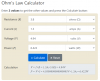
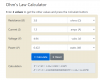
Thank man that would be awesome! This is what I have found thus far on the "interweb", see the attached manual for a 2014 MKS.

The VDC Module receives 9-16 Volts, and the sends a certain amount of this voltage to the dampener solenoids.
The dampener solenoids should not exceed a current of 1.3 amps.
The dampeners have a resistance of 3.5-4 ohms

My assumptions on the ranges.

Upload 2021 2 19 10 7 20

Upload 2021 2 19 10 11 21

Upload 2021 2 19 10 12 6

I still need or need to verify:

Voltage range sent to the dampeners, assuming (1.5V - 5V).
Current range sent to the dampeners, assuming (0.5A - 1.3A).
Frequency in hertz sent to the dampeners, assuming (400Hz).
If I had the factory specified values for the voltage, current and hertz at the comfort, normal and sport modes that would be great!
 

Attachments

  • Lincoln Dynamic Suspension Troubleshooting.pdf
    747.2 KB · Views: 0
  • upload_2021-2-19_9-56-34.png
    upload_2021-2-19_9-56-34.png
    51.1 KB · Views: 8
  • upload_2021-2-19_9-57-46.png
    upload_2021-2-19_9-57-46.png
    50.3 KB · Views: 9
Last edited:

SHOrod

Torrie Tuned
Joined
Jan 1, 2006
Messages
1,194
Reaction score
533
Location
Cedar Rapids, IA
I agree that the stand alone controller would likely not need to be PWM. Pulse Width Modulation doesn't typically change in frequency, it changes in pulse width. PWM is more efficient than using a voltage regulator, voltage divider, or resistive means to change the voltage or current. An Arduino seems well suited for serving as the stand alone controller since it had PWM outputs already (you'd need to add some FETS to handle the current), has a large support base/following online, is quite inexpensive, and also offers capabilities of having as fancy of a driver information display as you likely desire.

I have a 2013 MKS EcoBoost with the active suspension and I'm pretty sure I also have the factory service manual DVD for it. Fortunately I haven't had a reason to dig in to the service manual yet, and I'm not sure how much design information it will have it in for the active suspension. I also happen to have a few oscilloscopes at home but given that most of the easily accessible wiring is also exposed to the elements, I'm not sure there will be a convenient way to check the signal in a loaded condition (current draw) but if I can get the PWM signal for Comfort, Normal, and Sport settings and you have the solenoid resistance, you can calculate the current that the system must be able to source.

-Rod
 

aaron240

SHO Member
Joined
Mar 18, 2019
Messages
299
Reaction score
487
Location
Cambridge, Ohio
I agree that the stand alone controller would likely not need to be PWM. Pulse Width Modulation doesn't typically change in frequency, it changes in pulse width. PWM is more efficient than using a voltage regulator, voltage divider, or resistive means to change the voltage or current. An Arduino seems well suited for serving as the stand alone controller since it had PWM outputs already (you'd need to add some FETS to handle the current), has a large support base/following online, is quite inexpensive, and also offers capabilities of having as fancy of a driver information display as you likely desire.

I have a 2013 MKS EcoBoost with the active suspension and I'm pretty sure I also have the factory service manual DVD for it. Fortunately I haven't had a reason to dig in to the service manual yet, and I'm not sure how much design information it will have it in for the active suspension. I also happen to have a few oscilloscopes at home but given that most of the easily accessible wiring is also exposed to the elements, I'm not sure there will be a convenient way to check the signal in a loaded condition (current draw) but if I can get the PWM signal for Comfort, Normal, and Sport settings and you have the solenoid resistance, you can calculate the current that the system must be able to source.

-Rod
That would be awesome man! If you could provide that PWM signal i could do the current calculation to figure out what those comfort, normal, and sport settings are.

Also, I will look into the Arduino device, that is what you would recommend as the standalone controller for the suspension settings?
 
Back
Top