The signal IS controlled by the SJB, as you stated. There is no physical relay involved.
From the FSM:
Principles of Operation
NOTE: The Smart Junction Box (SJB) is also known as the Generic Electronic Module (GEM).
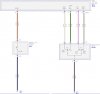
The SJB monitors the multifunction switch position by sending multiple voltage reference signals to the multifunction switch. When the multifunction switch is in the LH or RH TURN position, or the hazard lamp switch is pressed, that input signal is routed to ground.
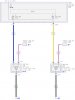
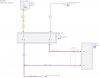
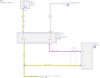
When the SJB receives a request for a turn signal or the hazard lamps, the SJB supplies on/off voltage to the appropriate turn lamps.
If the rear stoplamps are combined with the turn lamps, the turn and hazard lamp functions override the rear stoplamp function.
The timed on/off cycle for the turn lamps is determined by the SJB and is set to flash approximately 80 times per minute if both the front and rear turn lamps operate correctly. If an individual turn signal lamp is inoperative, the SJB flashes the remaining turn lamp approximately 160 times per minute.
The timed on/off cycle for the hazard flasher lamps is approximately 80 times per minute, regardless of bulb outage.
Field-Effect Transistor (FET) Protection
Field-Effect Transistor (FET) is a type of transistor that when used with module software can be used to monitor and control current flow on module outputs. The FET protection strategy is used to prevent module damage in the event of excessive current flow.
The SJB utilizes an FET protective circuit strategy for many of its outputs (for example, a headlamp output circuit). Output loads (current level) are monitored for excessive current (typically short circuits) and are shut down (turns off the voltage or ground provided by the module) when a fault event is detected. A continuous DTC is stored at the fault event and a cumulative counter is started.
When the demand for the output is no longer present, the module resets the FET circuit protection. The next time a request activates a circuit that has been shut down by a previous short ( FET protection) and the circuit remains shorted, the FET protection shuts off the circuit again and the cumulative counter advances.
When the excessive circuit load occurs often enough, the module shuts down the output until a repair procedure is carried out. Each FET protected circuit has 3 predefined levels of short circuit tolerance based on the harmful effect of each circuit fault on the FET and the ability of the FET to withstand it. A total level of fault events is established based upon the durability of the FET . If the total tolerance level is determined to be 600 fault events, the 3 predefined levels would be 200, 400 and 600 fault events.
When each tolerance level is reached, the continuous DTC that was stored on the first failure cannot be cleared by a command to clear the continuous DTCs. The module does not allow this code to be cleared or the circuit restored to normal operation until a successful self-test proves that the fault has been repaired. After the self-test has successfully completed (no on-demand DTCs present), the continuous DTC automatically clears and the circuit function returns.
When the first or second level is reached, the continuous DTC (associated with the short circuit) sets along with DTC B106E. These DTCs can be cleared using the module self-test, then the Clear DTC operation on the scan tool as long as the fault itself has been corrected.
If the number of short circuit fault events reach the third level, then DTCs B106F and B1342 set along with the associated continuous DTC. This DTC cannot be cleared and the module must be replaced.
The SJB FET protected output circuits for the turn lamp system are the LH and RH front turn lamp and the LH and RH rear turn lamp output circuits.




 Finally Upgrading After 18 Months Of Ownership
