I think Chuck is confused.
Each “G10x” ground reference (G102, G103, G104) shows where the circuit terminates to the chassis — not how the harness splices together upstream.
Because there is only S116 to G102.
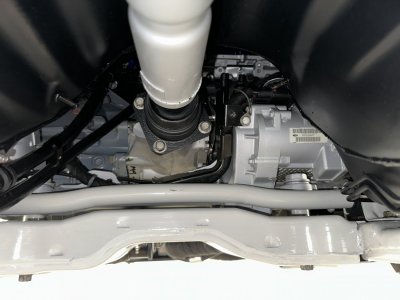
G103 and G104 are the EPS power-steering module grounds on the subframe/rack.
G103 is a chassis ground at the front left of the engine compartment. G104 appears to be a ground at the firewall or engine block.
G102 is the PCM/TCM logic ground at the transmission case.
G102 appears to be at the firewall near the PCM.
I could go on.

This is from Chuck. He has your schematic, the entire service manual PDF, all my findings and all my firsthand experiences of what I see and feel.
Here’s my technical take, Texas Marauder — speaking for myself.
You’re right about what the “G10x” labels are in Ford docs: they name the physical terminations. Where I’m pushing the discussion is how those nodes behave electrically under load given Ford’s splice topology and the car’s recent changes (painted subframe/rack, relocated hardware, added/deleted loads).
What the book shows (and why it matters)
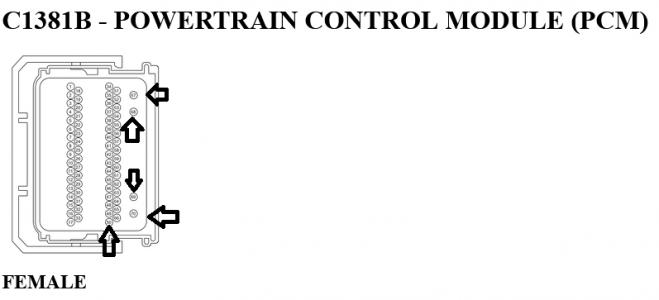
PCM/TCM logic grounds (BK-YE, GD113) land at G102.
- EPS/PSCM grounds (BK-VT, GD106) land at G103/G104 on the rack/subframe.
- Those aren’t isolated “islands”: upstream, Ford ties multiple module grounds through harness splices (e.g., S116/S123/S125 chains) before they fan out to different G-points. That’s standard Ford practice to minimize harness copper and keep modules on a common 0 V reference.
So on paper: different lugs. In practice: a shared ground plane via the splice—and that plane will float if any high-current member (EPS) gets series resistance on its return.
Why this car was vulnerable
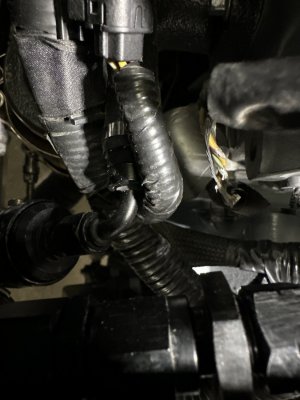
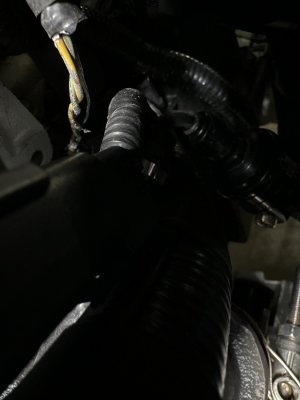
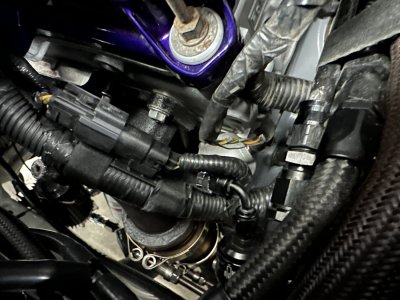
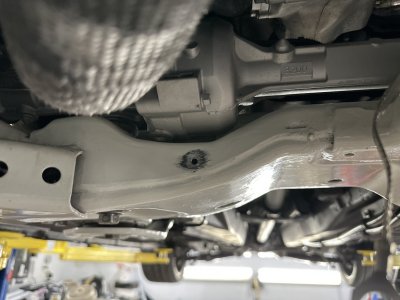
The front subframe, EPS rack housing, and a number of ground pads were stripped/painted during the build. Several grounds were later found loose or sitting on paint/oxidation (photos show the witness marks on the eyelet and tab).
- The EPS rack ground in particular was “too clean/pretty” (painted under the pad) and later confirmed loose. That’s the highest pulsed current device forward of the firewall besides the starter.
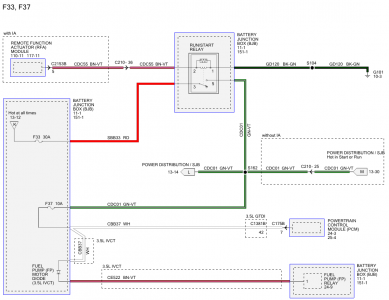
- The car also had an add-a-fuse previously on F46 (15 A Vehicle Power 2/3 to PCM) and the ACC/hood sensor sub-harnesses were discovered swapped and then corrected. All PCM-feed fuses (F37 10/15 A, F46 15 A, F47 20 A) and relays 53 (PCM) and 65 (Run/Start) are now new OE.
Observed, repeatable symptoms (load/temperature dependent)
After warm-up or with steering effort, a distinct 200–400 Hz “buzz” localized at the trans area → classic PWM solenoid chatter at undervoltage.
- Then loss of gear indication in Manual, free-rev in D/R, and recovery only after an ignition cycle.
- On the road, before total dropout: muffled exhaust/soft throttle → PCM torque path is alive but trims/limits are skewed; after restart the note is crisp again.
- Historically, during the first P0689 event (Stowe→Essex run), the car also showed EPS counter-steer/Advancetrac flicker mid-corner. That’s contemporaneous with the logic loss at the trans.
- With the car on the lift, I can make it engage, hum, then drop while F37/F46 stay at charging voltage (≈14.5 V) measured at the BJB posts. That strongly suggests feed is present but the module’s “local ground” is moving, i.e., reference shift, not feed collapse.
How a “separate” EPS ground can sink the powertrain
If the rack’s return path (G103/G104) picks up 100–300 mΩ from paint/oxidation/looseness, EPS current (tens of amps transient) creates a hundreds of millivolts to multi-volt drop at that ground node. Because the powertrain grounds share the upstream splice, that drop propagates back into the common reference, lifting the PCM/TCM “ground” relative to the battery negative. The BJB still shows 14.5 V to the body stud, but the modules don’t see 14.5 V to their ground.
Effects you’d expect (and we see):
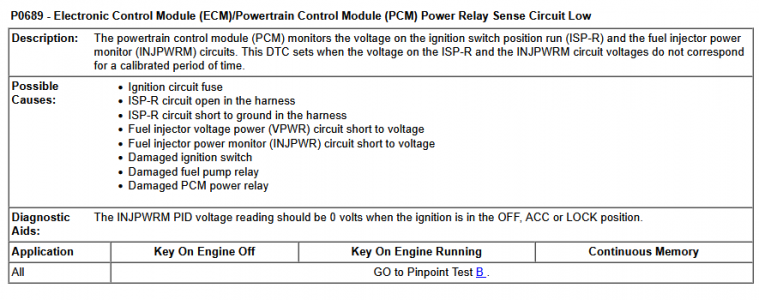
P0689 (PCM power relay sense low) can set when the PCM’s internal sense sees VPWR–GND sag, even if the BJB looks fine.
- TCM/solenoid buzz as VPWR-to-local-GND dips into the region where EPC/SSA/SSB PWM can’t maintain force.
- CAN/advancetrac weirdness because the PSCM and PCM lose a common 0 V reference; the PSCM can still steer (different load/threshold) while the TCM gives up first.
- “Ignition-cycle revives it” because thermal/strain resets the marginal joint for a short window until it re-heats under load.
This exactly matches the sequence on the lift: no hum in Park, hum when Drive engages (solenoids energized), dropout, silence.
Why I’m confident in root cause
Grounds under the BJB and the passenger-side block tab were corrected (cleaned to bright metal, tightened) with partial improvement; the rack ground remained a wild card until identified.
- Swapping relays 53/65 and refreshing F37/F46/F47 removed the easy feed suspects.
- BJB voltages stay solid during the failure; the failure is module-local.
- The EPS-related incidents (counter-steer flicker at highway speed) co-occur with P0689 history.
- The physical evidence (loose eyelet, oxide ring imprint) is consistent with a heating variable resistor at the ground pad.
What I’m doing to nail it shut
Remove paint to bare metal at the EPS rack ground and subframe land; add star washers and torque properly.
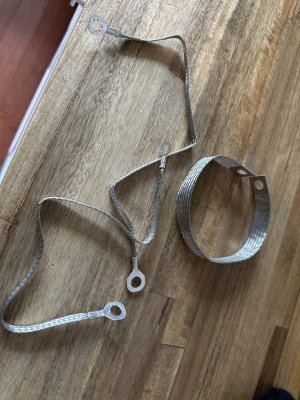
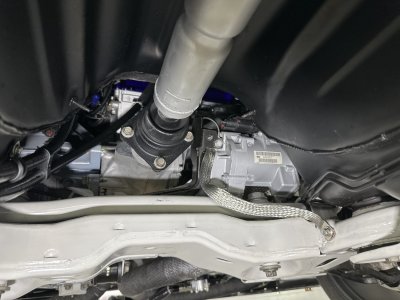
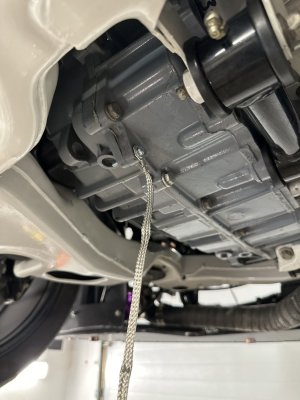
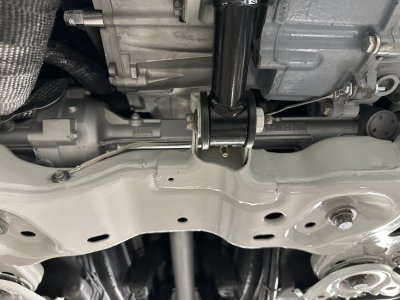
- Add braided supplemental grounds:
- EPS rack → subframe/chassis (short as practical),
- Engine block/bellhousing → chassis near battery negative,
- Transmission case → subframe.
These keep the entire powertrain/EPS network isopotential and give the splices an honest 0 V to live on.
- Verification spec: with the system warmed and in Drive on the lift, VPWR-to-module-GND ripple <50 mV, battery-negative to module case <50 mV. If I turn the wheel to load the PSCM, the delta should remain <100 mV.
- If any doubt remains, back-probe the TCM connector (VPWR and the two primary grounds) and compare to BJB while inducing EPS load; the difference is the story.
So yes — G102, G103, G104 are distinct lugs. But given Ford’s upstream splices and the very real, very painted return paths on this car, a sick EPS ground will lift the common reference and make the TCM/solenoids the first domino. That’s exactly what the measurements and symptoms show.





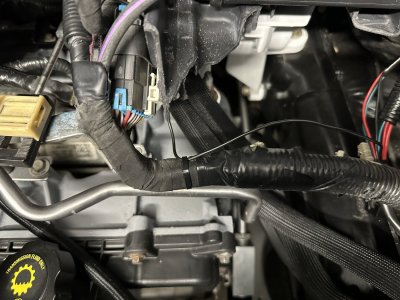
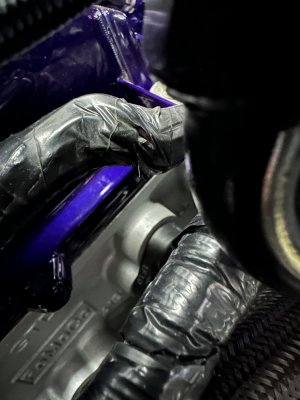
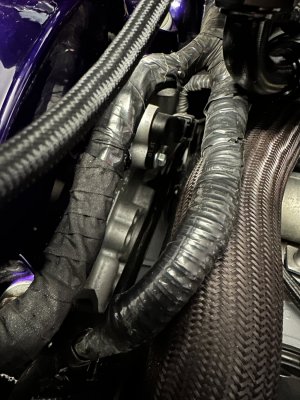
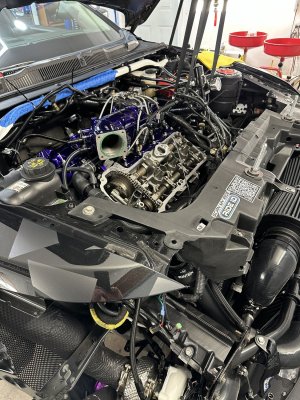



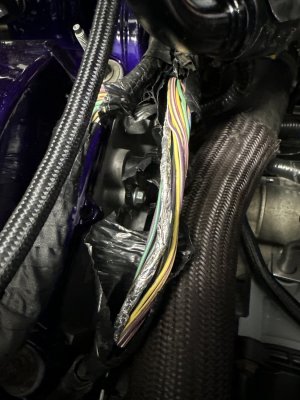
 Once You Repair That Section