


shomethe$$$
SHO Member
Header specs
Primary Diameter: 1 3/4 primaries (1.65" ID)
Primaries Equal Length: 21"
Gauge: 18 gauge mild steel
Merge angle 10-15 degrees
Merge outlet: 2.5"
Primary Extension: 17.75"
Weight Savings over stock: 2 lb
Fabrication Time: 25 hours
Pre-bent Piping $90
Flex pipe $26
Flanges and gaskets $12
weld wire $8
Paint $8
Cutting and grinding wheels $6
Total $150

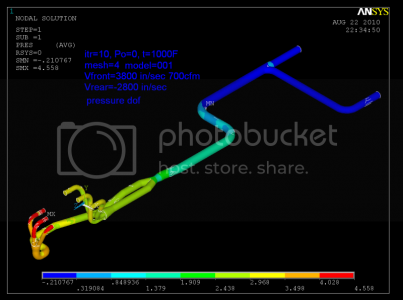
I ended up using the stock ******, the SHO cast iron manifold outlets are very large, about 1.75" x 1.5, I welded the piping to it and then took a die grinder and matched the port to the pipe. I hope to gain a bit of low end with this and good top end flow. I analyzed the header versus stock enough airflow for 600-700 hp. As you all know exhaust systems area compromise between velocity and flow, too big the velocity goes down, too small the pressure goes up making it harder to exhaust out of the engine. Lets first take a look at pressure for straight piping:

What this shows is the pressure above atmosphere, although each are less than 1psi, in real world application, this may be 5 times higher if you account for temperature. As you can see a 2.5" pipe becomes quite restrictive, almost two time higher pressure than the 3, if you go with a dual 2.5 its comparable to a single 3.5" so ideally a 3-2.5 is the best for high hp applications. Looking at the velocity:
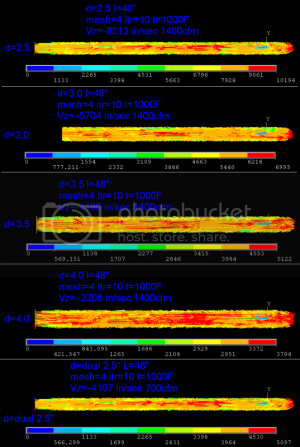
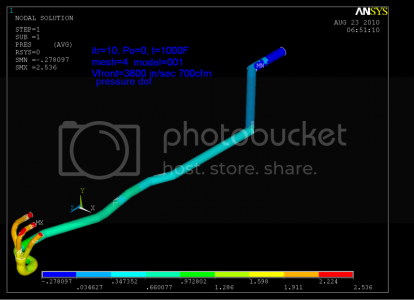
Obviously with the bigger piping the velocity drops considerably, next lets take a look at the stock manifold which has about 5" primaries:
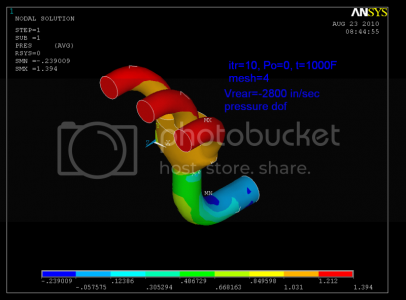
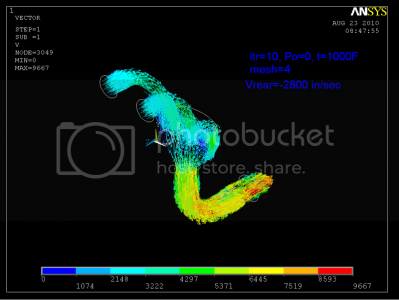
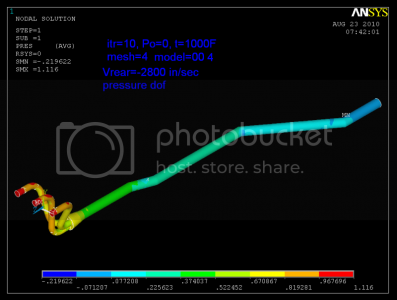
versus a stock manifold with a 2.5" outlet:
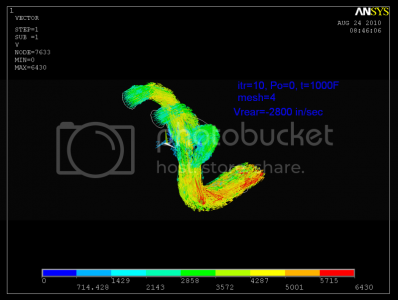
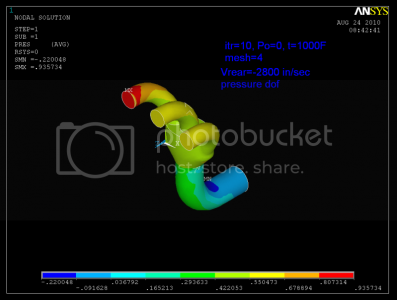
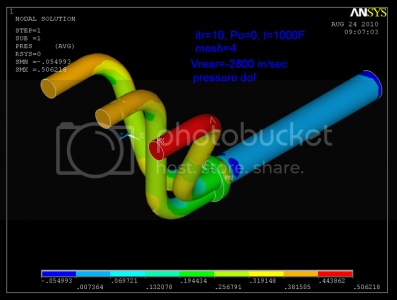
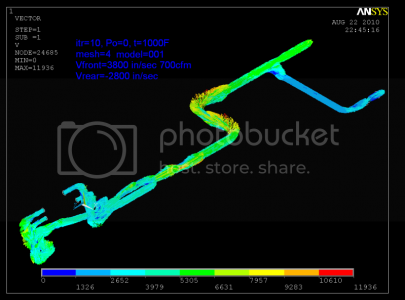
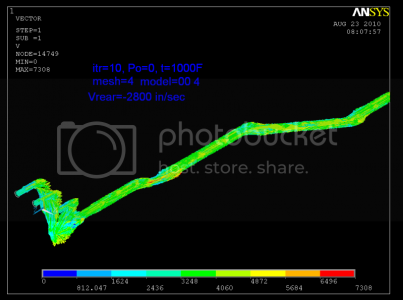
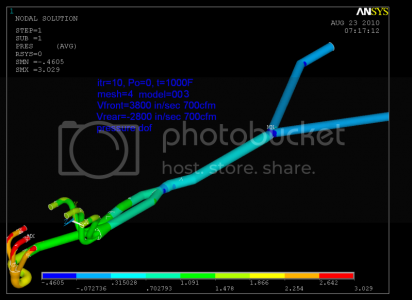
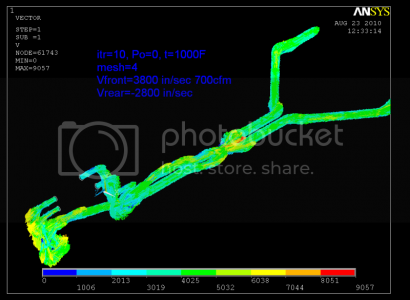
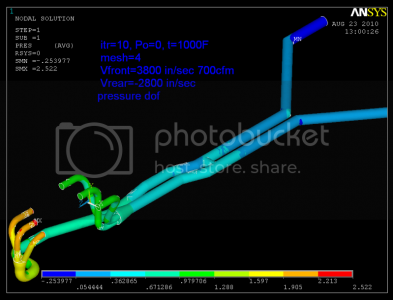
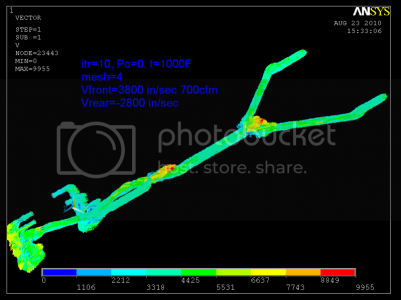
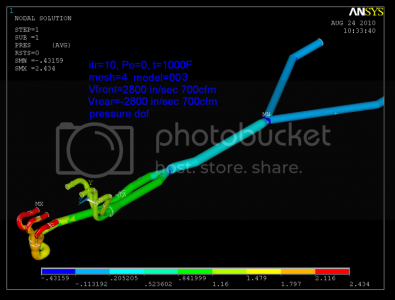
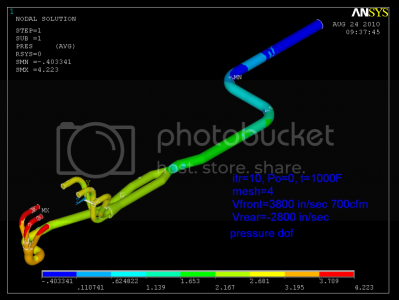
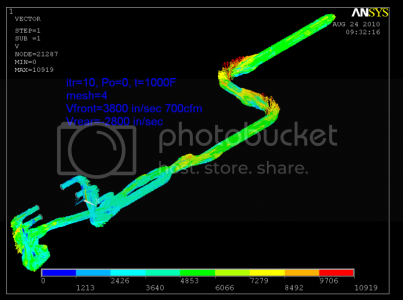
as you can see not only is the primary velocity higher than stock but the primary pressure is lower, so enlarging the outlet can be beneficial. Lets take a look at the header I fabricated modeled with a long extension this is where I think I can gain over a stock exhaust manifold:
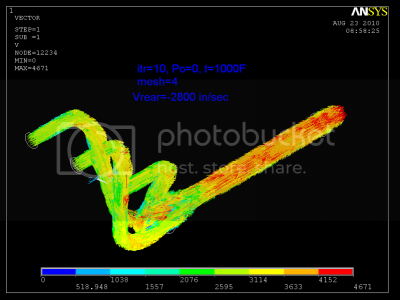
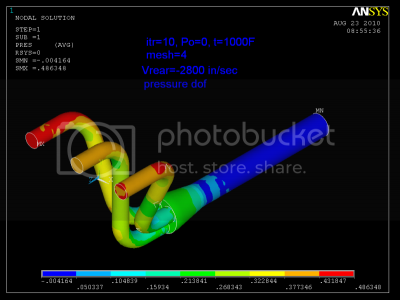
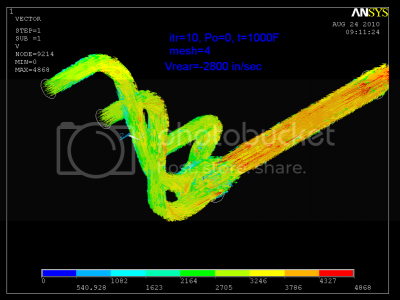
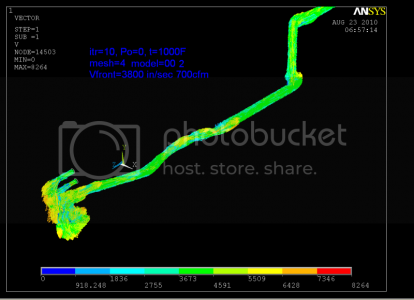
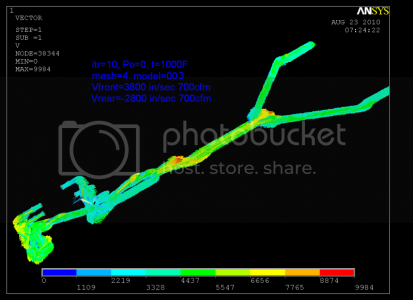
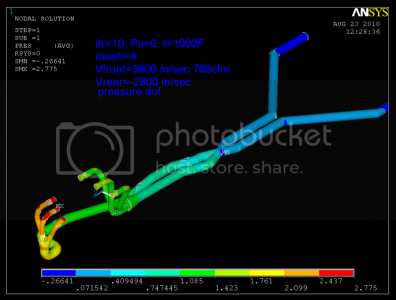
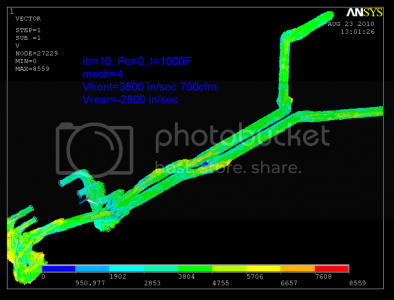
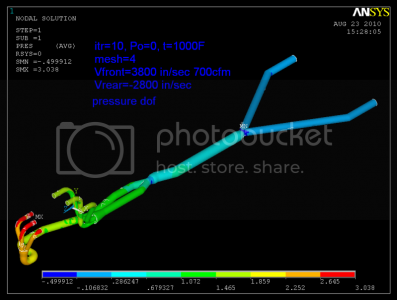
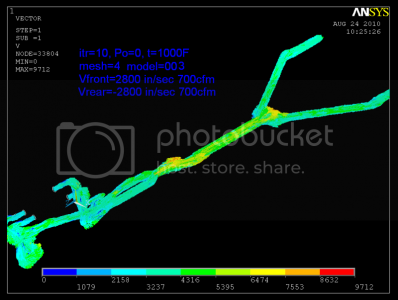
As you can see the velocity is higher and pressure is lower over stock, here is the same header with a short merge, not much difference although from research a low angle merge will help low and midrange power:
Lets take a look at a big header with midlength 11" primaries:
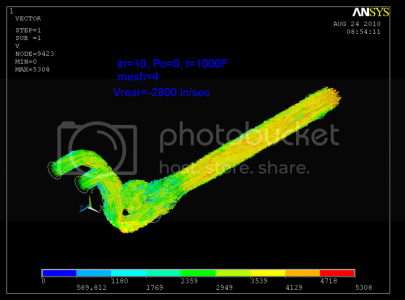
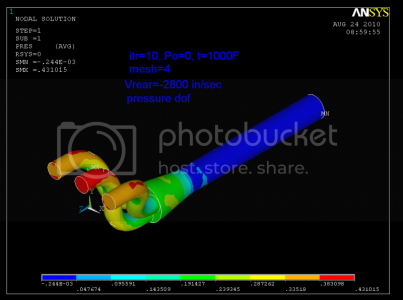
Not much difference, slightly higher velocity in the longer header, so not much difference between a longer and mid-length header. And this is true, a guy on the other forums put long tube headers and didn't gain much, maybe 1-2 hp over midlengths.
Primary Diameter: 1 3/4 primaries (1.65" ID)
Primaries Equal Length: 21"
Gauge: 18 gauge mild steel
Merge angle 10-15 degrees
Merge outlet: 2.5"
Primary Extension: 17.75"
Weight Savings over stock: 2 lb
Fabrication Time: 25 hours
Pre-bent Piping $90
Flex pipe $26
Flanges and gaskets $12
weld wire $8
Paint $8
Cutting and grinding wheels $6
Total $150
I ended up using the stock ******, the SHO cast iron manifold outlets are very large, about 1.75" x 1.5, I welded the piping to it and then took a die grinder and matched the port to the pipe. I hope to gain a bit of low end with this and good top end flow. I analyzed the header versus stock enough airflow for 600-700 hp. As you all know exhaust systems area compromise between velocity and flow, too big the velocity goes down, too small the pressure goes up making it harder to exhaust out of the engine. Lets first take a look at pressure for straight piping:
What this shows is the pressure above atmosphere, although each are less than 1psi, in real world application, this may be 5 times higher if you account for temperature. As you can see a 2.5" pipe becomes quite restrictive, almost two time higher pressure than the 3, if you go with a dual 2.5 its comparable to a single 3.5" so ideally a 3-2.5 is the best for high hp applications. Looking at the velocity:
Obviously with the bigger piping the velocity drops considerably, next lets take a look at the stock manifold which has about 5" primaries:
versus a stock manifold with a 2.5" outlet:
as you can see not only is the primary velocity higher than stock but the primary pressure is lower, so enlarging the outlet can be beneficial. Lets take a look at the header I fabricated modeled with a long extension this is where I think I can gain over a stock exhaust manifold:
As you can see the velocity is higher and pressure is lower over stock, here is the same header with a short merge, not much difference although from research a low angle merge will help low and midrange power:
Lets take a look at a big header with midlength 11" primaries:
Not much difference, slightly higher velocity in the longer header, so not much difference between a longer and mid-length header. And this is true, a guy on the other forums put long tube headers and didn't gain much, maybe 1-2 hp over midlengths.



 Im right up 495


