


As far as I know, all 3.0s use the same manual adjustment accessory tensioners, however since I am only familiar with the 1990 model I'll just say that this is the for the 1990 SHO.
This should be considered as an intermediate skill level.
Tools needed (may vary by year): 14, 12, 10 metric sockets for the battery tray and tensioners, 5 metric hex key for adjusting the tensioners, wheel lug removal tool or socket and wrench, suitable socket or wrench for removing battery connections, a floor jack and a stand, Pepsi (substitute suitable alternate liquid chemical delivery system here), a light source, and optionally new belts. This list is not exhaustive, but reflects what I needed.
**BEFORE PROCEEDING YOU MUST REMOVE THE BATTERY CABLES**
Now there are some times when I am digging around and changing or fixing things and I don't unplug the negative terminal but when you have your hands deep inside the front end of the engine, it is not an option. Plus you need to do it to complete step 1.
Step 1: Remove battery from vehicle. Just in case don't set it on the ground and put it on a table, or a piece of wood or the cat.
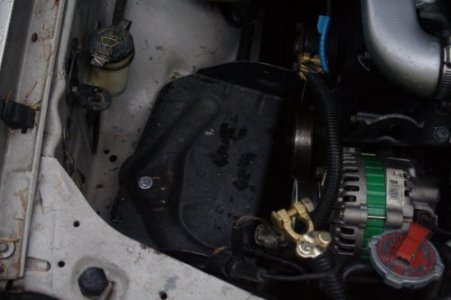
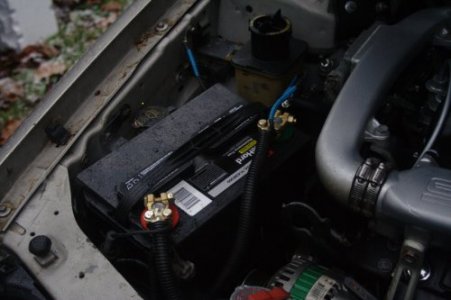
Step 2: Remove battery tray from vehicle. In the picture above you'll notice that your bolt looks different than mine because mine rotted out. However there are three bolts holding this in: one on top and two on the side right above the alternator pulley. These are size 10 metric.
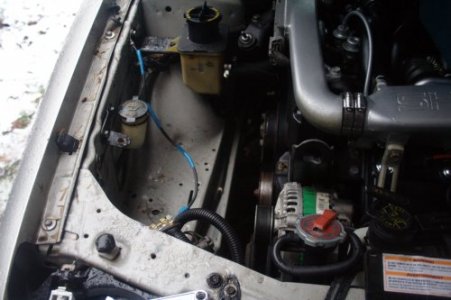
Step 3: Chock the rear wheels. Remove the front, passenger side wheel. You may have to remove the shroud; it wasn't installed on my vehicle. Once you do you can see the bottom bolt on the tensioner. That bolt not only holds on the tensioner but the oil pump as well, so it's important to torque it properly.
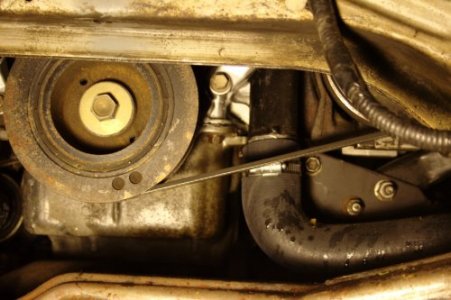
The bolt is about an inch to the right of the crank damper pulley (the big one in the middle)
Step 4: Loosen and remove the pulley on the left ("front") tensioner. You should be able to do that without adjusting it. Move the belt out of the way, but don't remove it yet. There are three bolts holding it on, one is size 14 on the front most side of the car, and the other two are 12s. The bottom one is very long, the top one is shorter and the front one has the largest diameter. Remove those bolts and the tensioner.

Step 5: Adjust the tensioner most of the way up with the hex key. Install the tensioner with or without pulley attached (remember the dish washer faces out). Hand tighten the three bolts. Install the pulley if it isn't already and leave the pulley nut about 1 turn before hand tight. Replace the belt if you have a new one or reuse the old one. Tighten the tensioner down with a hex key or preferably one on a socket. Before the belt is tight, make sure the belt is running along the pulleys correctly. The official tightness for the belt is 220-265 lbs (new) or 148-192 lbs (used). You get those measurements from a particular tool, which most people don't have. Some say the tension should be no less than 1/4 in of deflection on the longest open run of the belt with finger pressure. Tighten the pulley nut 25-36 ft/lbs.
Click here for torque specs
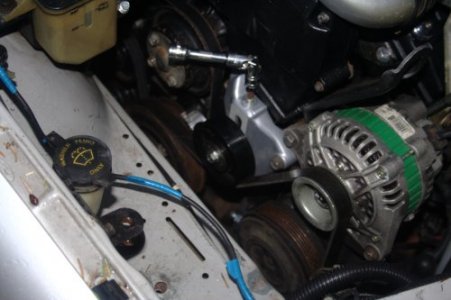
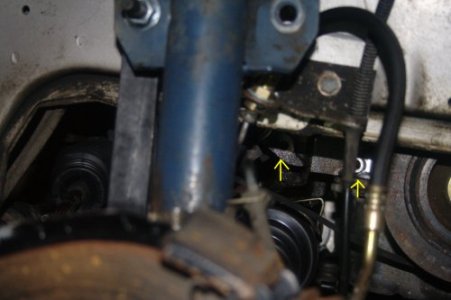
Step 6: Loosen and remove the pulley on the right ("rear") tensioner. You should be able to do that without adjusting it. Move the belt out of the way, but don't remove it yet. There are three bolts holding the tensioner in, and I believe they are all 12s. The top one can be reached with a socket easily, the other two if you haven't done this before should be removed from the bottom. The picture shows the holes with the tensioner removed.
Step 7: Take the pulley off of the tensioner and adjust it about halfway down. You want to get it correct out here: trust me. Install the tensioner and it's bolts hand tightened. Install the pulley on the tensioner with the dish washer facing out. Do not tighten the pulley bolt yet.
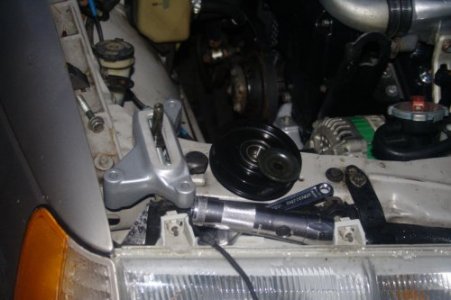

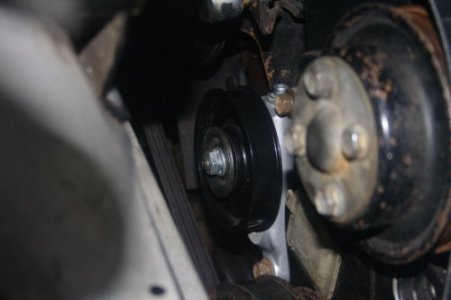
Step 8: Install a new (or the old) belt. The belt should have the smooth side go over the top of the pulley. Tighten the tensioner (clockwise) down. This is down either painstakingly with a hex key wrench or if you have a low profile hex key socket that accepts 1/4 in extension bits you can access the adjustment bolt with a 9 in or so extension and use a driver. This would be MUCH preferable to using the wrench, which is how I did it. However you do it the tension needs to be 154-198 lbs on a new belt or 112-157 on a used. I use the same 1/4 in deflection rule, however. Tight the pulley nut to 25-36 ft/lbs. Tighten the tensioner bracket bolts.
I do not have the exact torque specs for this tensioner available.

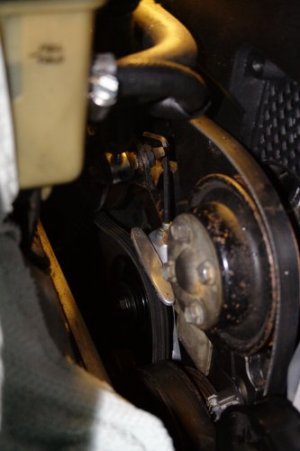
You can see my hex key sticking straight up from the adjustment bolt. There is a hole there for a 1/4 extension bit to fit down
Step 9: Double check the belts.
Step 10: Install the battery tray. Install the bolt in the top but don't tighten it, then install the two side bolts and tighten all three bolts. These are sheet metal bolts so I'd suggest getting them pretty tight by feel. The general rule of thumb is to turn them 1/4 of a turn past snug.

Step 11: Install the battery, and connectors, red then black.
Epilogue: My belts squeaked a bit at first when I turned it on because they were wet (it was raining and snowing). If yours do goose the throttle a bit and wait a minute. They might stop. If they continue to squeak make sure they are first not too tight. If they are you can stress the bearings or ruin the belt. It should be tight, but not so tight you can't move it with your finger. If it's too loose just take a hex key and tighten it. The front one is pretty easy but the one hidden in the back is a bit tougher.
Feel free to point out any discrepencies or add useful knowledge that I didn't. See, that wasn't hard!
This should be considered as an intermediate skill level.
Tools needed (may vary by year): 14, 12, 10 metric sockets for the battery tray and tensioners, 5 metric hex key for adjusting the tensioners, wheel lug removal tool or socket and wrench, suitable socket or wrench for removing battery connections, a floor jack and a stand, Pepsi (substitute suitable alternate liquid chemical delivery system here), a light source, and optionally new belts. This list is not exhaustive, but reflects what I needed.
**BEFORE PROCEEDING YOU MUST REMOVE THE BATTERY CABLES**
Now there are some times when I am digging around and changing or fixing things and I don't unplug the negative terminal but when you have your hands deep inside the front end of the engine, it is not an option. Plus you need to do it to complete step 1.
Step 1: Remove battery from vehicle. Just in case don't set it on the ground and put it on a table, or a piece of wood or the cat.
Step 2: Remove battery tray from vehicle. In the picture above you'll notice that your bolt looks different than mine because mine rotted out. However there are three bolts holding this in: one on top and two on the side right above the alternator pulley. These are size 10 metric.
Step 3: Chock the rear wheels. Remove the front, passenger side wheel. You may have to remove the shroud; it wasn't installed on my vehicle. Once you do you can see the bottom bolt on the tensioner. That bolt not only holds on the tensioner but the oil pump as well, so it's important to torque it properly.
The bolt is about an inch to the right of the crank damper pulley (the big one in the middle)
Step 4: Loosen and remove the pulley on the left ("front") tensioner. You should be able to do that without adjusting it. Move the belt out of the way, but don't remove it yet. There are three bolts holding it on, one is size 14 on the front most side of the car, and the other two are 12s. The bottom one is very long, the top one is shorter and the front one has the largest diameter. Remove those bolts and the tensioner.
Step 5: Adjust the tensioner most of the way up with the hex key. Install the tensioner with or without pulley attached (remember the dish washer faces out). Hand tighten the three bolts. Install the pulley if it isn't already and leave the pulley nut about 1 turn before hand tight. Replace the belt if you have a new one or reuse the old one. Tighten the tensioner down with a hex key or preferably one on a socket. Before the belt is tight, make sure the belt is running along the pulleys correctly. The official tightness for the belt is 220-265 lbs (new) or 148-192 lbs (used). You get those measurements from a particular tool, which most people don't have. Some say the tension should be no less than 1/4 in of deflection on the longest open run of the belt with finger pressure. Tighten the pulley nut 25-36 ft/lbs.
Click here for torque specs
Step 6: Loosen and remove the pulley on the right ("rear") tensioner. You should be able to do that without adjusting it. Move the belt out of the way, but don't remove it yet. There are three bolts holding the tensioner in, and I believe they are all 12s. The top one can be reached with a socket easily, the other two if you haven't done this before should be removed from the bottom. The picture shows the holes with the tensioner removed.
Step 7: Take the pulley off of the tensioner and adjust it about halfway down. You want to get it correct out here: trust me. Install the tensioner and it's bolts hand tightened. Install the pulley on the tensioner with the dish washer facing out. Do not tighten the pulley bolt yet.
Step 8: Install a new (or the old) belt. The belt should have the smooth side go over the top of the pulley. Tighten the tensioner (clockwise) down. This is down either painstakingly with a hex key wrench or if you have a low profile hex key socket that accepts 1/4 in extension bits you can access the adjustment bolt with a 9 in or so extension and use a driver. This would be MUCH preferable to using the wrench, which is how I did it. However you do it the tension needs to be 154-198 lbs on a new belt or 112-157 on a used. I use the same 1/4 in deflection rule, however. Tight the pulley nut to 25-36 ft/lbs. Tighten the tensioner bracket bolts.
I do not have the exact torque specs for this tensioner available.
You can see my hex key sticking straight up from the adjustment bolt. There is a hole there for a 1/4 extension bit to fit down
Step 9: Double check the belts.
Step 10: Install the battery tray. Install the bolt in the top but don't tighten it, then install the two side bolts and tighten all three bolts. These are sheet metal bolts so I'd suggest getting them pretty tight by feel. The general rule of thumb is to turn them 1/4 of a turn past snug.
Step 11: Install the battery, and connectors, red then black.
Epilogue: My belts squeaked a bit at first when I turned it on because they were wet (it was raining and snowing). If yours do goose the throttle a bit and wait a minute. They might stop. If they continue to squeak make sure they are first not too tight. If they are you can stress the bearings or ruin the belt. It should be tight, but not so tight you can't move it with your finger. If it's too loose just take a hex key and tighten it. The front one is pretty easy but the one hidden in the back is a bit tougher.
Feel free to point out any discrepencies or add useful knowledge that I didn't. See, that wasn't hard!
Last edited:


