I would like people to think in different terms of how the all wheel drive system functions and effects traction performance.
Imitation is the sincerest form of flattery.
Nice but not quite true. Now the system we use is in essence a modified version of the haldex all-wheel drive. It's a part-time system. It's intended to be a complimentary traction assistance. Simple way of saying this is that it aids/adds to the traction available to the front wheel drive system. This is an important part to consider. This is also was slightly misleading as I will explain further on.
JTEKT designed the RDU clutch coupler to mimic the action of a viscous coupler in a all wheel drive system. From their explanation and performance graphs. It shows that this is not a perfect analog.
We don't need no F'n brakes.
The next part is going to sound a little bit on the strange side, but please follow along and consider it.
Now that the 2013 and up, all wheel drive system, uses the anti-lock brake system to achieve torque vectoring and simulated limited slip differential action.
Now how this is achieved is clever, but slightly counterproductive. The brakes are applied to any wheel experiencing traction loss. This slows the rotation speed of the offending wheel. Now if your cornering while this is happening, it will aid steering turn in and send engine torque back through the system in the differential and then through the spider gears. So in some ways it's slightly self-defeating. It's making the spider gears work harder and producing heat through friction on the brakes. Plus loading up the CV joints and axles.
Wait what!!
Now next you need to understand how the PTU, RDU and Viscous Coupler operate and effect the system.
Now the pinion gear meches with the ring gear and turns the differential housing. This explains the first step of the power/work flow out of the transmission.
Now it appears there are two main flow paths for work flow. This is misleading though. I will explain.
Now the first and "number one path", is via the spider gears to the axle gears. Which divide the work flow according to rotation speed.
But wait, there's more.
Now this is where things get a little confusing, but I want to change how you think about this. Now the second power flow path doesn't exactly do what you think it is doing.
To explain this you first have to understand that the PTU is directly splined to the front differential. From this direct connection, power is fed through a series of driven, idler and a driven ring gear. A step up ratio by the PTU pinion gear then increases rotation speed to roughly 2.93 times the rotational speed of the front differential. This is transferred by the driveshaft to the input of the viscous clutch on the RDU. The clutch activates through the powering of an electromagnet which engages the clutches when there is a differential in rotation speed between drive shaft and the pinion gear on the RDU. This allows the ball and ramp cam system to energize and provide clutch pressure.
As a side note, notice that the drive shaft is rotating roughly three times faster then the wheels. This acts to provide increased reaction speed of the ball and ramp system. More sensitivity.
It's also the same rpm as needed by the RDU ring and pinion gear set ratio.
Okay I think I've got that.
Now remember those spider and Axle gears in the front differential? They are free to differentiate as needed. Guess that's why it's called a differential. So from the factory the only way to moderate front axle speed is the the traction control system application of brake Force to the offending wheel. Not so fast though. The use of the all wheel drive system, in essence, is also there to moderate front differential rotation speed. Remember the PTU is splined directly to the front differential. Is a secondary power flow path. It acts to match drivetrain rotation speed to the road speed. Strangely it works in a different manner, but to same effect as using brakes to slow down spinning wheels. In this case it provides forward thrust instead of drag via braking force/rotational restrictions.
So what does all this mean and what's the meaning of life?
So what I would like you to think, when you think about the all wheel drive system. Is that it's an analog, just like the simulated limited slip function is an analog LSD via the brake system. Sometimes systems do unusual things or have unusual effects.
What I'm trying to say is we have essentially a front wheel drive system with helpers. The rear wheel drive portion of our all wheel drive system has limited abilities. If you really want to accelerate more quickly. Concentrate a lot of your efforts on the front part of the drivetrain.
So the front l.s.d. is essentially the most important addition to the drivetrain. It helps to directly moderate front axle rotation speed differences. The all-wheel-drive portion only accentuates that ability. It cannot by itself overcome lack of traction at the front end. Hope this all makes sense and the answer is 42.
https://www.independent.co.uk/life-...life-the-universe-and-everything-2205734.html


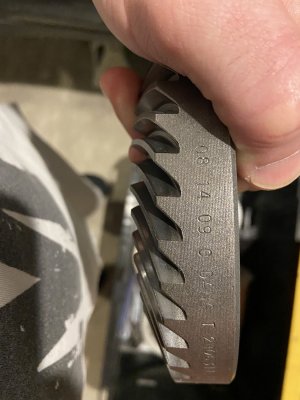
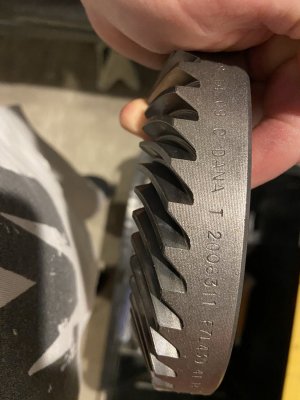
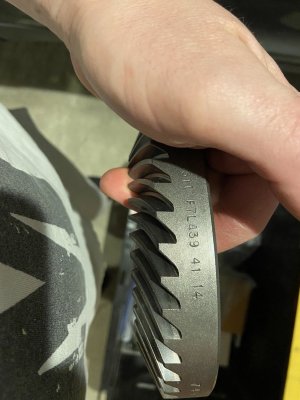
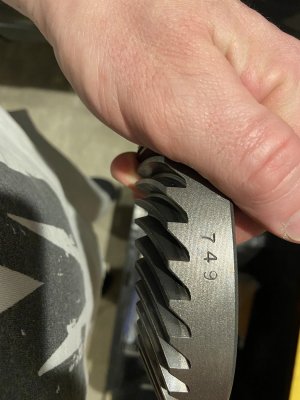 Same ring gear in my 2010 that’s also in another members 2016. Just different dates but both are 41:14. And bc these things bolt in, you can swap them around pretty easy if you needed to. TC installed it for me and their service charge is $150. I believe they generated a part number for it and let me check if it’s now on their site. https://www.tractionconcepts.com/Ford-Taurus-Sho-Ecoboost-AWD-Rear-LSD-Kit-p/tcxflm2804.htm