Do you mean strapping the suspension to keep the front end down?
I've daydreamer about water jetting a plate that sandwiches between the front struts top hat and the body of the car that has a loop. Then using a ratchet strap (strong one) to crank the top of the suspension to somewhere on the bottom...lower control arm or something.
Something to keep the front suspension from extending too much when launching and minimizing the front to rear weight transfer...keeping the weight on the front wheels...
Idk...was just random thoughts going through my head...I'm sure there's a better way.
You're ratchet strap idea isn't that far off the mark. Honda racers sometimes use a limiter strap with the front suspension. They also employ traction bars to the front suspension to maintain suspension geometry and Toe in toe out. I would suspect it also has some anti lift properties.
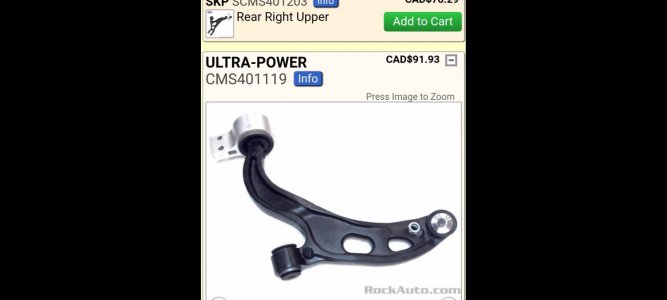
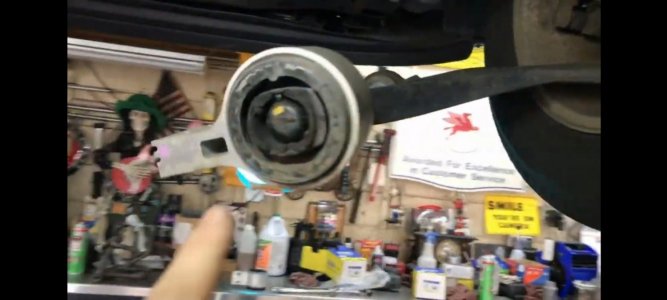
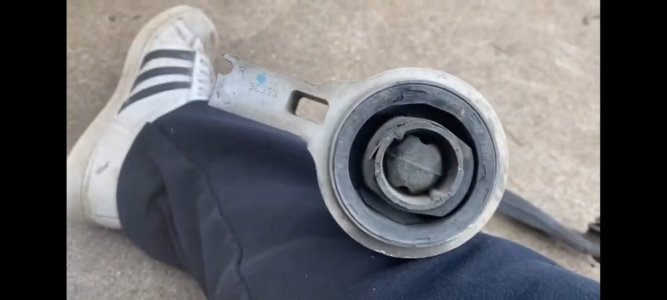
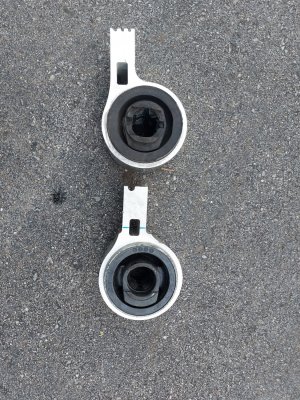
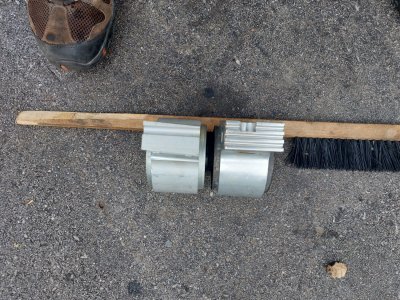
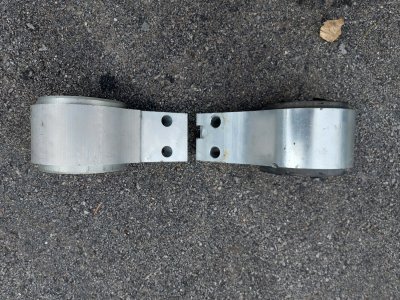
Now what I'm intending to do is mimic what white line offers on other front wheel drive vehicles. The idea is that you lower the rear mount to "reduce" the amount of anti-lift in the front suspension. It sounds backwards but what it does is, allow the front struts and springs to carry the weight of the car, as opposed to the lower A-arm suspension component, and even out the pressure across the two front wheels. You end up with better traction off the line this way. It also improves understeer in corners by allowing better weight distribution across the front suspension. Plus improving on throttle corner exit traction. This mod has been euphemistically labelled the poor man's limited slip, because of the effect it has. This also acts to soften the front suspension. Because the spring is then carrying the weight of the car as opposed to the suspension components. The front sway bar also acts softer as well, because it isn't fighting the geometry of the control arm. To be honest I don't know if this style suspension geometry change, dropping the rear Pivot Point so that the a-arm is parallel with the ground (more neutral position), will help with the Taurus platform. Subi's and other front and all-wheel drive cars tend to have lots of anti dive/anti lift geometry dialled in. That's why this type of modification helps with them.
Now if you wanted to actually add anti dive geometry to the Explorer. Raising the rear Pivot Point would increase the anti dive/anti lift geometry. So switching to the Taurus rear suspension mounts would raise the rear Pivot Point and help with this. It's much more difficult with Taurus platform because there are no Factory pivot bushing brackets to raise the Pivot Point any higher.
Now there's a bunch of fancy math with geometry and t h u r s t vectors (acceleration), instant centres and Center of balance 2 explain how all this works. But I have a much simpler analogy to help understand how this affects the front suspension.
Imagine a hinge with the Pivot Point pointing up towards the front of the car. This is the same as lowering the rear pivot of the front a arm. Now imagine one half of the hinge is attached to the car and the other half has a steering knuckle attached to it. Now if you apply forward power to the wheel attached to the steering knuckle, the hinge will open because the power is pulling the hinge open. This will take the load off the spring and extend the strut. Lifting the front end of the vehicle.
Now imagine a hinge with a pivot Points slanting down toward the front of the car. This is an anti lift geometry. Now everything's the same as in the last example except the Pivot Point is slanting down towards the front. If you apply forward power to the wheel it will close the hinge and try to compress the spring and shock. This will resist the force of acceleration. With enough of an angle on pivot point of the hinge, which is impossible, you could actually compress the front suspension and drop the front end of the car under acceleration.
There is also some anti Squat already dialled into the rear suspension with the 2 rear lower suspension mounting points. Meaning the lower parallel link and trailing link. The pivot Points angle up towards the front of the car.
Does this make sense to you?